• Fri frakt över 249 kr
  • •
  • Snabba leveranser
  • •
  • Billiga böcker
Kundservice

Du är på sajten för privatpersoner.

Företag, bibliotek eller offentlig verksamhet?

Du handlar på classic.bokus.com, där alla dina funktioner finns intakta.
Till classic.bokus.com
Bokus logotyp. Gå till startsidan.
  • Erbjudanden
  • Nyheter
  • Student
  • Topplistor
  • Barn & ungdom
  • Bokus Play
  • E-böcker
  • Pocketböcker
  • Spel & pussel

10% studentrabatt med kod TERM26

Sidfot

Mina sidor

    Hjälp

    • Kundservice
    • Vanliga frågor och svar
    • Frakt och leverans
    • Retur vid ångerrätt
    • Reklamera vara
    • Betalning
    • Köpvillkor
    • Allmänna villkor
    • Information om webbplatsens tillgänglighet

    Om Bokus

    • Om oss
    • Pressrum
    • För studenter
    • För företag
    • För bibliotek och offentlig verksamhet
    • För leverantörer
    • Hållbarhet

    Populärt

    • Aktuella erbjudanden
    • Presentkort
    • Studentlitteratur
    • Nya böcker
    • Topplistor
    • Signerade böcker
    • Engelska böcker

    Inspiration

    • Boktips
    • BookTok
    • Populära bokserier
    • Barnbokskaraktärer
    • Populära författare
    Logotyp för Bokus
    Följ oss på Facebook (extern länk)Följ oss på Instagram (extern länk)Följ oss på YouTube (extern länk)Följ oss på TikTok (extern länk)
    bokus @ CookiesAnpassa cookiesIntegritetspolicyKöpvillkor
    Till Citymail hemsida (extern länk)Till Budbee hemsida (extern länk)Till Postnord hemsida (extern länk)Till Schenker hemsida (extern länk)Till Early Bird hemsida (extern länk)Till Walleys hemsida (extern länk)
    1. Samhälle och politik
    2. Politik och statsskick
    3. Politiska ideologier och rörelser

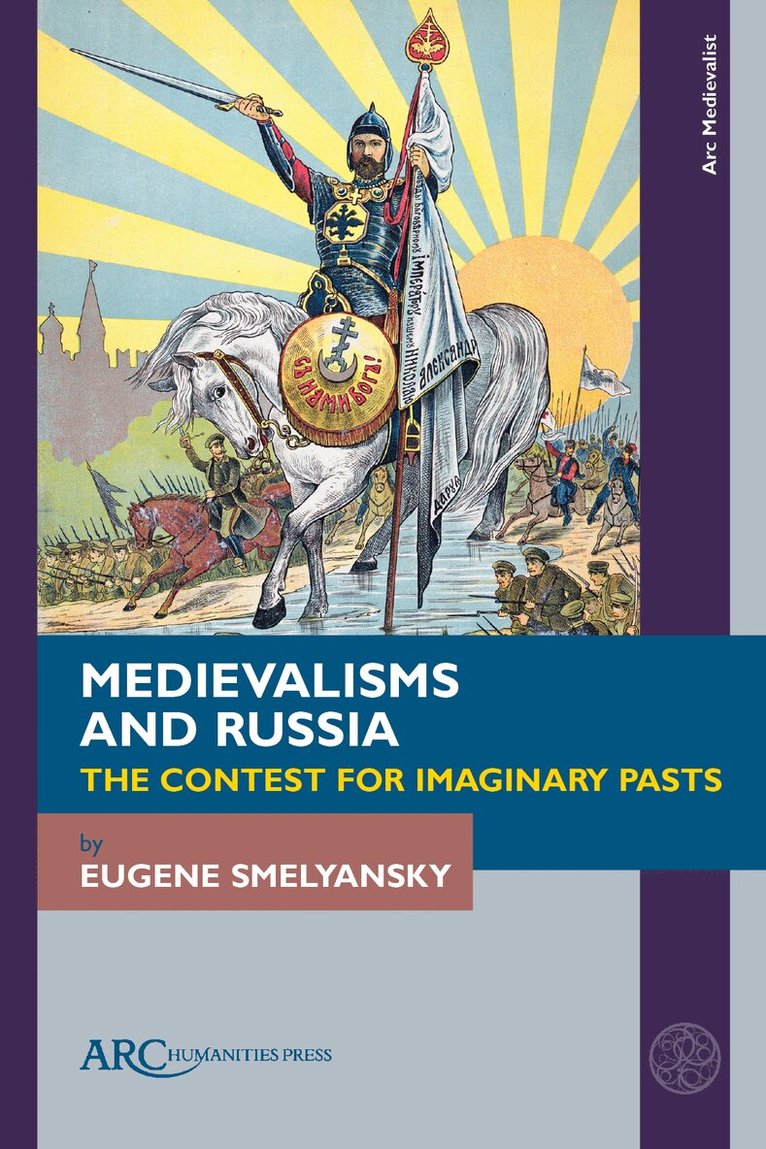
    Medievalisms and Russia

    The Contest for Imaginary Pasts

    AvEugene Smelyansky

    Inbunden, Engelska, 2024

    Del i serien Arc Medievalist

    1 725 kr

    Beställningsvara. Skickas inom 5-8 vardagar. Fri frakt över 249 kr.

    Fler format och utgåvor

    Häftad

    462 kr

    Beskrivning

    This new monograph is devoted to a detailed exploration of the ways in which the medieval past has been wielded to propagandic effect in Imperial, Soviet, and post-Soviet Russia.From politicians’ speeches to popular culture, from Orthodox Christianity to neo-paganism, the medieval Russian past remains crucial in constructing national identity, mobilizing society during times of crisis, and providing alternative models of communal belonging. Frequent appeals to a medieval Slavic past, its heroes and myths, have provided—and continue to provide—a particularly powerful tool for animating imperialist and populist sentiments.This study explores persuasive—and pervasive—recourse to tropes concerned with the Middle Ages in Imperial, Soviet, and post-Soviet Russia, seeking to explain why an often romanticized medieval past remains potent in Russian politics, society, and culture today.

    Produktinformation

    • Utgivningsdatum:2024-03-05
    • Mått:152 x 229 x 12 mm
    • Vikt:346 g
    • Format:Inbunden
    • Språk:Engelska
    • Serie:Arc Medievalist
    • Antal sidor:136
    • Förlag:Arc Humanities Press
    • ISBN:9781802700640

    Utforska kategorier

    • Politiska ideologier och rörelser inom Samhälle och politik
    • Medeltiden inom Historia och arkeologi

    Mer om författaren

    Eugene Smelyansky is a Teaching Assistant Professor of History at Washington State University, and has written on Russian medievalisms for The Public Medievalist.

    Recensioner i media

    Why has the medieval world captured the popular imagination in the twenty-first century? It is also a period associated with the birth of the nation and is central to national(ist) mythmaking. The latter has, of course, been a feature of many European medievalisms since at least the nineteenth century. Russia is no outlier, as Eugene Smelyansky points out, where already in the eighteenth century, the Imperial Academy of Arts and Sciences quickly alighted on early Rus—a medieval place or series of places founded by a Slavicized Viking diasporic elite—as the starting point for “Russian History.”From the period of imperial Russia to today, early Rus has been synonymous with the national heritage and genesis of Russia, and also Ukraine and Belarus. In his pseudoscientific historical article preceding Russia’s invasion of Ukraine in February 2024, the President of the Russian Federation, Vladimir Putin, expressed the common heritage and ethnicity of the people of Russia, Ukraine, and Belarus, using early Rus as the starting point of a common history.Why did Putin choose a remote medieval statelet on which to base his historical claim? Smelyansky’s book explores this and other instances of medievalism as intellectual nodes and cultural signifiers for Russian nationalism and supremacy.[...][T]he conclusion, although interesting, presents a missed opportunity to discuss a central node of Russian medievalism: the Mongols. It is a major oversight in an otherwise thoughtful and thorough overview of Russian medievalism and its influence on conservative politics to overlook the so-called “Tatar yoke.” This racist concept, central to both Russian (White and ethnic) supremacy and the Russian liberal epistemic orientation toward a “democratic” Europe and against a “despotic” East, represents a medieval-inspired race-making central to the colonial management of the indigenous peoples of Russia to this day.

    Innehållsförteckning

    • IntroductionChapter One. A Contested Inheritance: Medieval Rus and Russia’s Origin MythsChapter Two. Alexander Nevsky: The Once and Future PrinceChapter Three. Byzantine Dreams: Russia as the “Third Rome”Chapter Four. Medievalism as Allegory: The Middle Ages in Unofficial CultureConclusionSelect BibliographyIndex