• Fri frakt över 249 kr
  • •
  • Snabba leveranser
  • •
  • Billiga böcker
Kundservice

Du är på sajten för privatpersoner.

Företag, bibliotek eller offentlig verksamhet?

Du handlar på classic.bokus.com, där alla dina funktioner finns intakta.
Till classic.bokus.com
Bokus logotyp. Gå till startsidan.
  • Erbjudanden
  • Nyheter
  • Student
  • Topplistor
  • Barn & ungdom
  • Bokus Play
  • E-böcker
  • Pocketböcker
  • Spel & pussel

10% rabatt på allt med kod: NYSTART10 →

Sidfot

Mina sidor

    Hjälp

    • Kundservice
    • Vanliga frågor och svar
    • Frakt och leverans
    • Retur vid ångerrätt
    • Reklamera vara
    • Betalning
    • Köpvillkor
    • Allmänna villkor
    • Information om webbplatsens tillgänglighet

    Om Bokus

    • Om oss
    • Pressrum
    • För studenter
    • För företag
    • För bibliotek och offentlig verksamhet
    • För leverantörer
    • Hållbarhet

    Populärt

    • Aktuella erbjudanden
    • Presentkort
    • Studentlitteratur
    • Nya böcker
    • Topplistor
    • Signerade böcker
    • Engelska böcker

    Inspiration

    • Boktips
    • BookTok
    • Populära bokserier
    • Barnbokskaraktärer
    • Populära författare
    Logotyp för Bokus
    Följ oss på Facebook (extern länk)Följ oss på Instagram (extern länk)Följ oss på YouTube (extern länk)Följ oss på TikTok (extern länk)
    bokus @ CookiesAnpassa cookiesIntegritetspolicyKöpvillkor
    Till Citymail hemsida (extern länk)Till Budbee hemsida (extern länk)Till Postnord hemsida (extern länk)Till Schenker hemsida (extern länk)Till Early Bird hemsida (extern länk)Till Walleys hemsida (extern länk)
    1. Juridik
    2. Internationell rätt

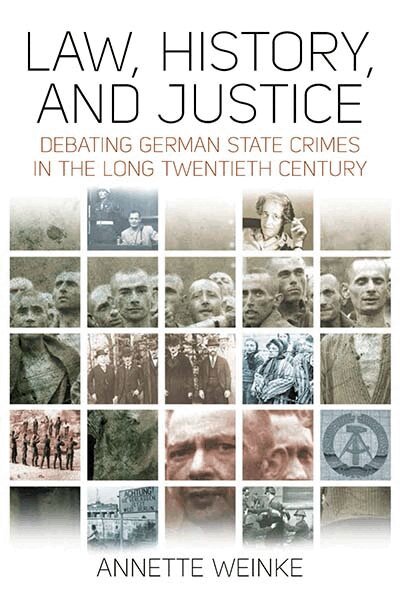
    Law, History, and Justice

    Debating German State Crimes in the Long Twentieth Century

    AvAnnette Weinke

    Häftad, Engelska, 2024

    585 kr

    Beställningsvara. Skickas inom 3-6 vardagar. Fri frakt över 249 kr.

    Fler format och utgåvor

    Inbunden

    1 916 kr

    Beskrivning

    Since the nineteenth century, the development of international humanitarian law has been marked by complex entanglements of legal theory, historical trauma, criminal prosecution, historiography, and politics. All of these factors have played a role in changing views on the applicability of international law and human-rights ideas to state-organized violence, which in turn have been largely driven by transnational responses to German state crimes. Here, Annette Weinke gives a groundbreaking long-term history of the political, legal and academic debates concerning German state and mass violence in the First World War, during the National Socialist era and the Holocaust, and under the GDR.

    Produktinformation

    • Utgivningsdatum:2024-09-01
    • Mått:152 x 229 x 18 mm
    • Vikt:454 g
    • Format:Häftad
    • Språk:Engelska
    • Antal sidor:340
    • Förlag:Berghahn Books
    • ISBN:9781805397083

    Utforska kategorier

    • Internationell rätt inom Juridik
    • Europas historia inom Historia och arkeologi
    • Politiskt förtryck inom Samhälle och politik

    Mer om författaren

    Annette Weinke is an Assistant Professor of History at the Friedrich Schiller University of Jena. She has previously been a visiting fellow at Princeton University’s History Department. She is the co-editor of Toward a New Moral World Order? (2013) and Human Rights and Humanitarian Intervention (2017).

    Recensioner i media

    “Annette Weinke’s deeply researched, tightly argued, and insightful book… weaves together literatures on historical theory, the historiography of six political regimes in Germany, international human rights law, and transitional justice from the 1980s onward to tell a story larger than the sum of its parts. And she does so in a tight package, helpful to scholars and students alike… She completely persuades that collective historical memory of Germany’s twentieth century frames and shapes, if it does not actually constitute, discourse about international human rights and international criminal law well into the twenty-first century.” • Holocaust and Genocide Studies“This book is complicated, and not for the beginner. It covers much ground, and quickly. Weinke does not so much create a usable narrative as destroy usable, but unfortunately inaccurate, narratives. Her book should be required reading for anyone producing new scholarship in these fields.” • Journal of Modern History“Meticulously researched in European and US archives, [this book] is a valuable contribution to a growing field and zooms in into debates of surprising variety… In her lucid conclusion on the entanglement of history’s burden and law she gives us an overview about one century of twisting German debates and the results of moral hubris. Her book will inspire a generation of scholars working in the field and surely find its readers not only among historians and legal scholars but also in the general public as it shows debates and its underlying dilemma which are as relevant today as they were in 1920 or 1945.” • Connections: A Journal for Historians and Area Specialists“It is to be welcomed that a translation of this book is now available since it can now find its place in the growing field of international research on the history of human rights and international law. The translation into English by Nichola Evangelos Levis is faultless.” • Sehepunkte

    Innehållsförteckning

    • List of IllustrationsAcknowledgmentsIntroductionAbbreviationsSelect ChronologyPART I: THE HAGUE – BERLIN – VERSAILLESChapter 1. International Criminal Law before World War IChapter 2. History Management in Wartime, 1914-1919Chapter 3. Debating the Responsibility Clauses of the Peace TreatyChapter 4. The Heidelberg Association and Max Weber’s “War Guilt” InterventionChapter 5. Review IPART II: WASHINGTON – NUREMBERG – BONNChapter 6. International Law versus Human Rights?Chapter 7. Jurists as Lobbyists and HistoriansChapter 8. The Frankfurt School Goes to WarChapter 9. Hermann Jahrreiß and the Nuremberg Defense StrategyChapter 10. West Germany Joins the Genocide ConventionChapter 11. Review IIPART III: BONN – LUDWIGSBURG – JERUSALEMChapter 12. Allied Law and the German Victims’ CommunityChapter 13. West German Historians and the “Führer Order”Chapter 14. Eichmann, Arendt, and JusticeChapter 15. Review IIIPART IV: SALZBURG – BONN AND BERLINChapter 16. Samuel Huntington’s Third Wave and “Transitology”Chapter 17. The “Politics of the Past” after German UnificationChapter 18. “Mercy Before Justice?” The Amnesty Debate of 1994-95Chapter 19. Review IVConclusionNotesBibliographyIndex