• Fri frakt över 249 kr
  • •
  • Snabba leveranser
  • •
  • Billiga böcker
Kundservice

Du är på sajten för privatpersoner.

Företag, bibliotek eller offentlig verksamhet?

Du handlar på classic.bokus.com, där alla dina funktioner finns intakta.
Till classic.bokus.com
Bokus logotyp. Gå till startsidan.
  • Erbjudanden
  • Nyheter
  • Student
  • Topplistor
  • Barn & ungdom
  • Bokus Play
  • E-böcker
  • Pocketböcker
  • Spel & pussel

10% rabatt på allt med kod NYSTART10 →

Sidfot

Mina sidor

    Hjälp

    • Kundservice
    • Vanliga frågor och svar
    • Frakt och leverans
    • Retur vid ångerrätt
    • Reklamera vara
    • Betalning
    • Köpvillkor
    • Allmänna villkor
    • Information om webbplatsens tillgänglighet

    Om Bokus

    • Om oss
    • Pressrum
    • För studenter
    • För företag
    • För bibliotek och offentlig verksamhet
    • För leverantörer
    • Hållbarhet

    Populärt

    • Aktuella erbjudanden
    • Presentkort
    • Studentlitteratur
    • Nya böcker
    • Topplistor
    • Signerade böcker
    • Engelska böcker

    Inspiration

    • Boktips
    • BookTok
    • Populära bokserier
    • Barnbokskaraktärer
    • Populära författare
    Logotyp för Bokus
    Följ oss på Facebook (extern länk)Följ oss på Instagram (extern länk)Följ oss på YouTube (extern länk)Följ oss på TikTok (extern länk)
    bokus @ CookiesAnpassa cookiesIntegritetspolicyKöpvillkor
    Till Citymail hemsida (extern länk)Till Budbee hemsida (extern länk)Till Postnord hemsida (extern länk)Till Schenker hemsida (extern länk)Till Early Bird hemsida (extern länk)Till Walleys hemsida (extern länk)
    1. Samhälle och politik
    2. Samhälle och kultur
    3. Kultur och medier
    4. Medievetenskap

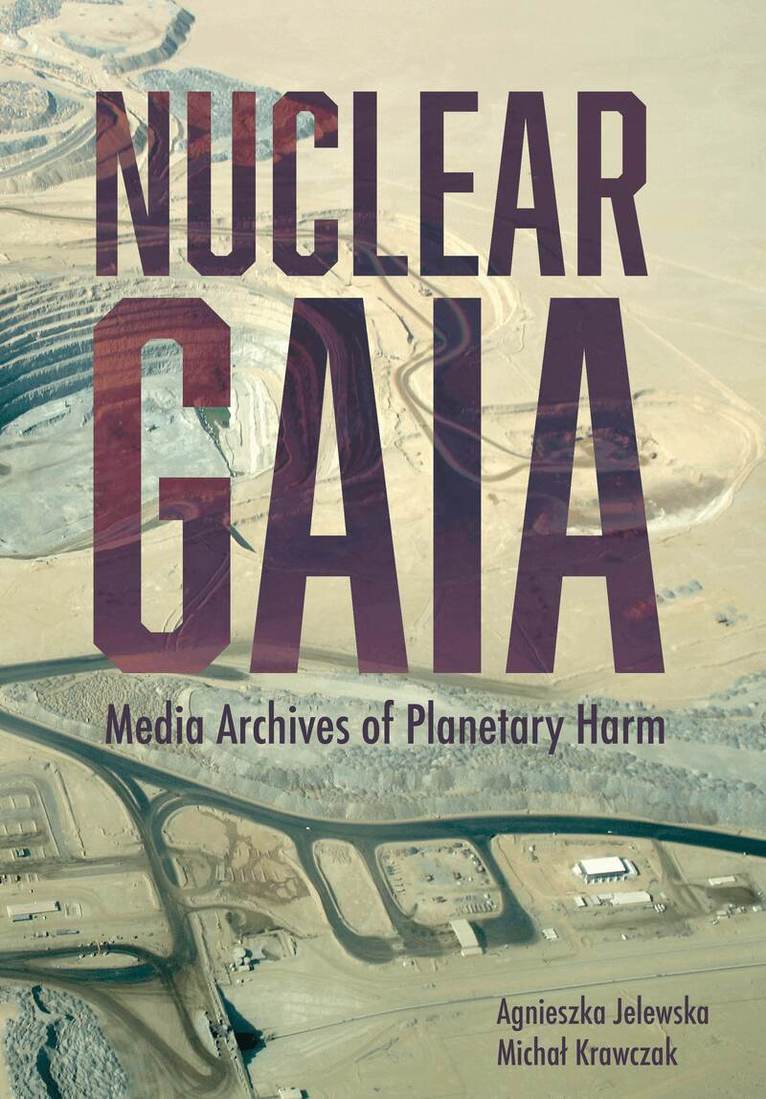
    Nuclear Gaia

    Media Archives of Planetary Harm

    AvAgnieszka Jelewska,Michał Krawczak

    Inbunden, Engelska, 2025

    Del 4 i serien BCMCR New Directions in Media and Cultural Research

    1 639 kr

    Beställningsvara. Skickas inom 5-8 vardagar. Fri frakt över 249 kr.

    Beskrivning

    Describes the transformations we have witnessed due to the development of nuclear science and technology, accelerating policies interdependent on energy, and military procedures that have led us to make a provocative claim that, in many respects, planet Earth is getting closer to the embodiment of the project we call Nuclear Gaia.The book examines media archives and online platforms that recover data and memory and shape community knowledge of nuclear events from the distant and nearer past. These are the pieces of evidence that we are on the eve of creating new forms of social justice, carried out by open-source investigations (OSINT) groups, independent researchers, artists, media makers, activists, local communities and civic groups. Thus, analysing nuclear processes and their social and environmental consequences is no longer the exclusive domain of experts, scientists, politicians and the military. The authors hope that such communities’ practices and decolonial discourses, combined with the critiques within our methodology as post-nuclear media studies, can also change the fate of nuclear industry victims by creating media space to discuss and regain justice as socially sanctioned and shared rules for understanding and using nuclear energy both in past and the future.

    Produktinformation

    • Utgivningsdatum:2025-10-20
    • Mått:170 x 244 x 16 mm
    • Vikt:616 g
    • Format:Inbunden
    • Språk:Engelska
    • Serie:BCMCR New Directions in Media and Cultural Research
    • Antal sidor:258
    • Förlag:Intellect
    • ISBN:9781835951538

    Utforska kategorier

    • Medievetenskap inom Samhälle och politik
    • Våld, intolerans och förföljelse inom Historia och arkeologi
    • Geografi inom Naturvetenskap och teknik

    Mer om författaren

    Agnieszka Jelewska, Ph.D., is a professor at the Adam Mickiewicz University in Poznań and director of the Humanities/Art/Technology Research Center AMU. She examines the transdisciplinary relations between science, art, culture, and technology in the 20th and 21st centuries, their social and political dimension. She is also a curator and co-creator of art and science projects.Michał Krawczak, PhD, assistant professor at the Anthropology and Cultural Studies Department of the Adam Mickiewicz University in Poznań, Poland, co-founder and program director of the Humanities/Art/Technology Research Center. Researcher, designer and curator of art and science projects. His main research field is modern forms of violence from the perspective of media and cultural studies.

    Recensioner i media

    Nuclear Gaia: Media Archives of Planetary Harm is a rich intervention in the field of nuclear studies. It offers not only new case studies and materials, but also new conceptual insights and tools by which to think about them. By viewing nuclear power through a range of ecological and scientific lenses, the authors have arrived at a highly original, path-breaking interpretation of their subject. This landmark study promises to pave the way from nuclear to postnuclear studies, where AI, quantum mechanics and nuclear technologies will merge in ways we are only just beginning to imagine.

    Innehållsförteckning

    • List of abbreviationsList of figuresAcknowledgementsIntroduction: Welcome to Nuclear Gaia 1. Post-nuclear Media Studies and Infrastructures of Nuclear RegimesMedia archives and grassroots practicesQuantum entanglementsDigital information, energy, and matterSentient media and radiationQuantum media theoryMedia as geological sedimentationInfrastructures of violenceHyper-aesthetics of nuclearity2. Nuclear Gaia: Oscillating Between Spacetimemattering and the Nuclear Colonial DriveSplitting the atom, or the intertwining of scientific experiments, historical time and military policiesMasculinist nuclearismNuclear criticism: The end of linear archives and the bomb as a mediumSpacetimemattering and the memory of nuclear violenceNuclear Gaia as technologically mediated Earth designColonial traces of Nuclear GaiaA lustful gaze at the exosphere and the moon as the eighth continent3. From Biosphere to IT GaiaThe Earth in the state of total peaceVernadsky’s biosphere and its noöspheric transformation‘The quest for Gaia’, or Lovelock’s tale about the superorganism, climate change and nuclear sadnessEarth Science System and the self-reflective global subjectThe Earth as we knew it no longer exists4. Postnuclear Communication and Grassroots Archives of CatastrophesThe advent of nuclear-proof communicationSimulation as a tool of the real: Between war games and catastrophesThe postnuclear seismic orderThe Fukushima Daiichi disaster and proof of communication collapseLive archiving of nuclear regimesTop-down archive as a theater of simulating nuclear futureAn inaccessible archiveRecords from the zone of alienationAgainst nucleocratismBeyond the linear paradigm5. Nuclear Violence and Planetary Harm: Testing the Endurance of Humans and the EnvironmentMedia labs of atomic testsNew media of the nuclear renaissanceAhead of the Time: Three visions of Russian nuclearismAtomic steppe: The Semipalatinsk Test SiteSeismic studies of nuclear powerFallout archives: The Nevada Test SiteThe downwinders’ archiveToxic archipelago archives: The French Polynesia Test SiteAtoll archives: The Bikini Test SiteNuclear savagesDecolonizing nuclear regimes6. Anthropocene: The First Geological Epoch of Nuclear GaiaIndices of the AnthropoceneMetadata of the AnthropoceneNuclear Anthropocene: Toxic minerals and landscapesNuclear harm: Conditions for half-lifeA Great ExtractivismDeep time future of radioactive waste and cross-generational justice No Apocalypse, Not Now …ReferencesAuthor BiographiesIndex