• Fri frakt över 249 kr
  • •
  • Snabba leveranser
  • •
  • Billiga böcker
Kundservice

Du är på sajten för privatpersoner.

Företag, bibliotek eller offentlig verksamhet?

Du handlar på classic.bokus.com, där alla dina funktioner finns intakta.
Till classic.bokus.com
Bokus logotyp. Gå till startsidan.
  • Erbjudanden
  • Nyheter
  • Student
  • Topplistor
  • Barn & ungdom
  • Bokus Play
  • E-böcker
  • Pocketböcker
  • Spel & pussel

10% rabatt på allt med kod NYSTART10 →

Sidfot

Mina sidor

    Hjälp

    • Kundservice
    • Vanliga frågor och svar
    • Frakt och leverans
    • Retur vid ångerrätt
    • Reklamera vara
    • Betalning
    • Köpvillkor
    • Allmänna villkor
    • Information om webbplatsens tillgänglighet

    Om Bokus

    • Om oss
    • Pressrum
    • För studenter
    • För företag
    • För bibliotek och offentlig verksamhet
    • För leverantörer
    • Hållbarhet

    Populärt

    • Aktuella erbjudanden
    • Presentkort
    • Studentlitteratur
    • Nya böcker
    • Topplistor
    • Signerade böcker
    • Engelska böcker

    Inspiration

    • Boktips
    • BookTok
    • Populära bokserier
    • Barnbokskaraktärer
    • Populära författare
    Logotyp för Bokus
    Följ oss på Facebook (extern länk)Följ oss på Instagram (extern länk)Följ oss på YouTube (extern länk)Följ oss på TikTok (extern länk)
    bokus @ CookiesAnpassa cookiesIntegritetspolicyKöpvillkor
    Till Citymail hemsida (extern länk)Till Budbee hemsida (extern länk)Till Postnord hemsida (extern länk)Till Schenker hemsida (extern länk)Till Early Bird hemsida (extern länk)Till Walleys hemsida (extern länk)
    1. Kultur
    2. Konstböcker
    3. Konstteori

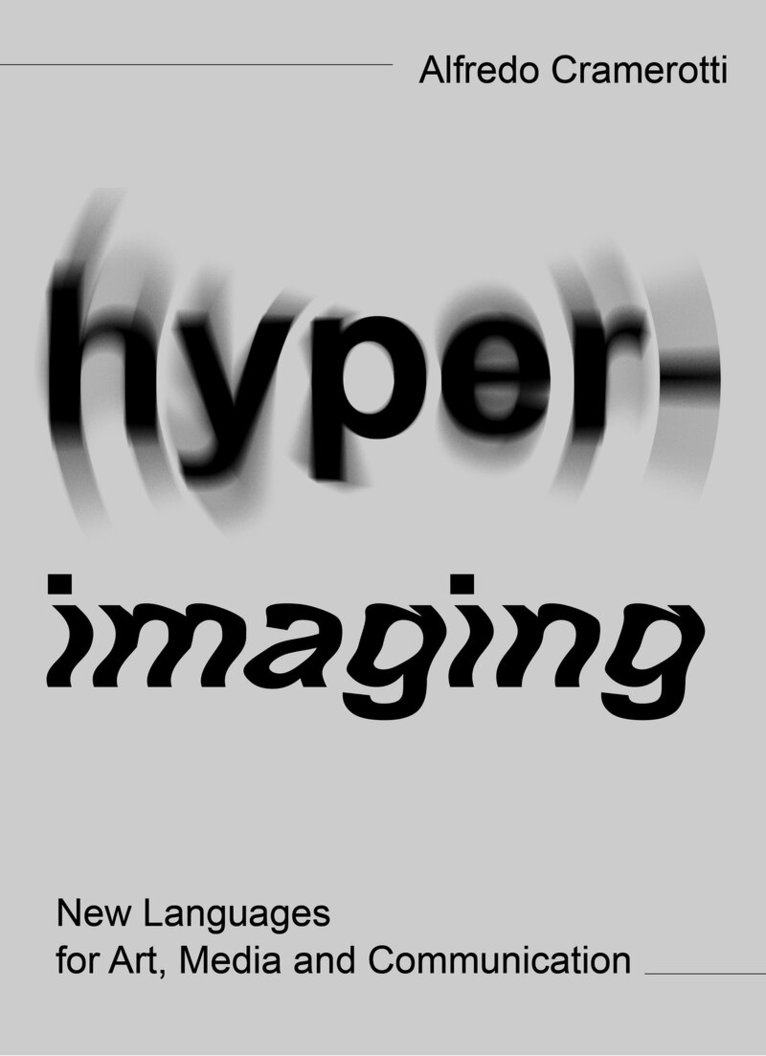
    Hyper-imaging

    New Languages for Art, Media and Communication

    AvAlfredo Cramerotti

    Inbunden, Engelska, 2026

    1 111 kr

    Kommande

    Fler format och utgåvor

    Häftad

    Kommande

    Beskrivning

    Hyper-imaging: New Languages for Art, Media and Communication describes a condition in which images are processes and no longer end points; relays of action instead of representations. In turn, this redefines curating as a form of active mediation between human attention and the invisible systems shaping it. Throughout the book, Dr. Cramerotti weaves theoretical perspectives with case studies drawn from his curatorial experience and deep engagements with artists and thinkers whose work interrogates these shifting dynamics.It offers a compelling argument that images are shifting from static representations to active practices, using the author’s curatorial experience to illustrate this transformation with clarity and depth. Thoroughly supported by scholarship and professional insight, the book shows how images circulate, shape our responses, and position artists and curators as key figures in evolving media theory.This is a book about how images function: how they move, mutate, and co-author meaning with machines, publics, and institutions. The goal is to equip curators, artists, scholars, and readers to better navigate this terrain: to engage critically, act creatively, and think infrastructurally. In the age of hyper-imaging, what is seeing is not the point; it is the system of seeing that must be curated.

    Produktinformation

    • Utgivningsdatum:2026-11-13
    • Mått:170 x 244 x 9 mm
    • Vikt:283 g
    • Format:Inbunden
    • Språk:Engelska
    • Antal sidor:170
    • Förlag:Intellect
    • ISBN:9781835953723

    Utforska kategorier

    • Konstteori inom Kultur
    • Digital konst, videokonst och new media arts inom Kultur
    • Filosofiska discipliner inom Filosofi och religion

    Mer om författaren

    Dr. Alfredo Cramerotti is a scholar, curator, and cultural entrepreneur whose research examines the intersection of contemporary art, media, and digital culture. As Director of the Media Majlis Museum (mm:museum) at Northwestern University in Qatar, he leads research-driven exhibitions and curatorial initiatives that explore the role of media in shaping contemporary cultural narratives, including for major art biennials and cultural institutions worldwide. His academic inquiry focuses on the evolving nature of curatorial practice in relation to technological advancements, globalization, and digital transformation in the cultural sector.

    Innehållsförteckning

    • Author’s statementForeword by S. Venus Jin 1. The Image: What It Is and What It DoesRethinking Representation and the Performativity of the ImageFraming the Contemporary ImageRethinking the Visual VocabularyA Living Glossary 2. Seeing Through: From Perception to OperationFrom Cognitive Image Formation to Infrastructural AestheticsImage as AgentVisual Content and Machinic OperationThe Contemporary Regime of VisualityImages After Representation 3. Early Trajectories: Transformative Perspectives on Photography and Mass-MediaMcLuhan, Flusser, Vaccari: Historical Legacies and Theoretical InflectionsPrecedents and FrameworksMarshall McLuhan: Pattern and IntuitionVilém Flusser: Code and ApparatusFranco Vaccari: The Technological Unconscious 4. Encoding the VisibleCompression, Circulation, and Modulation in Image BehaviorThe Image as Modus OperandiCirculationism: The Structure of ImagingOperational Aesthetics 5. Visualizing Futures: Approaches Across DisciplinesJournalism, Sociology, Technology, and Art: Reframing Visual ParadigmsLooking, Seeing, Imaging as Thinking PracticeJournalism after the Evidentiary ImageSociology and the Media MachineTechnology as Mechanism and MilieuImage Systems and Artistic ProductionSegue: From Disciplines to Practices 6. Practices of Hyper-imagingCase Studies: Steyerl, Goudal, Syms, Bridle, QuayolaThe Next Field: Hyper-imaging in ActionHito Steyerl: Image as Disappearance / Weapon / EchoNoémie Goudal: Layering the VisualMartine Syms: Horizontality and ImagesJames Bridle: The Network and the ImageQuayola: Computation and ImagesWorking the Image 7. Curating the Image-WorldExhibition-making as Knowledge Device: On Expansion and Pristina Case StudiesThe Evolution of Cultural InteractionsOn Expansion and Hyperimaging!The Aesthetic Experience: Non-Linear, Uncertain, and UnfinishedErica Scourti: Reauthoring the AlgorithmThomas Galler: The Aesthetics of AccumulationMargo Wolowiec: Context and ImagesBrilant Pireva: Distributed SubjectivityFrom Visual Intimacy to Navigational Method 8. The Possibility of an ImageThe Intermediacy of Appearance, Code, and ExperienceIn-between Object, System, and ExperienceSystems Thinking: From Object to InstructionCollapsing the FrameImage-Making as AggregationTriangulating Appearance, Code, and Experience 9. The Transparent LayerFinal Propositions: Toward a Politics of Perceptual MediationThe Invisibility of the ImageCurating in the Age of Hyper-imagingFrom Visual Life to Curatorial AttitudeToward an Ethics of Hyper-visual Mediation Afterword by Melanie LenzAuthor’s postscript: A Future LayerBibliography and SourcesProjects and Works ReferencedIndex