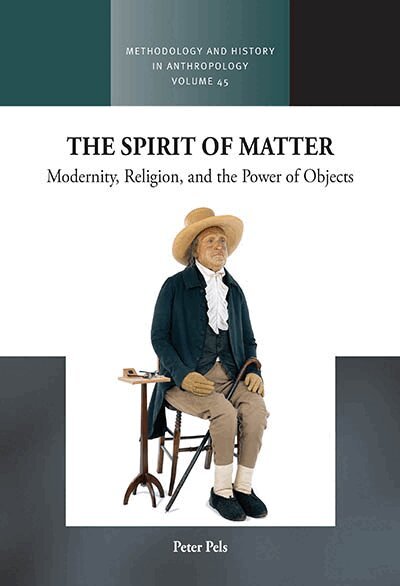
Spirit of Matter
Modernity, Religion, and the Power of Objects
332 kr
Skickas . Fri frakt över 249 kr.
Du är på sajten för privatpersoner.
332 kr
Skickas . Fri frakt över 249 kr.
Peter Pels is a Professor of Anthropology of Africa at the University of Leiden. He edited the journal Social Anthropology (2003-2007) and advised the Çatalhöyük excavation project led by Ian Hodder (2005-14). His most recent publication is Museum Temporalities: Time, History and the Future of the Ethnographic Museum (Routledge, 2023) which is co-edited with Wayne Modest.
“I consider this to be a brilliant piece of research creating a highly original intervention in material culture studies. In particular the debates on materiality and matter and the intellectual history of the concept of fetishism and its transformation of meaning in Europe from the 16th century to the present.” • Michael Rowlands, University College London“[A book] with considerable value. It is a compelling read, that has some important interventions to make concerning the nature of the material within modernity.” • Jon Mitchell, University of Sussex
Du är på sajten för privatpersoner.
332 kr
Skickas . Fri frakt över 249 kr.
Peter Pels is a Professor of Anthropology of Africa at the University of Leiden. He edited the journal Social Anthropology (2003-2007) and advised the Çatalhöyük excavation project led by Ian Hodder (2005-14). His most recent publication is Museum Temporalities: Time, History and the Future of the Ethnographic Museum (Routledge, 2023) which is co-edited with Wayne Modest.
“I consider this to be a brilliant piece of research creating a highly original intervention in material culture studies. In particular the debates on materiality and matter and the intellectual history of the concept of fetishism and its transformation of meaning in Europe from the 16th century to the present.” • Michael Rowlands, University College London“[A book] with considerable value. It is a compelling read, that has some important interventions to make concerning the nature of the material within modernity.” • Jon Mitchell, University of Sussex