• Fri frakt över 249 kr
  • •
  • Snabba leveranser
  • •
  • Billiga böcker
Kundservice

Du är på sajten för privatpersoner.

Företag, bibliotek eller offentlig verksamhet?

Du handlar på classic.bokus.com, där alla dina funktioner finns intakta.
Till classic.bokus.com
Bokus logotyp. Gå till startsidan.
  • Erbjudanden
  • Nyheter
  • Student
  • Topplistor
  • Barn & ungdom
  • Bokus Play
  • E-böcker
  • Pocketböcker
  • Spel & pussel

10% rabatt på allt med kod: NYSTART10 →

Sidfot

Mina sidor

    Hjälp

    • Kundservice
    • Vanliga frågor och svar
    • Frakt och leverans
    • Retur vid ångerrätt
    • Reklamera vara
    • Betalning
    • Köpvillkor
    • Allmänna villkor
    • Information om webbplatsens tillgänglighet

    Om Bokus

    • Om oss
    • Pressrum
    • För studenter
    • För företag
    • För bibliotek och offentlig verksamhet
    • För leverantörer
    • Hållbarhet

    Populärt

    • Aktuella erbjudanden
    • Presentkort
    • Studentlitteratur
    • Nya böcker
    • Topplistor
    • Signerade böcker
    • Engelska böcker

    Inspiration

    • Boktips
    • BookTok
    • Populära bokserier
    • Barnbokskaraktärer
    • Populära författare
    Logotyp för Bokus
    Följ oss på Facebook (extern länk)Följ oss på Instagram (extern länk)Följ oss på YouTube (extern länk)Följ oss på TikTok (extern länk)
    bokus @ CookiesAnpassa cookiesIntegritetspolicyKöpvillkor
    Till Citymail hemsida (extern länk)Till Budbee hemsida (extern länk)Till Postnord hemsida (extern länk)Till Schenker hemsida (extern länk)Till Early Bird hemsida (extern länk)Till Walleys hemsida (extern länk)
    1. Filosofi och religion
    2. Religion och tro
    3. Religion: allmänt

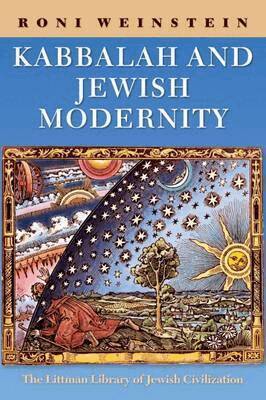
    Kabbalah and Jewish Modernity

    AvRoni Weinstein

    Häftad, Engelska, 2024

    Del i serien Littman Library of Jewish Civilization

    493 kr

    Beställningsvara. Skickas inom 5-8 vardagar. Fri frakt över 249 kr.

    Fler format och utgåvor

    Inbunden

    702 kr

    Beskrivning

    Something crucial and quite unprecedented happened to kabbalah in the sixteenth and seventeenth centuries. Though it had previously been considered a highly secretive and esoteric tradition, its practitioners began to spread its doctrines throughout the Jewish world with missionary zeal. Their goal was ambitious: no less than the remodelling of the religious and ethical attitudes of the entire Jewish population, a reformation of Judaism. Few aspects of Jewish life and religious practice were not changed as a result of the spread of kabbalah.These innovations originated mainly in the city of Safed in Galilee. They were introduced by kabbalistic adepts, but would not have gained broad acceptance if they had not made sense to people in terms of their everyday lives. The kabbalistic corpus that emerged should thus be interpreted not just as the elaboration of a secretive literary tradition, but as a response to the needs of Jewish society in its manifest historical context. In addition, Roni Weinstein argues, these kabbalistic innovations were partly a response to changes in the Catholic world-view, revealing an intimate link with Counter-Reformation Catholicism that is explored here for the first time. The religious and political changes taking place in contemporary Ottoman settings also contributed to these changes.The effect of these developments on Jewish culture was nothing short of revolutionary, deeply affecting people’s lives at the time and also laying the foundations for change in future generations. Yet they were not presented as revolutionary: the early modern kabbalists understood that they would only succeed in spreading their message if they presented their doctrines as the natural continuation of what went before.Weinstein’s sociological reading of mystical texts encompasses a number of methodological innovations, including the need to consider the impact of the non-Jewish environment in the fashioning of Jewish texts. He sees the emergence of ‘Jewish modernity’ as the result of developments that were intrinsically Jewish rather than as a response to outside influences during the Enlightenment; controversially, he therefore places its origins in the Mediterranean world of the late sixteenth century rather than in eighteenth-century Berlin. His argument is based on a wide range of Jewish sources—including theological tracts, kabbalistic and ethical literature, hagiographies, mystical diaries, halakhic rulings and responsa, and community and confraternal regulations—as well as the testimonies non-Jewish travellers, and Catholic religious literature. This stimulating new reading of the development of kabbalistic texts and practices opens a new chapter in the understanding of Jewish modernity. The Hebrew edition of this book was awarded the Goren-Gottstein Prize for the Best Book in Jewish Thought 2010–2012.

    Produktinformation

    • Utgivningsdatum:2024-02-16
    • Mått:156 x 234 x 23 mm
    • Vikt:368 g
    • Format:Häftad
    • Språk:Engelska
    • Serie:Littman Library of Jewish Civilization
    • Antal sidor:228
    • Förlag:Liverpool University Press
    • ISBN:9781837640546

    Utforska kategorier

    • Religion: allmänt inom Filosofi och religion
    • Judendom inom Filosofi och religion

    Mer om författaren

    Roni Weinstein teaches at the Hebrew University of Jerusalem and has published extensively on various aspects of Jewish life in Renaissance and early modern Italy. In recent years he has been researching processes of modernization among the Jews of the Mediterranean basin, and particularly as related to migration, religious reform, mystical activity, halakhic innovations, and the spread of new ideas.

    Recensioner i media

    'This book is essential for understanding early modern Jewish religious thought and would be a valuable addendum for studies on the broader impact of early modern movements in Christianity. The English is polished and no previous knowledge of kabbalah is necessary for full comprehension. The concise text is rich in content and stimulating in its broad outlook. This study is not only a useful tool for crosscultural comparisons but it itself is a model for such a study. It could only be written by a person who has mastery both in early modern history and in early modern thought both Jewish and general. Luckily, the author meets these requirements and the result is a model monograph.'Shaul Stampfer, Religious Studies Review

    Innehållsförteckning

    • Note on TransliterationIntroduction: A Social Historian Looks at Early Modern Kabbalah1 A New God: The Theological Innovation 2 Like Giants on the Shoulders of Dwarfs: The Rise of the Jewish Saint 3 Religious Confraternities 4 ‘From my body I shall envision God’: The Body and Sexuality 5 Sin and Repentance: The Jewish Confession 6 Another God. Catholic Tradition in Safed Kabbalah: The Sephardi--Conversos Link 7 Summary: Kabbalah of Safed and ModernityBibliography Index