• Fri frakt över 249 kr
  • •
  • Snabba leveranser
  • •
  • Billiga böcker
Kundservice

Du är på sajten för privatpersoner.

Företag, bibliotek eller offentlig verksamhet?

Du handlar på classic.bokus.com, där alla dina funktioner finns intakta.
Till classic.bokus.com
Bokus logotyp. Gå till startsidan.
  • Erbjudanden
  • Nyheter
  • Student
  • Topplistor
  • Barn & ungdom
  • Bokus Play
  • E-böcker
  • Pocketböcker
  • Spel & pussel

Må bättre, för mindre! Upp till 50% rabatt på hälsoböcker

Sidfot

Mina sidor

    Hjälp

    • Kundservice
    • Vanliga frågor och svar
    • Frakt och leverans
    • Retur vid ångerrätt
    • Reklamera vara
    • Betalning
    • Köpvillkor
    • Allmänna villkor
    • Information om webbplatsens tillgänglighet

    Om Bokus

    • Om oss
    • Pressrum
    • För studenter
    • För företag
    • För bibliotek och offentlig verksamhet
    • För leverantörer
    • Hållbarhet

    Populärt

    • Aktuella erbjudanden
    • Presentkort
    • Studentlitteratur
    • Nya böcker
    • Topplistor
    • Signerade böcker
    • Engelska böcker

    Inspiration

    • Boktips
    • BookTok
    • Populära bokserier
    • Barnbokskaraktärer
    • Populära författare
    Logotyp för Bokus
    Följ oss på Facebook (extern länk)Följ oss på Instagram (extern länk)Följ oss på YouTube (extern länk)Följ oss på TikTok (extern länk)
    bokus @ CookiesAnpassa cookiesIntegritetspolicyKöpvillkor
    Till Citymail hemsida (extern länk)Till Budbee hemsida (extern länk)Till Postnord hemsida (extern länk)Till Schenker hemsida (extern länk)Till Early Bird hemsida (extern länk)Till Walleys hemsida (extern länk)
    1. Ekonomi och Ledarskap
    2. Nationalekonomi
    3. Internationell ekonomi

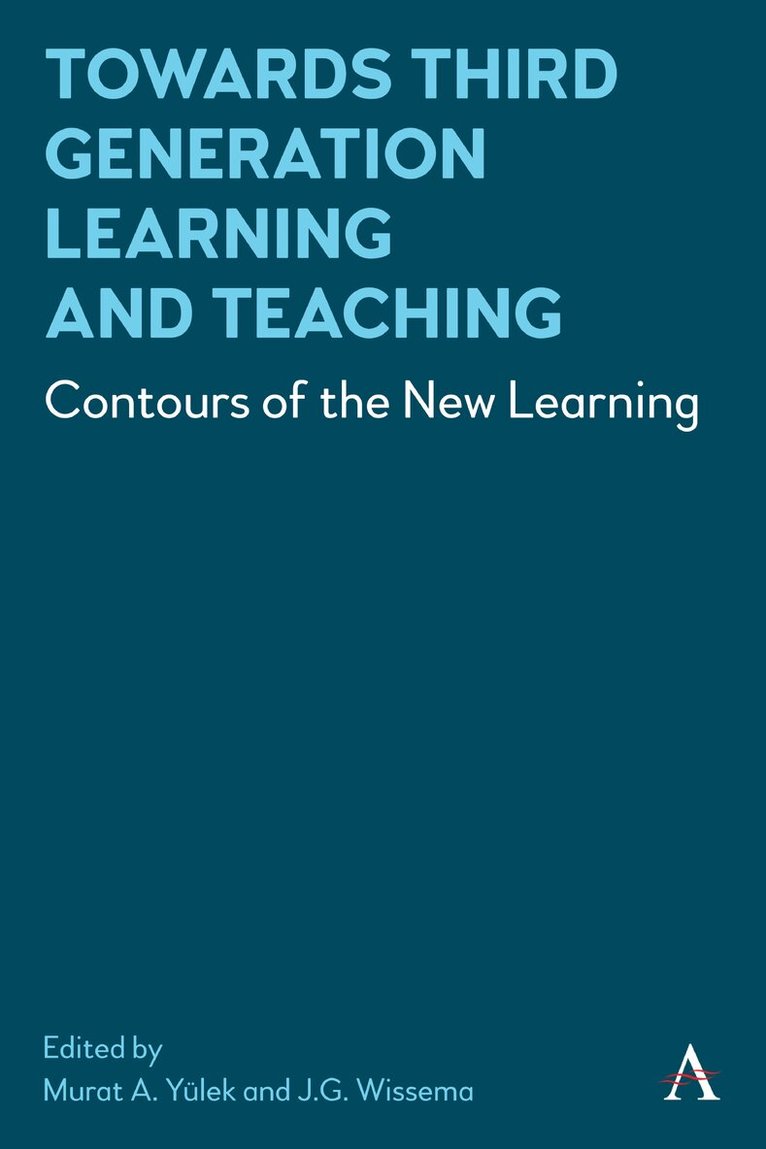
    Towards Third Generation Learning and Teaching

    Contours of the New Learning

    AvMurat A. Yülek,J.G. Wissema

    Inbunden, Engelska, 2022

    1 244 kr

    Beställningsvara. Skickas inom 5-8 vardagar. Fri frakt över 249 kr.

    Beskrivning

    Descartes has said he is because he thinks. Perhaps we should say: we are because we learn. Learning is an essential human characteristic, look at children who self-learn empirically. In our times we are privileged to have special learning institutions while learning has become a hallmark of civilization. Teachers are among the key contributors to our society, but will they work the same as in the last millennia? Right now, just about everything in learning and teaching is changing. Traditional methods are replaced by newer ones and there is a host of new learning “technologies.” It is of foremost importance that societies adapt to this and that is why this book has been created. Thoughts and experiences of the brightest minds of today offer an overview of what is going on and where we are heading. Written in an accessible, yet academically rigorous way, this volume explores the past dynamics and future avenues of learning and teaching. Its contributors are among the brightest minds of today with knowledge, experience and vision to shed a light of learning and teaching’s past and future.

    Produktinformation

    • Utgivningsdatum:2022-10-04
    • Mått:153 x 229 x 26 mm
    • Vikt:454 g
    • Format:Inbunden
    • Språk:Engelska
    • Antal sidor:278
    • Förlag:Anthem Press
    • ISBN:9781839984600

    Utforska kategorier

    • Internationell ekonomi inom Ekonomi och Ledarskap
    • Utbildningsstrategier och utbildningspolitik inom Psykologi och pedagogik
    • Företagsekonomi inom Ekonomi och Ledarskap

    Mer om författaren

    Murat Yülek is the Rector of Ostim Technical University. A former IMF economist, he is a well-published expert on economic development. He has development policy experience in more than 15 countries and is the author of How Nations Succeed: Manufacturing, Trade, Industrial Policy and Economic Development.J.G. (Hans) Wissema is professor emeritus at TU Delft in the Netherlands and professor of economics at Ostim Technical University. His book Towards the Third Generation University was published in English and six other languages.

    Recensioner i media

    “The editors, who have published major texts before, have now attacked one of the core issues that will affect humanity for the remainder of century: how we learn and how organizations learn, and subsequently the effects on this stage of human evolution as these trends converge. Core learning is pragmatic and through osmosis, not the rote methods taught during the industrial era which plagued much of our youth and continues to be the core method for young people globally. The connections and convergence argument have hitherto not been explored in such a coherent and logical manner, combined of course with the editors’ reliance on data and facts. When I read this book, it is as though I am learning anew given its wealth of facts and connections that are obvious after reading, however, had been lost on me prior to being exposed to the book. Who should read this? Educators and students globally, corporate executives, policy makers and scientists. This book is rich and melds the topics of all four constituencies in a hitherto unexplored manner.”—Mr. RehanChaudri, Executive Chairman, Altan Capital.

    Innehållsförteckning

    • Part I. Introduction: 1. Contours of the New Learning; 2. Learning in Perspective; 3. How Do We Learn, Now and Before?; 4. Public Education and the University; Part II. How Demand for Learning Changes: 5. What Do Today’s Students Expect from Education and Learning?; 6. What Do Employers Expect from Education?; 7. Social Learning; 8. The Changing Role of Diplomas; Part III. Driving Forces for Change: 9. New Insights from Pedagogical Research and Experience; 10. Phenomenon-Based Learning, 11. The Virtues of Self-Learning Learning and Distance Learning; 12. Learning by Gaming; 13. What to Expect from Artificial Intelligence; 14. New Insights from Brain Research; Part IV. Learning in Practice: 15. Learning by Writing a Business Plan; 16. Learning in the Industrial University; 17. Phenomenon-Based Learning; 18. Collaboration with Industry (Case); 19. Corporate Learning – The Case of Sberbank University; 20. Case Gaming; Part V. Conclusions: 21. Summing It Up.