• Fri frakt över 249 kr
  • •
  • Snabba leveranser
  • •
  • Billiga böcker
Kundservice

Du är på sajten för privatpersoner.

Företag, bibliotek eller offentlig verksamhet?

Du handlar på classic.bokus.com, där alla dina funktioner finns intakta.
Till classic.bokus.com
Bokus logotyp. Gå till startsidan.
  • Erbjudanden
  • Nyheter
  • Student
  • Topplistor
  • Barn & ungdom
  • Bokus Play
  • E-böcker
  • Pocketböcker
  • Spel & pussel

10% rabatt på allt med kod: NYSTART10 →

Sidfot

Mina sidor

    Hjälp

    • Kundservice
    • Vanliga frågor och svar
    • Frakt och leverans
    • Retur vid ångerrätt
    • Reklamera vara
    • Betalning
    • Köpvillkor
    • Allmänna villkor
    • Information om webbplatsens tillgänglighet

    Om Bokus

    • Om oss
    • Pressrum
    • För studenter
    • För företag
    • För bibliotek och offentlig verksamhet
    • För leverantörer
    • Hållbarhet

    Populärt

    • Aktuella erbjudanden
    • Presentkort
    • Studentlitteratur
    • Nya böcker
    • Topplistor
    • Signerade böcker
    • Engelska böcker

    Inspiration

    • Boktips
    • BookTok
    • Populära bokserier
    • Barnbokskaraktärer
    • Populära författare
    Logotyp för Bokus
    Följ oss på Facebook (extern länk)Följ oss på Instagram (extern länk)Följ oss på YouTube (extern länk)Följ oss på TikTok (extern länk)
    bokus @ CookiesAnpassa cookiesIntegritetspolicyKöpvillkor
    Till Citymail hemsida (extern länk)Till Budbee hemsida (extern länk)Till Postnord hemsida (extern länk)Till Schenker hemsida (extern länk)Till Early Bird hemsida (extern länk)Till Walleys hemsida (extern länk)
    1. Kultur
    2. Arkitektur
    3. Arkitekturhistoria

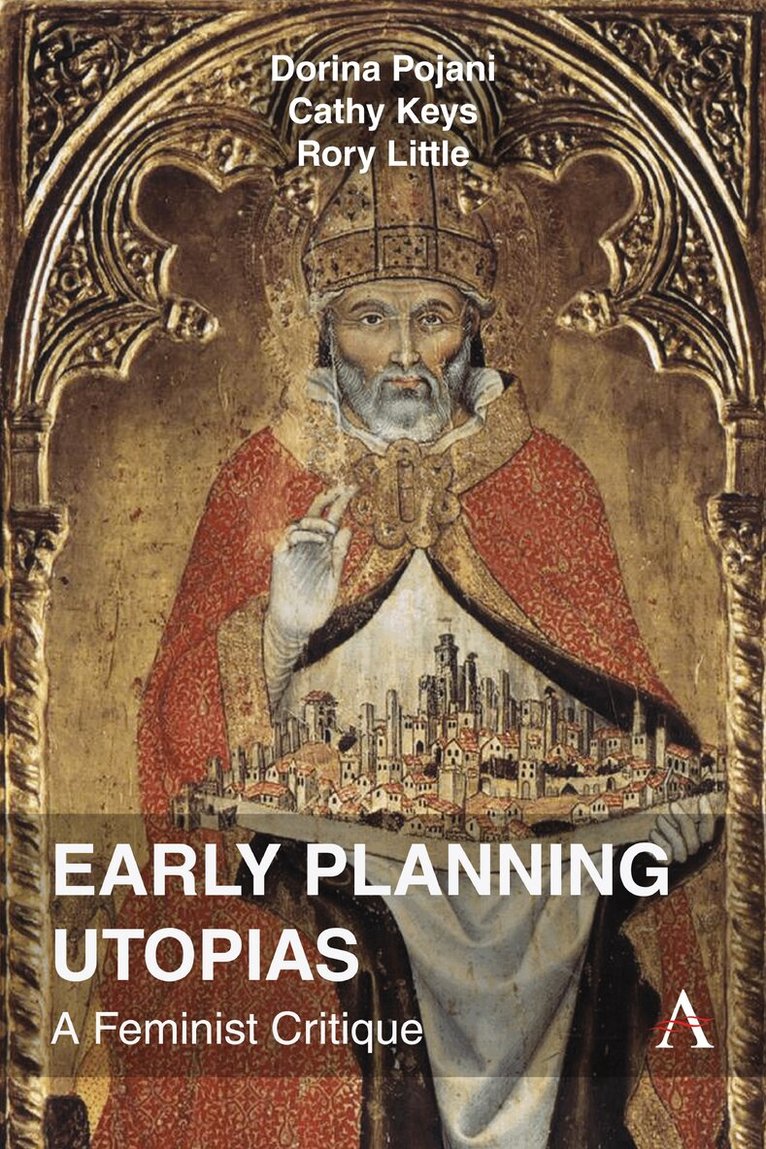
    Early Planning Utopias

    A Feminist Critique

    AvDorina Pojani,Cathy Keys

    Häftad, Engelska, 2025

    356 kr

    Beställningsvara. Skickas inom 5-8 vardagar. Fri frakt över 249 kr.

    Beskrivning

    There is little doubt that urban planning has historically failed women. To liberate the profession from patriarchal influences, it is necessary to revisit the preconceptions that shaped early efforts to design new cities or improve existing ones. This book critiques the work of twenty male planning luminaries who proposed urban models, interventions, and approaches on both sides of the North Atlantic during the Second Industrial Revolution. These early visions, often presented as emancipatory or utopian, set European and North American cities (as well as their colonial counterparts) on an inexorable masculinist path. The grand urban plans and projects of the late 19th and early 20th centuries were largely bankrolled by wealth extracted from colonial enterprises in Africa, Asia, and Latin America.A reverence for geometry, order, and standardization, alongside a monumental scale, reflected a hegemonic and monolithic vision of the city, with little tolerance for cultural or physical difference. Limitless urban growth and the rapid, effortless movement of people were valorised, and for the first time in history, roads became more important than homes. Many of these same planners, indifferent to cultural and physical differences, readily accepted the continuation of class divisions in cities. Comprehensive plans for both small and large settlements were hierarchical, with the wealthiest or most powerful occupying central positions of power. Functional segregation, later institutionalized as “zoning,” enforced spatial divisions between the public (male) and private (female) spheres. Even as the planning agenda prioritized “men’s issues” related to industry and commerce, domestic ideology was promoted during this period.The book also highlights the work of several female activists and reformers from the same era. Although these women rarely envisioned full-blown urban utopias or produced extensive writings on planning, they worked to improve built environments for all. Female reformers were more attuned to the lived experiences of city dwellers than male planners, architects, and engineers. While men focused on structures and infrastructure, women were concerned with the human condition. Rather than expanding or clearing out the existing urban fabric, women sought to restore it. Practically, women extended their reproductive duties from the home to the entire city, envisioning it as a collective living space where everyone shared responsibility for one another’s daily welfare. This book calls for a return to that planning philosophy, at a time when numerous techno utopias are being imagined and built, often backed by major private corporations or individual male billionaires.

    Produktinformation

    • Utgivningsdatum:2025-07-15
    • Mått:153 x 229 x 7 mm
    • Vikt:155 g
    • Format:Häftad
    • Språk:Engelska
    • Antal sidor:160
    • Förlag:Anthem Press
    • ISBN:9781839994524

    Utforska kategorier

    • Arkitekturhistoria inom Kultur
    • Genusvetenskap inom Samhälle och politik
    • Regional planering inom Naturvetenskap och teknik

    Mer om författaren

    Dorina Pojani is an Associate Professor of urban planning at The University of Queensland.Catherine Keys is a Senior Lecturer in architecture and a practicing artist.Rory Little is an urban planning student at The University of Queensland, Australia.

    Recensioner i media

    ‘Early Planning Utopias offers a timely feminist critique of foundational urban planning models that continue to shape our cities. Through meticulous analysis, the authors reveal how narrowly gendered and masculinist ideals of control, segregation, and monumentality were embedded in seemingly progressive visions. As we confront contemporary chal-lenges, this work provides valuable insights into creating more inclusive urban spaces.’ — Professor Ella Howard, Professor of History, Wentworth Institute of Technology, Boston, USA‘Through a feminist lens, this book is a decisive and timely call for progressive planners and the communities they serve to take action to disrupt the prospects of a tech-bro urban future. From a focus on redemptive places to feminist garden cities to communitarian models that reject hyper-capitalism, the authors offer careful planning alternatives that challenge the path dependency of cities that have “failed women”.’ — Professor Wendy Steele, Centre for Urban Re-search, RMIT University, Melbourne, Australia‘A useful critical summary and engagement with many of the male heroes of early planning theory and practice, high-lighting how their gender not only informed their visions but also limited the place women could then occupy in ideal and existing cities as well. A book to add to any comprehensive planning or urban studies course.’ — Professor Louise C. Johnson, Honorary Professor of Human Geography, Deakin University, Australia

    Innehållsförteckning

    • Figures; About the Authors; Acknowledgements; Introduction; Background; Types of Feminism; Selection Criteria; Analysis; The Utopian Visionaries; The Rational Functionalists; The Romantic Archaists; Synthesis; Central Themes in Masculine Early Utopias; Women’s Different Planning Preoccupations; Conclusion; References; Notes