• Fri frakt över 249 kr
  • •
  • Snabba leveranser
  • •
  • Billiga böcker
Kundservice

Du är på sajten för privatpersoner.

Företag, bibliotek eller offentlig verksamhet?

Du handlar på classic.bokus.com, där alla dina funktioner finns intakta.
Till classic.bokus.com
Bokus logotyp. Gå till startsidan.
  • Erbjudanden
  • Nyheter
  • Student
  • Topplistor
  • Barn & ungdom
  • Bokus Play
  • E-böcker
  • Pocketböcker
  • Spel & pussel

10% rabatt på allt med kod NYSTART10 →

Sidfot

Mina sidor

    Hjälp

    • Kundservice
    • Vanliga frågor och svar
    • Frakt och leverans
    • Retur vid ångerrätt
    • Reklamera vara
    • Betalning
    • Köpvillkor
    • Allmänna villkor
    • Information om webbplatsens tillgänglighet

    Om Bokus

    • Om oss
    • Pressrum
    • För studenter
    • För företag
    • För bibliotek och offentlig verksamhet
    • För leverantörer
    • Hållbarhet

    Populärt

    • Aktuella erbjudanden
    • Presentkort
    • Studentlitteratur
    • Nya böcker
    • Topplistor
    • Signerade böcker
    • Engelska böcker

    Inspiration

    • Boktips
    • BookTok
    • Populära bokserier
    • Barnbokskaraktärer
    • Populära författare
    Logotyp för Bokus
    Följ oss på Facebook (extern länk)Följ oss på Instagram (extern länk)Följ oss på YouTube (extern länk)Följ oss på TikTok (extern länk)
    bokus @ CookiesAnpassa cookiesIntegritetspolicyKöpvillkor
    Till Citymail hemsida (extern länk)Till Budbee hemsida (extern länk)Till Postnord hemsida (extern länk)Till Schenker hemsida (extern länk)Till Early Bird hemsida (extern länk)Till Walleys hemsida (extern länk)
    1. Samhälle och politik
    2. Samhälle och kultur
    3. Kultur och medier
    4. Referensverk och tvärvetenskap

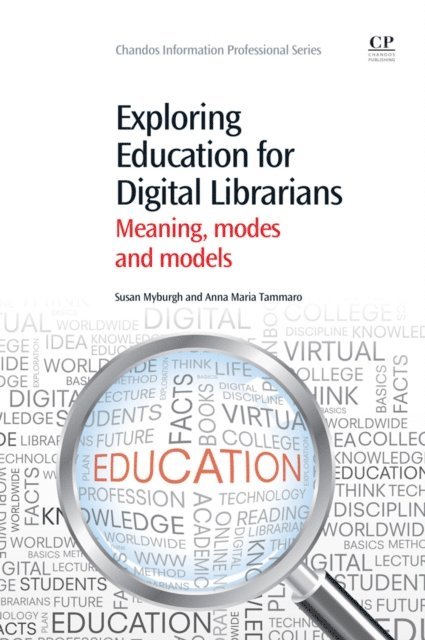
    Exploring Education for Digital Librarians

    Meaning, Modes and Models

    AvSue Myburgh,Anna Maria Tammaro

    Häftad, Engelska, 2013

    Del i serien Chandos Information Professional Series

    650 kr

    Beställningsvara. Skickas inom 10-15 vardagar. Fri frakt över 249 kr.

    Beskrivning

    Exploring Education for Digital Librarians provides a refreshing perspective on the discipline and profession of Library and Information Science (LIS), with a focus on preparing students for careers as librarians who can deal with present and future digital information environments. A re-examination of the knowledge base of the field, combined with a proposed theoretical structure for LIS, provide the basis for this work, which also examines competencies for practice as well as some of the international changes in the nature of higher education. The authors finally suggest a model that could be used internationally to educate librarians for their new roles and social responsibilities in a digitised, networked world.The twelve chapters of this book cover key issues in education for digital librarians, including: the necessity of regenerating the profession; current contexts; previous research on education for digital librarians; understanding the dimensions of the discipline and profession of librarianship, and the distinctions between them; the social purpose of librarianship as a profession and the theoretical framework which supports the practice of the profession; a brief analysis of curriculum design, pedagogies and teaching methods, and a glimpse of the proactive and important future role of librarianship in society.

    Produktinformation

    • Utgivningsdatum:2013-04-17
    • Vikt:580 g
    • Format:Häftad
    • Språk:Engelska
    • Serie:Chandos Information Professional Series
    • Förlag:Woodhead Publishing Ltd
    • ISBN:9781843346593

    Utforska kategorier

    • Referensverk och tvärvetenskap inom Samhälle och politik

    Mer om författaren

    Sue Myburgh is currently Program Director of two postgraduate programs – in Knowledge Management and Internet Communication Strategies - at the University of South Australia. She has been involved in many aspects of the theory and practice of Information Management internationally over the last two decades. Amongst various honours received, she was a Fulbright Scholar and has been awarded the Britt Literary Award by the Association of Records Managers and Administrators International. Anna Maria Tammaro is currently Professor at the University of Parma, Italy. She is also Local Co-ordinator of the International Master’s in Digital Library Learning (DILL), Chair of IFLA Division IV, and an IFLA Governing Board member. Anna Maria has extensive experience in academic librarianship, having been the Librarian at the University of Florence and the University of Bologna, Italy.

    Recensioner i media

    "The authors position librarians as information workers in the first few chapters and introduce the concept of ‘digital libraries’ and ‘digital librarians’ as change agents (in the context of knowledge creation and knowledge sharing, rather than simply knowledge capture and containment)."--The Australian Library Journal, Vol. 63, No. 1, 2014

    Innehållsförteckning

    • DedicationList of figures and tablesList of abbreviationsPrefaceAbout the authorsAcknowledgementsChapter 1: Regeneration of the second oldest professionAbstract:IntroductionFrom books to ideasDLs as socio-technical systemsEducation for the information professionsWhat digital libraries can beWhat digital librarians could doInterpersonal activityDecoders and interventionistsDigital knowledge creation and critical thinkingInterdisciplinarityConclusionsChapter 2: The influence of the current contextAbstract:ContextAbbott and the professional contextWhat is a ‘profession’?Context 1: the information societyContext 2: context of professionsContext 3: ICTsExplaining ideologiesConclusionsChapter 3: Previous research on education for DLsAbstract:The perplexed state of education for information workTechnology and educationDL courses currently offeredDL programmes in LIS and CSConclusionsChapter 4: First things fourthAbstract:Unravelling long-standing ambiguitiesWhat do librarians do?Technical tasksPurpose and processesHegemonySelectionAccessOrganisation of information resourcesThe social role of librarians and abstruse hegemonyChapter 5: Purposeful digital librariansAbstract:The activities of the digital librarianLIS education and ideologiesChapter 6: No theory, no discipline = no professionAbstract:Notes towards solving these dilemmasTheory and praxisDistinction between theory and praxisDisciplinesNeutrality of scienceThe information metacommunityMultidisciplinary metacommunities and their metatheoriesDigital library research and education is particularly inter- and multidisciplinaryFacilitating interdisciplinary workChapter 7: Constructing a theoretical frameworkAbstract:The purpose of a theoretical frameworkSteps of theory constructionStep 1: clarification of the axiological position of the researcher(s)Step 2: nomos, or ‘existing situation’Step 3: existing theories examined and tested teleologicallyStep 4: lexical register and conceptual identificationStep 5: development of alternative conceptual models in an ontologyStep 6: taxonomy of information professionsStep 7: model tested against purpose/teleological assumptionsConclusionsChapter 8: Designing curriculaAbstract:Changes in LIS educationDidacticsEpistemological approaches to curriculum designCreative industriesCultural institutionsInterdisciplinarityChapter 9: Aims and outcomesAbstract:Curriculum aimsProfessional philosophy and phronesisResults and effects of the curriculumCompetencies and skillsGraduate qualitiesInternational equivalencesInternationalisationChapter 10: Pedagogies and teaching methodsAbstract:Teaching and learningUse of ICTs in educationSocial responsibilities of higher educationEpistemological frameworks for learningSocial constructivismSocial constructionismConnectivismThree common modes of teaching/learningCritical pedagogy as heutagogicalThe Socratic methodOnline learning and heutagogyEducation, culture and internationalisationDigital and critical literacy, critical thinkingChapter 11: Content and structureAbstract:Substance and speculationTheoretical frameworkHuman information behaviourKnowledge creationRepresentation of information: language and linguisticsEvaluation of information: interpretation, meaning and critical information literacyEvaluating information economicallyTechnology and other ‘stuff’Level of programmeStructureMetacommunityCoreChapter 12: A bright futureAbstract:The past and the futureLibraries and freedom of thoughtDemocracy and social roleMetacommunity and agreementChanged service modelEvaluation of the social role of librariansNew profileResearch for the futureReferencesIndex