• Fri frakt över 249 kr
  • •
  • Snabba leveranser
  • •
  • Billiga böcker
Kundservice

Du är på sajten för privatpersoner.

Företag, bibliotek eller offentlig verksamhet?

Du handlar på classic.bokus.com, där alla dina funktioner finns intakta.
Till classic.bokus.com
Bokus logotyp. Gå till startsidan.
  • Erbjudanden
  • Nyheter
  • Student
  • Topplistor
  • Barn & ungdom
  • Bokus Play
  • E-böcker
  • Pocketböcker
  • Spel & pussel

10% rabatt på allt med kod: NYSTART10 →

Sidfot

Mina sidor

    Hjälp

    • Kundservice
    • Vanliga frågor och svar
    • Frakt och leverans
    • Retur vid ångerrätt
    • Reklamera vara
    • Betalning
    • Köpvillkor
    • Allmänna villkor
    • Information om webbplatsens tillgänglighet

    Om Bokus

    • Om oss
    • Pressrum
    • För studenter
    • För företag
    • För bibliotek och offentlig verksamhet
    • För leverantörer
    • Hållbarhet

    Populärt

    • Aktuella erbjudanden
    • Presentkort
    • Studentlitteratur
    • Nya böcker
    • Topplistor
    • Signerade böcker
    • Engelska böcker

    Inspiration

    • Boktips
    • BookTok
    • Populära bokserier
    • Barnbokskaraktärer
    • Populära författare
    Logotyp för Bokus
    Följ oss på Facebook (extern länk)Följ oss på Instagram (extern länk)Följ oss på YouTube (extern länk)Följ oss på TikTok (extern länk)
    bokus @ CookiesAnpassa cookiesIntegritetspolicyKöpvillkor
    Till Citymail hemsida (extern länk)Till Budbee hemsida (extern länk)Till Postnord hemsida (extern länk)Till Schenker hemsida (extern länk)Till Early Bird hemsida (extern länk)Till Walleys hemsida (extern länk)
    1. Kultur
    2. Scenkonst och film
    3. Film

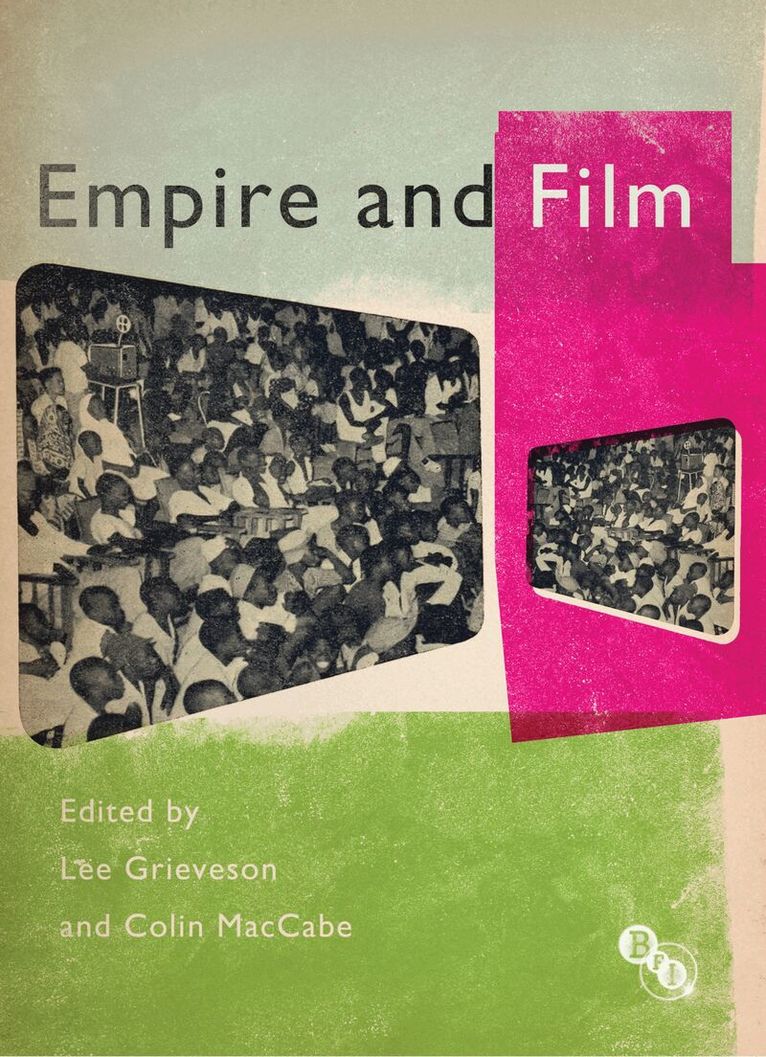
    Empire and Film

    AvLee Grieveson,Colin MacCabe

    Häftad, Engelska, 2011

    Del i serien Cultural Histories of Cinema

    500 kr

    Beställningsvara. Skickas inom 5-8 vardagar. Fri frakt över 249 kr.

    Beskrivning

    'This important new volume reconstructs the forms of production, distribution and exhibition of films made in and about the colonies. It then ties them to wider theoretical issues about film and liberalism, spectacle and political economy, representation and rule. The result is one of the first volumes to examine how imperial rule is intimately tied to the emergence of documentary as a form and, indeed, how the history of cinema is at the same time the history of Empire.'BRIAN LARKIN, Barnard College'This superb collection of new scholarship shows how cinema both communicated and aided the imperialist agenda throughout the twentieth century. In doing so, it shows film can be understood as one of the tools of empire, as much as the technology of weaponry or modes of administration: a means of education and indoctrination in the colonies and at home.'TOM GUNNING, University of ChicagoAt its height in 1919, the British Empire claimed 58 countries, 400 million subjects, and 14 million square miles of ground. Empire and Film brings together leading international scholars to examine the integral role cinema played in the control, organisation, and governance of this diverse geopolitical space. The essays reveal the complex interplay between the political and economic control essential to imperialism and the emergence and development of cinema in the late nineteenth and first half of the twentieth century.Contributors address how the production, distribution and exhibition of film were utilised by state and industrial and philanthropic institutions to shape the subject positions of coloniser and colonised; to demarcate between 'civilised' and 'primitive' and codify difference; and to foster a political economy of imperialism that was predicated on distinctions between core and periphery. The generic forms of colonial cinema were, consequently, varied: travelogues mapped colonial spaces; actuality films re-presented spectacles of royal authority and imperial conquest and conflict; home movies rendered colonial self-representation; state-financed newsreels and documentaries fostered political and economic control and the 'education' of British and colonial subjects; philanthropic and industrial organisations sponsored films to expand Western models of capitalism; British and American film companies made films of imperial adventure. These films circulated widely in Britain and the empire, and were sustained through the establishment of imperial networks of distribution and exhibition, including in particular innovative mobile exhibition circuits and non-theatrical spaces like schools, museums and civic centres. Empire and Film is a significant revision to the historical and conceptual frameworks of British cinema history, and is a major contribution to the history of cinema as a global form that emerged amid, and in dialogue with, the global flows of imperialism. The book is produced in conjunction with a major website housing freely available digitised archival films and materials relating to British colonial cinema, www.colonialfilm.org.uk, and a companion volume entitled Film and the End of Empire.

    Produktinformation

    • Utgivningsdatum:2011-10-18
    • Mått:172 x 234 x 20 mm
    • Vikt:640 g
    • Format:Häftad
    • Språk:Engelska
    • Serie:Cultural Histories of Cinema
    • Antal sidor:304
    • Förlag:Bloomsbury Publishing PLC
    • ISBN:9781844574216

    Utforska kategorier

    • Film inom Kultur
    • Europas historia inom Historia och arkeologi
    • Socialhistoria och kulturhistoria inom Historia och arkeologi

    Mer om författaren

    LEE GRIEVESON is Director of Film Studies at University College London. COLIN MACCABE is Distinguished Professor of English and Film at the University of Pittsburgh and Associate Director of the London Consortium.

    Innehållsförteckning

    • Introduction: 'To take ship to India to see a naked man spearing fish in blue water': Watching Films to Mourn the End of Empire; C.MacCabe.- PART I: EARLY CINEMATIC ENCOUNTERS WITH EMPIRE.- 'The Captains and the Kings Depart': Imperial Departure and Arrival in Early Cinema; I.Christie.- 'Sons of our Empire': Shifting Ideas of 'Race' and the Cinematic Representation of Imperial Troops in the First World War; T.Haggith and R.Smith.- American Philanthropy and Colonial Filmmaking – the Rockefeller Foundation, the Carnegie Corporation, and the Birth of Colonial Cinema; J.Burns.- PART II: THE STATE AND THE ORIGINS OF DOCUMENTARY.- The Cinema and the (Common)Wealth of Nations; L.Grieveson.- Exhibiting Africa: British Instructional Films and The Empire Series (1925-1928); T.Rice.- Imperialism and Internationalism: The British Documentary Movement and the Legacy of the Empire Marketing Board; S.Anthony.- PART III: COLONIALISM AND THE REPRESENTATION OF SPACE.- Representing Connection: A Multimedia Approach to Colonial Film, 1918-1939; D.Trotter.- An 'Accurate Imagination': Place, Map and Archive as Spatial Objects of Film History; P.Jaikumar.- Domesticating Empire in the 1930s: Metropole, Colony, Family; J.Codell.- PART IV: AFRICAN EXPERIMENTS.- The Bantu Educational Kinema Experiment and the Political Economy of Community Development; A.Windel.- Colonialism, Visuality and the Cinema: Revisiting the Bantu Educational Kinema Experiment; A.Sanago.- 'Of Great Use at Meetings: Film-Making Principles of the London Missionary Society'; F.Gooding.- Paul Robeson and the Cinema of Empire; C.Musser.