Cultural Histories of Cinema – serie
Visar alla böcker i serien Cultural Histories of Cinema. Handla med fri frakt och snabb leverans.
12 produkter
12 produkter
1 547 kr
Skickas inom 7-10 vardagar
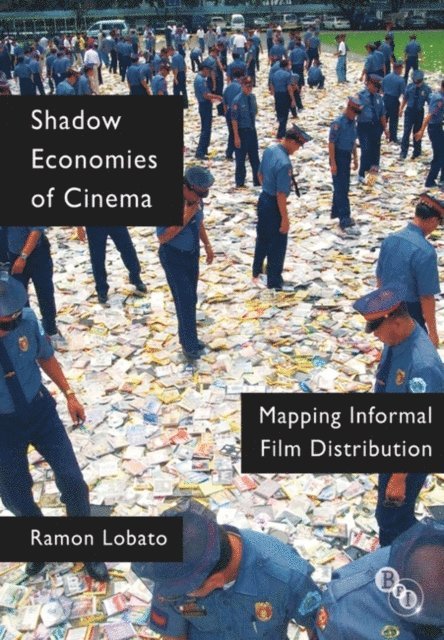
How do people access movies today? What are the most popular and powerful channels for media distribution on a global scale? How are film industries changing in the face of media convergence and digitisation? To answer questions such as these, argues Ramon Lobato, we must shift our gaze away from the legal film business and toward cinema's shadow economies. All around the world, films are bought from roadside stalls, local markets, and grocery stores; they are illegally downloaded and streamed; they are watched in makeshift video clubs, on street corners, and in restaurants, shops and bars. International film culture in its actually-existing forms is a messy affair, and it relies to a great extent on black and grey media markets. Examining the industrial dynamics of these subterranean film networks across a number of different sites – from Los Angeles to Lagos, Melbourne to Mexico City – this book shows how they constitute a central rather than marginal part of audiovisual culture and commerce. Combining film industry analysis with cultural theory, Shadow Economies of Cinema opens up a new area of inquiry for cinema studies, putting industry research into dialogue with wider debates about economic informality and commodity circulation. Written in an accessible style, this book offers an original 'bottom-up' perspective on the global cinema industry for researchers and students in film studies, cultural studies, and media and communications.
482 kr
Skickas inom 7-10 vardagar
'This important new volume reconstructs the forms of production, distribution and exhibition of films made in and about the colonies. It then ties them to wider theoretical issues about film and liberalism, spectacle and political economy, representation and rule. The result is one of the first volumes to examine how imperial rule is intimately tied to the emergence of documentary as a form and, indeed, how the history of cinema is at the same time the history of Empire.'BRIAN LARKIN, Barnard College'This superb collection of new scholarship shows how cinema both communicated and aided the imperialist agenda throughout the twentieth century. In doing so, it shows film can be understood as one of the tools of empire, as much as the technology of weaponry or modes of administration: a means of education and indoctrination in the colonies and at home.'TOM GUNNING, University of ChicagoAt its height in 1919, the British Empire claimed 58 countries, 400 million subjects, and 14 million square miles of ground. Empire and Film brings together leading international scholars to examine the integral role cinema played in the control, organisation, and governance of this diverse geopolitical space. The essays reveal the complex interplay between the political and economic control essential to imperialism and the emergence and development of cinema in the late nineteenth and first half of the twentieth century.Contributors address how the production, distribution and exhibition of film were utilised by state and industrial and philanthropic institutions to shape the subject positions of coloniser and colonised; to demarcate between 'civilised' and 'primitive' and codify difference; and to foster a political economy of imperialism that was predicated on distinctions between core and periphery. The generic forms of colonial cinema were, consequently, varied: travelogues mapped colonial spaces; actuality films re-presented spectacles of royal authority and imperial conquest and conflict; home movies rendered colonial self-representation; state-financed newsreels and documentaries fostered political and economic control and the 'education' of British and colonial subjects; philanthropic and industrial organisations sponsored films to expand Western models of capitalism; British and American film companies made films of imperial adventure. These films circulated widely in Britain and the empire, and were sustained through the establishment of imperial networks of distribution and exhibition, including in particular innovative mobile exhibition circuits and non-theatrical spaces like schools, museums and civic centres. Empire and Film is a significant revision to the historical and conceptual frameworks of British cinema history, and is a major contribution to the history of cinema as a global form that emerged amid, and in dialogue with, the global flows of imperialism. The book is produced in conjunction with a major website housing freely available digitised archival films and materials relating to British colonial cinema, www.colonialfilm.org.uk, and a companion volume entitled Film and the End of Empire.
489 kr
Skickas inom 10-15 vardagar
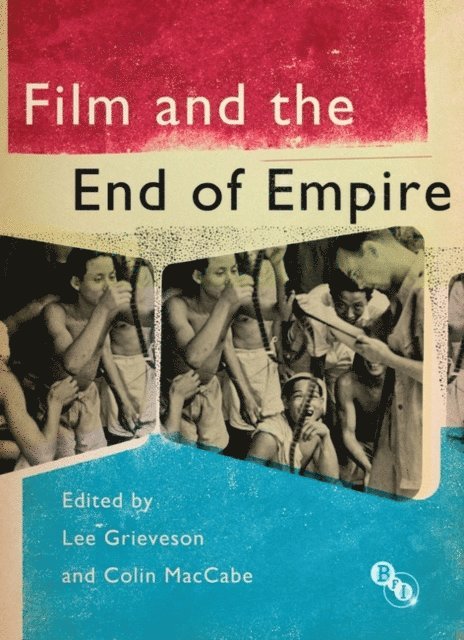
In these two volumes of original essays, scholars from around the world address the history of British colonial cinema stretching from the emergence of cinema at the height of imperialism, to moments of decolonization andthe ending of formal imperialism in the post-Second World War.
504 kr
Skickas inom 10-15 vardagar
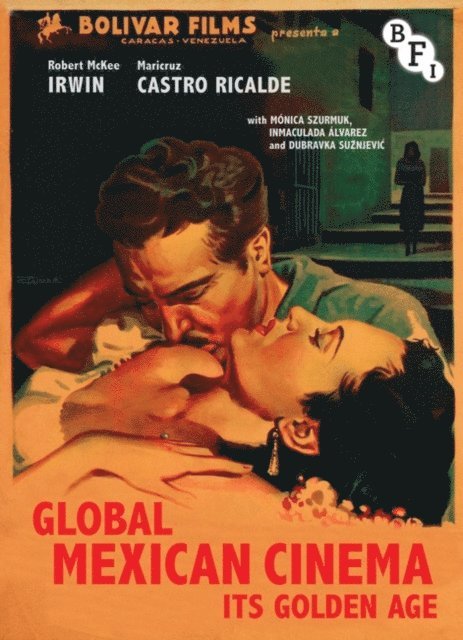
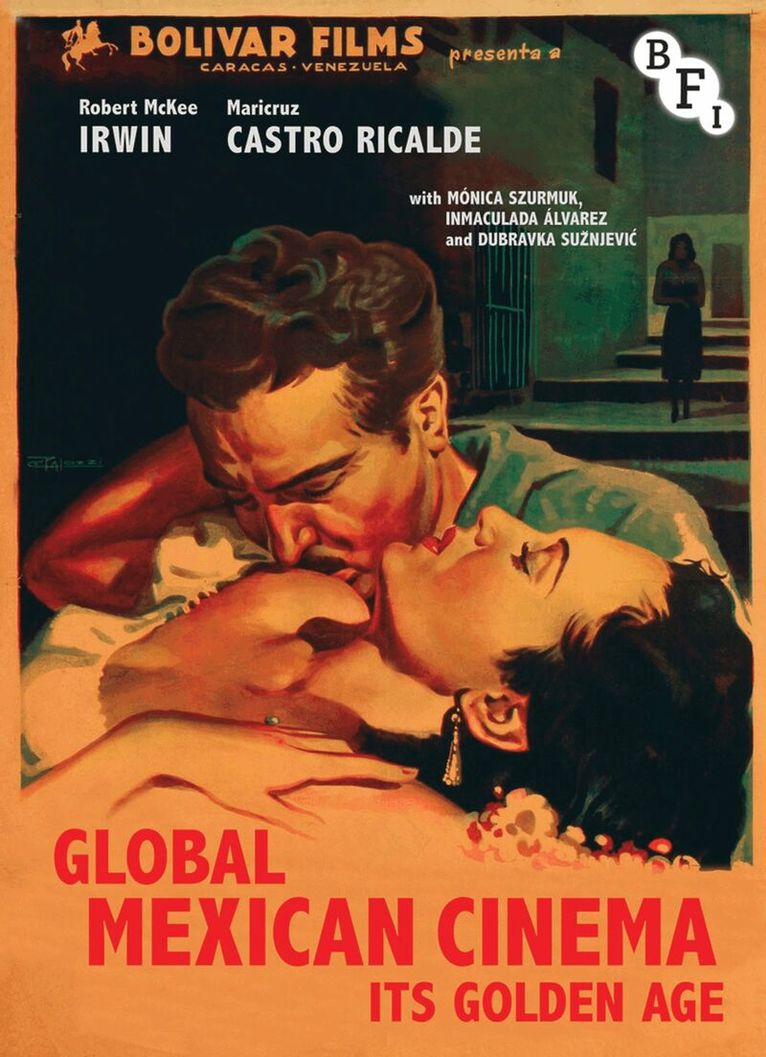
The golden age of Mexican cinema, which spanned the 1930s through to the 1950s, saw Mexico's film industry become one ofthe most productive in the world, exercising a decisive influence on national culture and identity.In the first major study of the global reception and impact of Mexican Golden Age cinema, this book captures the key aspects of its international success, from its role in forming a nostalgic cultural landscape for Mexican emigrants working in the United States, to its economic and cultural influence on Latin America, Spain and Yugoslavia. Challenging existing perceptions, the authors reveal how its film industry helped establish Mexico as a long standing centre of cultural influence for the Spanish-speaking world and beyond.
497 kr
Skickas inom 7-10 vardagar
This landmark collection of essays considers the global legacy of John Grierson, the father of British documentary. Featuring the work of leading scholars from around the world, The Grierson Effect explores the impact of Grierson's ideas about documentary and educational film in a wide range of cultural and national contexts – from Russia and Scandinavia, to Latin America, South Africa and New Zealand.In reconsidering Grierson's international infl uence, this major new study emphasises the material conditions of the production and circulation of documentary cinema, foregrounds core issues in documentary studies, and opens up expanded perspectives on transnational cinema cultures and histories.
1 547 kr
Skickas inom 7-10 vardagar
This landmark collection of essays considers the global legacy of John Grierson, the father of British documentary. Featuring the work of leading scholars from around the world, The Grierson Effect explores the impact of Grierson's ideas about documentary and educational film in a wide range of cultural and national contexts – from Russia and Scandinavia, to Latin America, South Africa and New Zealand.In reconsidering Grierson's international infl uence, this major new study emphasises the material conditions of the production and circulation of documentary cinema, foregrounds core issues in documentary studies, and opens up expanded perspectives on transnational cinema cultures and histories.
489 kr
Skickas inom 10-15 vardagar
Focusing on early cinema's relationship with the pictorial arts, this pioneering study explores how cinema's emergence was grounded in theories of picture composition, craft and arts education – from magic lantern experiments in 1890s New York through to early Hollywood feature films in the 1920s.Challenging received notions that the advent of cinema was a celebration of mechanisation and a radical rejection of nineteenth-century traditions of representation, Kaveh Askari instead emphasises the overlap between craft traditions and modernity in early film.Opening up valuable new perspectives on the history of film as art, Askari links American silent cinema with the practice of teaching the public how to appreciate fine art; charts its entrance into arts education via art schools and university film courses;shows how concepts of artistic production entered films through a material interest in the studio; and examines the way in which Maurice Tourneur and Rex Ingram made early art films by shaping an image of the film director around the idea of the fine artist.
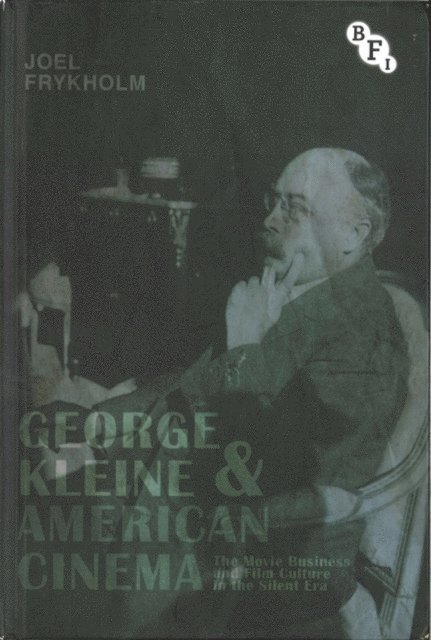
George Kleine and American Cinema
The Movie Business and Film Culture in the Silent Era
Inbunden, Engelska, 2015
1 355 kr
Skickas inom 10-15 vardagar
George Kleine was a New York City optician who moved to Chicago in 1893 to set up an optical store. In 1896 he branched out and began selling motion picture equipment and films. Within a few years he becameAmerica's largest film distributor and a pivotal figure in the movie business.In chronicling the career of this motion picture pioneer – including his rapid rise to fame and fortune, but also his gradual downfall after 1915 as the era of Hollywood began – Joel Frykholm provides an in-depth account of the emergence of the motion picture business in the United States and its development throughout the silent era. Through the lens of Kleine's fascinating career, this book explores how motion pictures gradually transformed from a novelty into an economic and cultural institution central to both American life and an increasingly globalised culture of mass entertainment.
433 kr
Skickas inom 10-15 vardagar
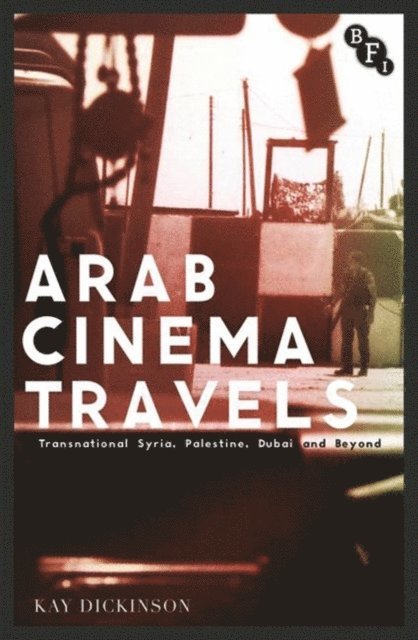
Exploring the impact of travel on Arab cinema, Kay Dickinson reveals how the cinemas of Syria, Palestine and Dubai have been shaped by the history and politics of international circulation. This compelling book offers fresh insights into film, mobility and the Middle East.
489 kr
Skickas inom 10-15 vardagar
The past four decades have seen the Spanish film industry rise from isolation in the 1970s to international recognition within European and World Cinema today. Exploring the cultural and political imperatives that governed this success, this book shows how Spanish film culture was deliberately and strategically shaped into its current form.
1 355 kr
Skickas inom 10-15 vardagar
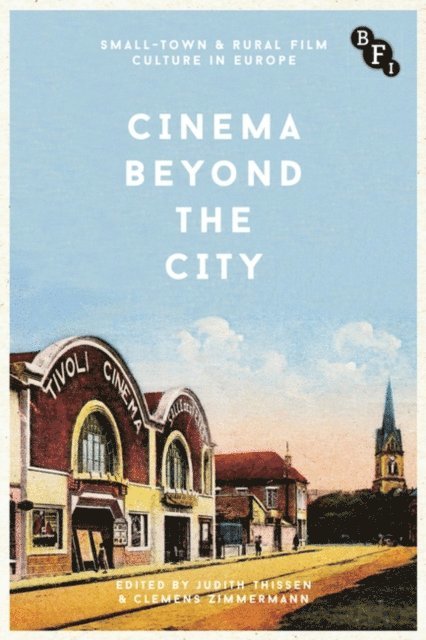
Cinema is often perceived as a metropolitan medium – an entertainment product of the big city and for the big city. Yet film exhibitors have been bringing moving pictures to towns and villages since the early days of itinerant shows. This volume presents for the first time an exploration of the social, cultural and economic dynamics of film culture in the European countryside. Spanning more than a century of film exhibition from the early twentieth-century to the present day, Cinema Beyond the City examines the role that movie-going has played in small-town and rural communities across Europe. It documents an amazing diversity of sites and situations that are relevant for understanding historical and current patterns in film consumption. In chapters written by leading scholars and young academics, interdisciplinary research is used to address key questions about access, economic viability, audience behaviour, film programming and the cultural flows between cities and hinterlands. With its wide range of regional studies and innovative methodological approaches, the collection will be of interest not only to film historians, but also to scholars in the fields of urban history, rural studies and cultural geography.
455 kr
Skickas inom 7-10 vardagar
While moving image advertising has been around us, everywhere, for at least a century, the topic has tended to be overlooked by cinema studies. This far-reaching new collection makes an incisive contribution to a new field of study, by exploring the history, theory and practice of moving image advertising, and emphasising the dynamic and lasting relationships between print, film, broadcasting and advertising cultures.In chapters written by an international ensemble of leading scholars and archivists, the book covers a variety of materials from pre-show advertising films to lantern slides and sponsored 'educations'. With case studies of advertising campaigns and archival collections from a range of different countries, and giving consideration to the problems that advertising materials pose for preservation and presentation, this rich and expansive text testifies to the need for a new approach to this burgeoning subject that looks beyond the mere study of promotional film.