• Fri frakt över 249 kr
  • •
  • Snabba leveranser
  • •
  • Billiga böcker
Kundservice

Du är på sajten för privatpersoner.

Företag, bibliotek eller offentlig verksamhet?

Du handlar på classic.bokus.com, där alla dina funktioner finns intakta.
Till classic.bokus.com
Bokus logotyp. Gå till startsidan.
  • Erbjudanden
  • Nyheter
  • Student
  • Topplistor
  • Barn & ungdom
  • Bokus Play
  • E-böcker
  • Pocketböcker
  • Spel & pussel

10% rabatt på allt med kod: NYSTART10 →

Sidfot

Mina sidor

    Hjälp

    • Kundservice
    • Vanliga frågor och svar
    • Frakt och leverans
    • Retur vid ångerrätt
    • Reklamera vara
    • Betalning
    • Köpvillkor
    • Allmänna villkor
    • Information om webbplatsens tillgänglighet

    Om Bokus

    • Om oss
    • Pressrum
    • För studenter
    • För företag
    • För bibliotek och offentlig verksamhet
    • För leverantörer
    • Hållbarhet

    Populärt

    • Aktuella erbjudanden
    • Presentkort
    • Studentlitteratur
    • Nya böcker
    • Topplistor
    • Signerade böcker
    • Engelska böcker

    Inspiration

    • Boktips
    • BookTok
    • Populära bokserier
    • Barnbokskaraktärer
    • Populära författare
    Logotyp för Bokus
    Följ oss på Facebook (extern länk)Följ oss på Instagram (extern länk)Följ oss på YouTube (extern länk)Följ oss på TikTok (extern länk)
    bokus @ CookiesAnpassa cookiesIntegritetspolicyKöpvillkor
    Till Citymail hemsida (extern länk)Till Budbee hemsida (extern länk)Till Postnord hemsida (extern länk)Till Schenker hemsida (extern länk)Till Early Bird hemsida (extern länk)Till Walleys hemsida (extern länk)
    1. Historia och arkeologi
    2. Historia
    3. Historia: särskilda händelser och ämnen
    4. Socialhistoria och kulturhistoria

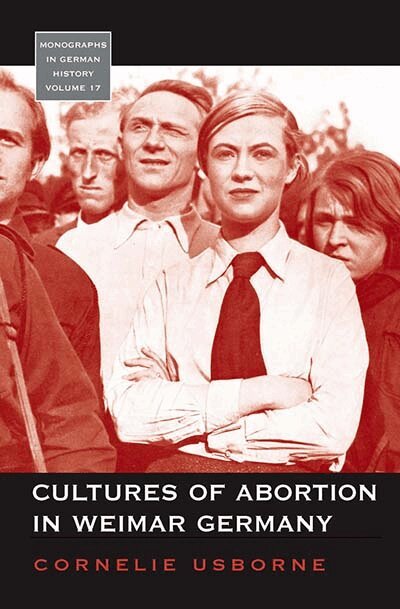
    Cultures of Abortion in Weimar Germany

    AvCornelie Usborne

    Inbunden, Engelska, 2007

    Del i serien Monographs in German History

    1 916 kr

    Beställningsvara. Skickas inom 5-8 vardagar. Fri frakt över 249 kr.

    Fler format och utgåvor

    Häftad

    453 kr

    E-bok

    292 kr

    Beskrivning

    Abortion in the Weimar Republic is a compelling subject since it provoked public debates and campaigns of an intensity rarely matched elsewhere. It proved so explosive because populationist, ecclesiastical and political concerns were heightened by cultural anxieties of a modernity in crisis. Based on an exceptionally rich source material (e.g., criminal court cases, doctors’ case books, personal diaries, feature films, plays and literary works), this study explores different attitudes and experiences of those women who sought to terminate an unwanted pregnancy and those who helped or hindered them. It analyzes the dichotomy between medical theory and practice, and questions common assumptions, i.e. that abortion was “a necessary evil,” which needed strict regulation and medical control; or that all back-street abortions were dangerous and bad. Above all, the book reveals women’s own voices, frequently contradictory and ambiguous: having internalized medical ideas they often also adhered to older notions of reproduction which opposed scientific approaches.

    Produktinformation

    • Utgivningsdatum:2007-12-01
    • Mått:152 x 229 x 21 mm
    • Vikt:594 g
    • Format:Inbunden
    • Språk:Engelska
    • Serie:Monographs in German History
    • Antal sidor:296
    • Förlag:Berghahn Books
    • ISBN:9781845453893

    Utforska kategorier

    • Socialhistoria och kulturhistoria inom Historia och arkeologi
    • Europas historia inom Historia och arkeologi
    • Etiska frågor och debatter inom Samhälle och politik

    Mer om författaren

    Cornelie Usborne is Professor emerita of History at Roehampton University and Senior Research Fellow, Institute of Historical Research, London.  She has published widely on the history of women, reproduction, birth control, sexuality and medicine in Modern Germany. She is the author of The Politics of the Body in Weimar Germany. Women¹s Reproductive Rights and Duties (London: Macmillan and Ann Arbor: University of Michigan Press, 1992) and she edited, amongst others, `Picturing the Past', the special issue of the journal  Cultural  and Social History (with Charlotte Behr and Sabine Wieber,  December 2010);   Cultural Approaches to the History of Medicine. Mediating Medicine in Early Modern and Modern Europe (with Willem de Blécourt, London: Palgrave Macmillan, 2004) and Gender and Crime in Modern Europe (edited with Margaret L.Arnot, London: UCL Press, 1999).

    Recensioner i media

    “[The author’s] careful analysis of multiple discourses, makes clear how innovative the debate over abortion in Weimar Germany was. The popular cultural evidence and the medical discourse and the criminal law cases tell us somewhat different things about how abortion was understood at this historical moment; Usborne's analysis and juxtaposition of these various meanings is masterful and persuasive.”  ·  H-German“…The author offers a shift of paradigm in the history of abortion in Weimar Germany by writing a history of everyday life from the point of view of lower-class women as well as revealing the professional interests of physicians. Even committed sex reformers like the Munich gynaecologist Adams Lehmann appear ambivalent since she sterilised her abortion patients on eugenic grounds without consent.”  ·  Historische Zeitschrift"...a richly textured analysis of medical and lay abortion discourses and practices, artistic representations of the procedure, and of women's, particularly lower-class women's, own perceptions and experiences of abortion. Skilfully using an impressive variety of sources, Usborne provides a meticulous, insightful, and lively study that questions some of the continuing assumptions about the Weimar Republic.and provides an exciting example of how to approach the history of the body."  ·  Medical History“Based on a careful reading of court files, this investigation reveals a rich and often ambiguous repertoire of perceptions and descriptions…Cultures of Abortion is not only the seminal study on one of the most contested and high-profile issues in Weimar politics, it is also a superb demonstration of how ‘gender’ can be used to complicate well established historical narratives.”  ·  German History“With inspiration from Alltagsgeschichte(history of the everyday) and body history, Usborne presents a fascinating collection of stories about how abortion was practiced in both rural and urban, medicalized and folk-healing contexts...[It] performs several valuable services. It brings us far closer to the actual experiences of Weimar women who underwent abortions than we have ever been before, it usefully questions our tendency to respect complex medical procedures over simpler but often just as effective techniques, and it provides considerable evidence that the practice and social acceptance of abortion were far more widespread in this period than previously appreciated."  ·  Bulletin of the History of Medicine“Historically, abortion was a key coordinate of sexual lives and heteroerotic experiences. Placing those lives and experiences into meaningful engagement with abortion history remains a daunting but vital challenge for its historians, one to which Usborne’s innovative study makes a wonderful contribution.”  ·  Cultural and Social History“This revealing study teases out the various ways that official discourses often clashed with women‚s everyday experiences and attitudes towards abortion…Overall, this monograph is an important addition for any scholar interested in abortion, the body, medical discourses, gender and modern Germany.”  ·  H-Soz-u-Kult“Usborne provides a vivid picture not only of...individuals, but of the communities that they lived in and the social networks that facilitated their relationships and contacts. Many of her conclusions are fascinating...[a] compelling book.”  ·  German Studies Review“The book includes introductory and concluding chapters that effectively place the story in the historiography of modern Germany and of modern abortion and, more broadly, the female body. Usborne’s monograph contains much of worth and interest for scholars and students of modern Germany, gender relations, sexuality, medicine, and, certainly, abortion.”  ·  American Historical Review

    Innehållsförteckning

    • List of PlatesPrefaceChapter 1. Towards a Cultural History of AbortionHistorical perspectivesCultures of abortion in Weimar GermanyChapter 2. Cultural Representation: Abortion on Stage, Screen and in FictionAbortion in the moviesThe novel Gilgi and the female reader and spectatorSocialist plays and novelsAbortion pathologizedChapter 3. Medical Termination of Pregnancy: Theory and PracticeThe case of Dr HartmannAbortion in the medical discourseDivided opinion within the medical professionMedical blunders and legal practiceThe case of Dr Hope Bridges Adams LehmannFinancial considerationsMedical attitude and medical powerWomen’s experienceChapter 4. Abortion in the Marketplace: Lay Practitioners and Doctors CompeteThe anti-quackery campaignSelf-induced abortionsLay abortionistsGender and the abortionistThe careers of ‘wise women’The safety record of quack abortionistsMethods and moneyClass differences and shared cultureChapter 5. Women’s Own Voices: Female Perceptions of AbortionThe construction of the criminal in abortion trialsThe experience of abortion‘Blocked menses’ (Blutstockung) as a popular lay conceptAdvertising abortifacientsWomen’s sensory perceptionsChapter 6. Abortion as an Everyday Experience in Village Life: A Case Study from HesseRural communities in declineFemale communication networksReproductive EigensinnRebellious women and menRelations between the sexesThe career of a successful abortionistDenunciationConclusionsChapter 7. Abortion in Early Twentieth-century Germany: Continuity and ChangeGender roles and gender relationsThe blurring of boundariesContinuity and changeAbortion in Nazi GermanyContinuity with Imperial GermanyAbbreviationsNotesBibliographyIndex