• Fri frakt över 249 kr
  • •
  • Snabba leveranser
  • •
  • Billiga böcker
Kundservice

Du är på sajten för privatpersoner.

Företag, bibliotek eller offentlig verksamhet?

Du handlar på classic.bokus.com, där alla dina funktioner finns intakta.
Till classic.bokus.com
Bokus logotyp. Gå till startsidan.
  • Erbjudanden
  • Nyheter
  • Student
  • Topplistor
  • Barn & ungdom
  • Bokus Play
  • E-böcker
  • Pocketböcker
  • Spel & pussel

Må bättre, för mindre! Upp till 50% rabatt på hälsoböcker

Sidfot

Mina sidor

    Hjälp

    • Kundservice
    • Vanliga frågor och svar
    • Frakt och leverans
    • Retur vid ångerrätt
    • Reklamera vara
    • Betalning
    • Köpvillkor
    • Allmänna villkor
    • Information om webbplatsens tillgänglighet

    Om Bokus

    • Om oss
    • Pressrum
    • För studenter
    • För företag
    • För bibliotek och offentlig verksamhet
    • För leverantörer
    • Hållbarhet

    Populärt

    • Aktuella erbjudanden
    • Presentkort
    • Studentlitteratur
    • Nya böcker
    • Topplistor
    • Signerade böcker
    • Engelska böcker

    Inspiration

    • Boktips
    • BookTok
    • Populära bokserier
    • Barnbokskaraktärer
    • Populära författare
    Logotyp för Bokus
    Följ oss på Facebook (extern länk)Följ oss på Instagram (extern länk)Följ oss på YouTube (extern länk)Följ oss på TikTok (extern länk)
    bokus @ CookiesAnpassa cookiesIntegritetspolicyKöpvillkor
    Till Citymail hemsida (extern länk)Till Budbee hemsida (extern länk)Till Postnord hemsida (extern länk)Till Schenker hemsida (extern länk)Till Early Bird hemsida (extern länk)Till Walleys hemsida (extern länk)
    1. Historia och arkeologi
    2. Historia
    3. Asiens historia

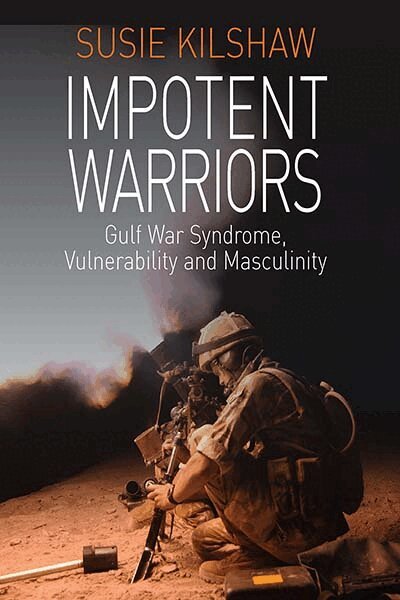
    Impotent Warriors

    Perspectives on Gulf War Syndrome, Vulnerability and Masculinity

    AvSusie Kilshaw

    Häftad, Engelska, 2010

    307 kr

    Beställningsvara. Skickas inom 5-8 vardagar. Fri frakt över 249 kr.

    Fler format och utgåvor

    Inbunden

    1 916 kr

    E-bok

    441 kr

    Beskrivning

    From September 1990 to June 1991, the UK deployed 53,462 military personnel in the Gulf War. After the end of the conflict anecdotal reports of various disorders affecting troops who fought in the Gulf began to surface. This mysterious illness was given the name “Gulf War Syndrome” (GWS). This book is an investigation into this recently emergent illness, particularly relevant given ongoing UK deployments to Iraq, describing how the illness became a potent symbol for a plethora of issues, anxieties, and concerns. At present, the debate about GWS is polarized along two lines: there are those who think it is a unique, organic condition caused by Gulf War toxins and those who argue that it is probably a psychological condition that can be seen as part of a larger group of illnesses. Using the methods and perspective of anthropology, with its focus on nuances and subtleties, the author provides a new approach to understanding GWS, one that makes sense of the cultural circumstances, specific and general, which gave rise to the illness.

    Produktinformation

    • Utgivningsdatum:2010-11-01
    • Mått:152 x 229 x 15 mm
    • Vikt:381 g
    • Format:Häftad
    • Språk:Engelska
    • Antal sidor:282
    • Förlag:Berghahn Books
    • ISBN:9781845455279

    Utforska kategorier

    • Asiens historia inom Historia och arkeologi
    • Folkhälsa och hälsopedagogik inom Medicin
    • Modern militärhistoria inom Historia och arkeologi

    Mer om författaren

    Susie Kilshaw is a social anthropologist at University College London where she pursues her research interests in new illnesses, health scares and anxieties, military health, and trans-cultural psychiatry. She previously worked for the NHS as a clinically applied medical anthropologist on issues surrounding ethnic minorities and mental health. Since 2004 she has been Assistant Editor of Anthropology and Medicine.

    Recensioner i media

    “Medical dialogues are rarely solely about medical matters but serve as a proxy for feelings about the self and the way that an individual relates to others. Indeed, the inclusion of transcripts of interviews and discussions is of particular value…a brave book that challenges popular assumptions about Gulf War syndrome; her analysis of the long-term effects of military service will serve as an important record not only for those with an interest in the armed forces, but also for researchers in the field of illness perception.”  ·  The British Journal of Psychiatry“This is an important anthropological study, which I believe is set to become a classic. The theoretical perspectives are clearly presented and applied to compelling ethnographic material. The publication of this manuscript will make it accessible to both undergraduate and graduate students of anthropology, as well as students of political science, sociology and military studies.”  ·  Vieda Skultans

    Innehållsförteckning

    • List of AbbreviationsAcknowledgementsIntroductionPART I: GWS EXPLANATORY MODELSChapter 1. “Desert Rats, Not Lab Rats”IntroductionBiomedical Position on GWSA Veteran’s ViewDiscussion of GWS CausesRiskConclusionsChapter 2. Chains of Causation, Chains of KnowledgeIntroductionContested KnowledgeClaims to Truth and KnowledgeLevels of CausationMeta-narrativeConclusionsPART II: BODIES AND BOUNDARIESChapter 3. Leaky BodiesIntroductionBody SubstancesBody Substances as CommodityVisibilityShifting BoundariesExtended BoundariesLeaky BodiesInternal RisksConclusionsChapter 4. “We are the Enemy”Boundaries and BordersTheories of Causation and the Immune SystemMilitary MetaphorsConclusionsPART III GWS AS UNIQUE ILLNESSChapter 5. Veterans’ AssociationsThe Construction of GWS NarrativesThe Role of Women“You Aren’t Mad – It’s Chemical”ConclusionsChapter 6. The Disappearing Man: Narratives of Lost MasculinitySemenThe Soldier’s Body: The Embodiment of MasculinityGWS Bodies: The Disappearance of Masculinity“Old Women’s Diseases”WomenConclusionsChapter 7. Impotent Warriors: The Context of Narratives of Lost MasculinityMilitary MasculinityMasculinity under ThreatGender AnxietyLeaving the MilitaryThe Military ContextConclusions: Embodying Male LackConclusion: GWS and World Trade Centre SyndromeGWS: An Illness of Our Time?Risk and VulnerabilityThe medicalisation of LifeThe Approach of AnthropologyEthical Issues and DilemmasConclusionsAppendicesBibliographyIndex