• Fri frakt över 249 kr
  • •
  • Snabba leveranser
  • •
  • Billiga böcker
Kundservice

Du är på sajten för privatpersoner.

Företag, bibliotek eller offentlig verksamhet?

Du handlar på classic.bokus.com, där alla dina funktioner finns intakta.
Till classic.bokus.com
Bokus logotyp. Gå till startsidan.
  • Erbjudanden
  • Nyheter
  • Student
  • Topplistor
  • Barn & ungdom
  • Bokus Play
  • E-böcker
  • Pocketböcker
  • Spel & pussel

10% rabatt på allt med kod: NYSTART10 →

Sidfot

Mina sidor

    Hjälp

    • Kundservice
    • Vanliga frågor och svar
    • Frakt och leverans
    • Retur vid ångerrätt
    • Reklamera vara
    • Betalning
    • Köpvillkor
    • Allmänna villkor
    • Information om webbplatsens tillgänglighet

    Om Bokus

    • Om oss
    • Pressrum
    • För studenter
    • För företag
    • För bibliotek och offentlig verksamhet
    • För leverantörer
    • Hållbarhet

    Populärt

    • Aktuella erbjudanden
    • Presentkort
    • Studentlitteratur
    • Nya böcker
    • Topplistor
    • Signerade böcker
    • Engelska böcker

    Inspiration

    • Boktips
    • BookTok
    • Populära bokserier
    • Barnbokskaraktärer
    • Populära författare
    Logotyp för Bokus
    Följ oss på Facebook (extern länk)Följ oss på Instagram (extern länk)Följ oss på YouTube (extern länk)Följ oss på TikTok (extern länk)
    bokus @ CookiesAnpassa cookiesIntegritetspolicyKöpvillkor
    Till Citymail hemsida (extern länk)Till Budbee hemsida (extern länk)Till Postnord hemsida (extern länk)Till Schenker hemsida (extern länk)Till Early Bird hemsida (extern länk)Till Walleys hemsida (extern länk)
    1. Psykologi och pedagogik
    2. Pedagogik
    3. Utbildningsstrategier och utbildningspolitik

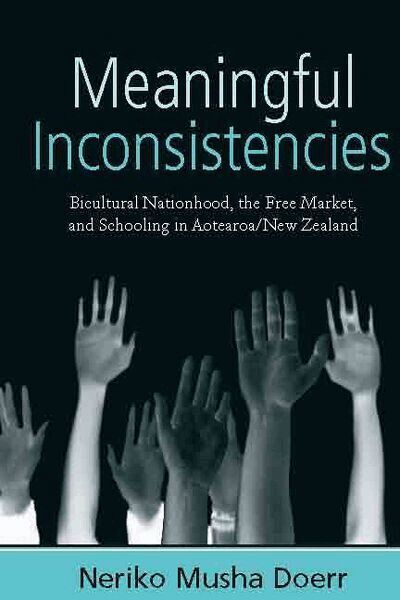
    Meaningful Inconsistencies

    Bicultural Nationhood, the Free Market, and Schooling in Aotearoa/New Zealand

    AvNeriko Musha Doerr

    Inbunden, Engelska, 2009

    1 808 kr

    Beställningsvara. Skickas inom 5-8 vardagar. Fri frakt över 249 kr.

    Fler format och utgåvor

    E-bok

    306 kr

    Beskrivning

    School differentiates students-and provides differential access to various human and material resources-along a range of axes: from elected subjects and academic "achievement" to ethnicity, age, gender, or the language they speak. These categorizations, affected throughout the world by neoliberal reforms that prioritize market forces in transforming educational institutions, are especially stark in societies that recognize their bi- or multicultural makeup through bilingual education. A small town in Aotearoa/New Zealand, with its contemporary shift toward official biculturalism and extensive free-marketization of schooling, is a prime example. Set in the microcosm of a secondary school with a bilingual program, this important volume closely examines not only the implications of categorizing individuals in ethnic terms in their everyday life but also the shapes and meaning of education within the discourse of academic achievement. It is an essential resource for those interested in bilingual education and its effects on the formations of subjectivities, ethnic relations, and nationhood.

    Produktinformation

    • Utgivningsdatum:2009-07-01
    • Mått:152 x 229 x 18 mm
    • Vikt:463 g
    • Format:Inbunden
    • Språk:Engelska
    • Antal sidor:242
    • Förlag:Berghahn Books
    • ISBN:9781845456092

    Utforska kategorier

    • Utbildningsstrategier och utbildningspolitik inom Psykologi och pedagogik
    • Skolan och förskolan inom Psykologi och pedagogik
    • Sociologi inom Samhälle och politik

    Mer om författaren

    Neriko Musha Doerr earned a PhD in anthropology from Cornell University. Her publications have appeared in a number of journals. She currently teaches cultural anthropology at Brookdale Community College, New Jersey.

    Recensioner i media

    “The translation of a Ph.D. thesis into a book is not always a successful enterprise. But it succeeds here. It is a welcome addition to a literature which explores the transformation of New Zealand in the late twentieth century from a colonial nation-state to a bicultural society, even if it is flawed or incomplete in certain regards. What this book does is indicate how this transformation impacts on identity and relationships in .a particular setting.”  ·  JRAI“This book will be of interest to those following struggles for sovereignty and autonomy, for scholars interested in educational reform, and to Maori specialists.”  ·  Pacific Affairs"Based on research undertaken at a time of neoliberal reform in the 1990s, when middle-class Asian students from other countries entered into New Zealand's particular ethnic mix of native students from Maori and Pakeha (European settlers) backgrounds...and written in an accessible yet rigorous style, [this study] engages with a wide range of theories regarding the function of modern education...Along the way, Neriko Doerr provides many delightfully surprising insights that promise to reframe bilingual education in other national settings."  ·  John Borneman, Princeton University"[R]elevant to a far wider audience than those concerned with New Zealand. The issues of multiculturalism, biculturalism, language teaching in school, national policies about identity as experienced by teachers, students, administrators, etc., are issues of very general interest, particularly in the United States where all that is attempted in New Zealand is open for debate. In every way, Dr. Doerr's book is exemplary of what makes anthropology essential for developing our knowledge and reforming our policies."  ·  Hervé Varenne, Columbia University

    Innehållsförteckning

    • List of tablesList of mapsAcknowledgmentsList of abbreviationsChapter 1. IntroductionChapter 2. Shifting terrains: Aotearoa/New Zealand's changing nationhoodChapter 3. Categorizing: Changing official regimes of difference in Aotearoa/New ZealandChapter 4. Inhabiting Waikaraka High SchoolChapter 5. Sorting: Tracking system and production of meaningsChapter 6. Calling it separatist: On conflating two regimesChapter 7. Imagining "failure": The illusion of Maori under-achievementChapter 8. Laughing: Language politics in the classroomChapter 9. Laughing globally: Creation of alliances and globally homologousChapter 10. Dancing: Cultural performance and nationhoodChapter 11. Conclusion and departureBibliographyIndex