• Fri frakt över 249 kr
  • •
  • Snabba leveranser
  • •
  • Billiga böcker
Kundservice

Du är på sajten för privatpersoner.

Företag, bibliotek eller offentlig verksamhet?

Du handlar på classic.bokus.com, där alla dina funktioner finns intakta.
Till classic.bokus.com
Bokus logotyp. Gå till startsidan.
  • Erbjudanden
  • Nyheter
  • Student
  • Topplistor
  • Barn & ungdom
  • Bokus Play
  • E-böcker
  • Pocketböcker
  • Spel & pussel

10% rabatt på allt med kod: NYSTART10 →

Sidfot

Mina sidor

    Hjälp

    • Kundservice
    • Vanliga frågor och svar
    • Frakt och leverans
    • Retur vid ångerrätt
    • Reklamera vara
    • Betalning
    • Köpvillkor
    • Allmänna villkor
    • Information om webbplatsens tillgänglighet

    Om Bokus

    • Om oss
    • Pressrum
    • För studenter
    • För företag
    • För bibliotek och offentlig verksamhet
    • För leverantörer
    • Hållbarhet

    Populärt

    • Aktuella erbjudanden
    • Presentkort
    • Studentlitteratur
    • Nya böcker
    • Topplistor
    • Signerade böcker
    • Engelska böcker

    Inspiration

    • Boktips
    • BookTok
    • Populära bokserier
    • Barnbokskaraktärer
    • Populära författare
    Logotyp för Bokus
    Följ oss på Facebook (extern länk)Följ oss på Instagram (extern länk)Följ oss på YouTube (extern länk)Följ oss på TikTok (extern länk)
    bokus @ CookiesAnpassa cookiesIntegritetspolicyKöpvillkor
    Till Citymail hemsida (extern länk)Till Budbee hemsida (extern länk)Till Postnord hemsida (extern länk)Till Schenker hemsida (extern länk)Till Early Bird hemsida (extern länk)Till Walleys hemsida (extern länk)
    1. Kultur
    2. Konstböcker
    3. Konsthistoria

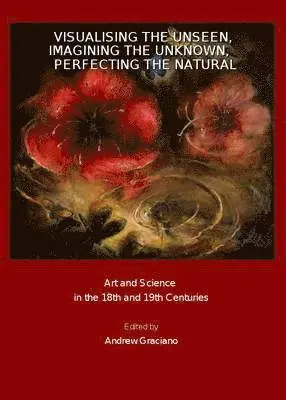
    Visualising the Unseen, Imagining the Unknown, Perfecting the Natural

    Art and Science in the 18th and 19th Centuries

    AvAndrew Graciano,Andrew Graciano

    Inbunden, Engelska, 2008

    975 kr

    Tillfälligt slut

    Beskrivning

    Throughout history, both art and science have been employed to visualise things unseen and to image/imagine things unknown as part of the quest to understand nature. In light of this, perhaps our contemporary tendency to see art and science as completely divergent, mutually exclusive fields of study with similarly distinct methodologies may be profitably re-examined. This volume brings together recent work by both junior and senior scholars treating the art/science connection in eighteenth- and nineteenth-century art. The essays are individual case studies dealing with historical interconnections between drawing, painting, sculpture and book illustration and such diverse fields of science as botany, physics, geology, and evolutionary biology. As a whole, the book invites readers to question more generally: What is art's relationship to science and vice versa? At what points do the two disciplines intersect and/or complement one another? Can science directly inform artistic subjects? Is art a useful tool to focus a scientific lens on the past, to validate or challenge scientific theory, to inspire and encourage scientific inquiry? Can it be employed successfully as a means to visualise scientific ends? Do artists have the potential to create images and objects whose meanings surpass the laws of science and outlast its theories, whose functions are similarly universal and arguably more immediately accessible (legible) to the public? If art, like text and data charts, has the power to create, organise and disseminate information (knowledge), then why do we continue to privilege scientific research over artistic investigation? Would it not be more fruitful and humane to see them as more equitable modes of inquiry?

    Produktinformation

    • Utgivningsdatum:2008-08-22
    • Mått:148 x 212 x undefined mm
    • Format:Inbunden
    • Språk:Engelska
    • Antal sidor:230
    • Förlag:Cambridge Scholars Publishing
    • ISBN:9781847185426

    Utforska kategorier

    • Konsthistoria inom Kultur
    • Kulturvetenskap inom Samhälle och politik
    • Naturvetenskapens historia inom Naturvetenskap och teknik

    Mer om författaren

    Dr Andrew Graciano is Assistant Professor of Art History at the University of South Carolina. His book examines the role of natural philosophy in the late paintings of Joseph Wright of Derby (forthcoming, Liverpool University Press, 2009). He is also editing the autobiographical memoir of Benjamin Wilson, FRS, painter and electrical scientist, which will be published by the Walpole Society in 2012.

    Recensioner i media

    "This volume brings together a remarkable group of essays addressing the connections between art and science in the eighteenth and nineteenth centuries and its content augurs well for the future development of this comparatively understudied discipline....These richly varied essays will undoubtedly be of great interest to art historians, historians of science and indeed to anyone seriously interested in the visualisation of the natural world in the eighteenth and nineteenth centuries."-- Brian Allen, Director of the Paul Mellon Centre for Studies in British Art"This enlightening volume is a welcome step forward in investigating the complex intersections between art and science and ways in which both fields construct the natural through varying modes of knowledge production. By highlighting two key themes--the use of Linnean classification in botany in the eighteenth century and the impact of Darwinism around the turn of the twentieth century--this text takes the permeable and at least in terms of the "period eye" sometimes indistinguishable boundaries between art and science one step further. It offers case studies of how the specifics of political moments, cultural transitions, and artistic agendas affected ways in which individual artists and scientists both drew upon and reshaped the visual culture of science." --Barbara Larson, University of West Florida