• Fri frakt över 249 kr
  • •
  • Snabba leveranser
  • •
  • Billiga böcker
Kundservice

Du är på sajten för privatpersoner.

Företag, bibliotek eller offentlig verksamhet?

Du handlar på classic.bokus.com, där alla dina funktioner finns intakta.
Till classic.bokus.com
Bokus logotyp. Gå till startsidan.
  • Erbjudanden
  • Student
  • Topplistor
  • Barn & ungdom
  • Bokus Play
  • E-böcker
  • Ljudböcker
  • Pocketböcker
  • Spel och pussel

5% studentrabatt – använd koden KURSBOK27 →

Sidfot

Mina sidor

    Hjälp

    • Kundservice
    • Vanliga frågor och svar
    • Frakt och leverans
    • Retur vid ångerrätt
    • Reklamera vara
    • Betalning
    • Köpvillkor
    • Allmänna villkor
    • Information om webbplatsens tillgänglighet

    Om Bokus

    • Om oss
    • Pressrum
    • För studenter
    • För företag
    • För bibliotek och offentlig verksamhet
    • För leverantörer
    • Hållbarhet

    Populärt

    • Aktuella erbjudanden
    • Presentkort
    • Studentlitteratur
    • Nya böcker
    • Topplistor
    • Signerade böcker
    • Engelska böcker

    Inspiration

    • Boktips
    • BookTok
    • Barnbokskaraktärer
    • Populära författare
    Logotyp för Bokus
    Följ oss på Facebook (extern länk)Följ oss på Instagram (extern länk)Följ oss på YouTube (extern länk)Följ oss på TikTok (extern länk)
    bokus @ CookiesAnpassa cookiesIntegritetspolicyKöpvillkor
    Till Citymail hemsida (extern länk)Till Budbee hemsida (extern länk)Till Postnord hemsida (extern länk)Till Schenker hemsida (extern länk)Till Early Bird hemsida (extern länk)Till Walleys hemsida (extern länk)
    1. Samhälle och politik
    2. Samhälle och kultur
    3. Kultur och medier
    4. Referensverk och tvärvetenskap

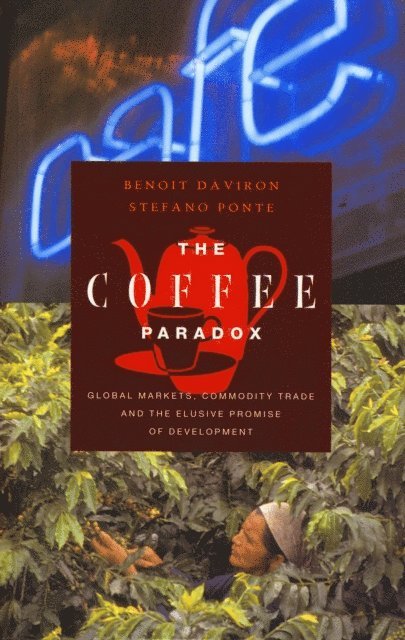
    Coffee Paradox

    Global Markets, Commodity Trade and the Elusive Promise of Development

    AvBenoit Daviron,Stefano Ponte

    E-bok
    PDF, Engelska, 2008

    560 kr

    Läs direkt i Bokus Reader – eller ladda ned till din enhet (PDF kräver ofta zoom och scroll på små skärmar).

    Fler format och utgåvor

    Inbunden

    1 269 kr

    Häftad

    519 kr

    E-bok

    560 kr

    Beskrivning

    Can developing countries trade their way out of poverty? International trade has grown dramatically in the last two decades in the global economy, and trade is an important source of revenue in developing countries. Yet, many low-income countries have been producing and exporting tropical commodities for a long time. They are still poor. This book is a major analytical contribution to understanding commodity production and trade, as well as putting forward policy-relevant suggestions for 'solving' the commodity problem.Through the study of the global value chain for coffee, the authors recast the 'development problem' for countries relying on commodity exports in entirely new ways. They do so by analysing the so-called coffee paradox – the coexistence of a 'coffee boom' in consuming countries and of a 'coffee crisis' in producing countries. New consumption patterns have emerged with the growing importance of specialty, fair trade and other 'sustainable' coffees. In consuming countries, coffee has become a fashionable drink and coffee bar chains have expanded rapidly. At the same time, international coffee prices have fallen dramatically and producers receive the lowest prices in decades.This book shows that the coffee paradox exists because what farmers sell and what consumers buy are becoming increasingly 'different' coffees. It is not material quality that contemporary coffee consumers pay for, but mostly symbolic quality and in-person services. As long as coffee farmers and their organizations do not control at least parts of this 'immaterial' production, they will keep receiving low prices. The Coffee Paradox seeks ways out from this situation by addressing some key questions: What kinds of quality attributes are combined in a coffee cup or coffee package? Who is producing these attributes? How can part of these attributes be produced by developing country farmers? To what extent are specialty and sustainable coffees achieving these objectives?

    Produktinformation

    • Utgivningsdatum:2008-02-29
    • Språk:Engelska
    • Antal sidor:321
    • Filformat:PDF
    • Kopieringsskydd:LCP
    • ISBN:9781848130593
    • Förlag:Bloomsbury Publishing PLC

    Utforska kategorier

    • Referensverk och tvärvetenskap inom Samhälle och politik
    • Nationalekonomi inom Ekonomi och Ledarskap
    • Finansiering inom Ekonomi och Ledarskap

    Mer om författaren

    Stefano Ponte is senior researcher at the Institute for International Studies, Copenhagen. He is co-author (with Peter Gibbon) of 'Africa, Value Chains and the Global Economy' (2004) and author of 'Farmers and Markets in Tanzania: How Policy Reforms Affect Rural Livelihoods in Africa' (2002). He has published extensively on commodity trade (especially coffee) and development, global value chains, the political economy of standards, agro-food markets, and rural livelihoods in developing countries.Benoit Daviron is a French agronomist and agricultural economist at CIRAD. He is currently a visiting scholar at the University of California, Berkeley.

    Recensioner i media

    Ponte and Daviron bring fresh insights to the persistent difficulties of trade as a lever of development for poor nations. Their well-crafted and historically grounded arguments precisely characterize the important intangible attributes of value and market power that are often overlooked and offer some stimulating perspectives for anyone interested in development and in coffee.

    Innehållsförteckning

    • Preface1. Commodity Trade, Development and Global Value Chains2. What's in a Cup? Coffee from Bean to Brew3. Who Calls the Shots? Regulation and Governance4. Is this any Good? Material and Symbolic Production of Coffee Quality5. For Whose Benefit? 'Sustainable' Coffee Initiatives6. Value Chains or Values Changed?7. A Way Forward