Stefano Ponte – författare
Visar alla böcker från författaren Stefano Ponte. Handla med fri frakt och snabb leverans.
15 produkter
15 produkter
Häftad, Engelska, 2018
684 kr
Skickas inom 10-15 vardagar
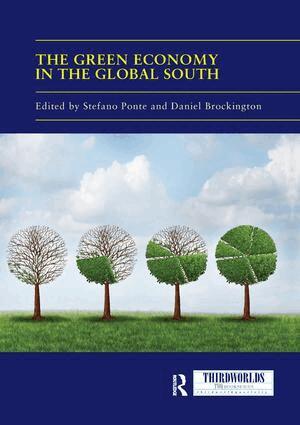
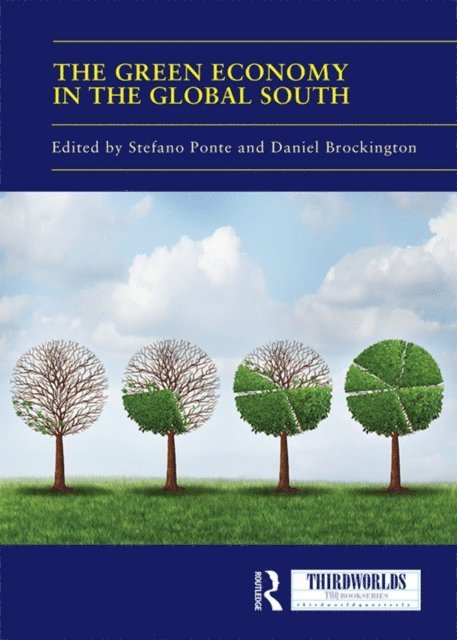
The idea and practice of the ‘green economy’ is gaining momentum, coinciding with financial instability and continued economic woe in the Global North, but generally more positive economic circumstances in the Global South. ‘Green economic initiatives’ in the Global South are multiplying, and include carbon payments, ecotourism, community-based wildlife management, sustainability certification initiatives, and offsets by mining companies exploiting new resources. These initiatives are reallocating resources, redefining inequalities and redistributing the fortune and misfortune of participants of the green economy and those excluded from it. They have also led to resistance – locally, nationally, and transnationally – and to demands for alternatives to market-driven instruments and solutions, which are generally gaining strength and coherence. The articles included in this volume bring together a multi-disciplinary team of scholars from North and South to provide nuanced analyses of green economy experiences in the Global South – analysing the opportunities they provide, but also the redistributions they entail and the kinds of resistances they face. The ultimate aim of the collection is to provide a critical, but balanced, overview of the emerging green economy in the Global South and point the way to possible adjustments, alternatives or radical resistance, depending on different situations. This book was originally published as a special issue of Third World Quarterly.
Häftad, Engelska, 2020
629 kr
Skickas inom 10-15 vardagar
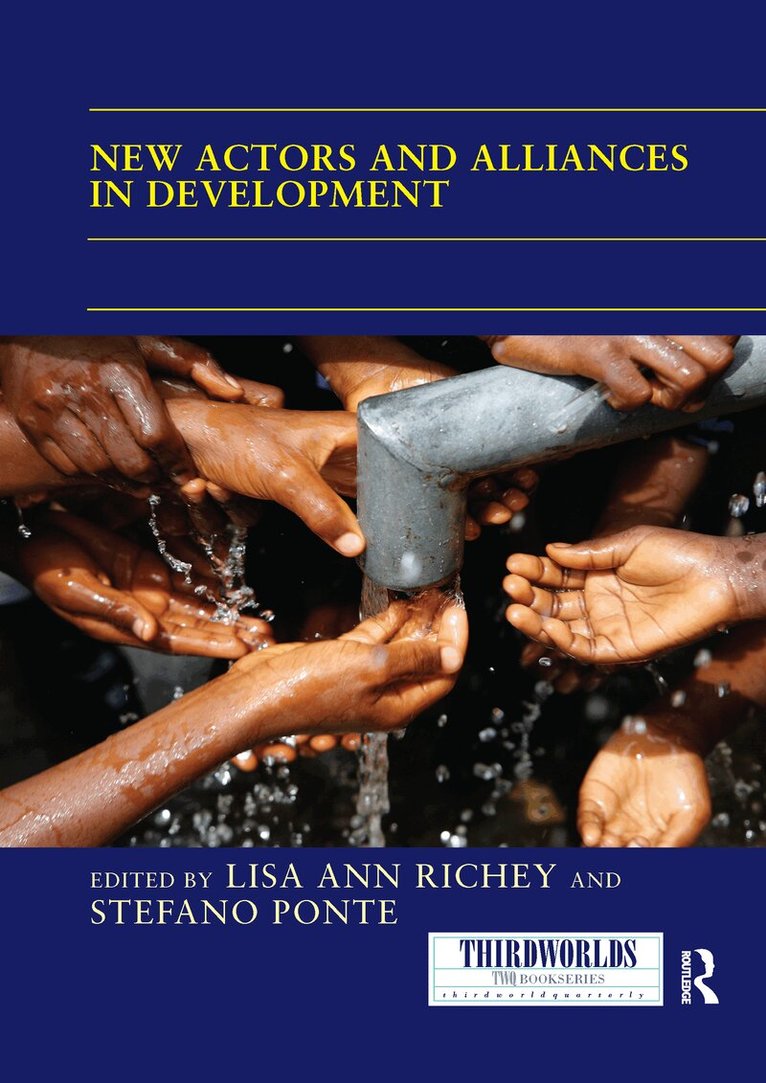
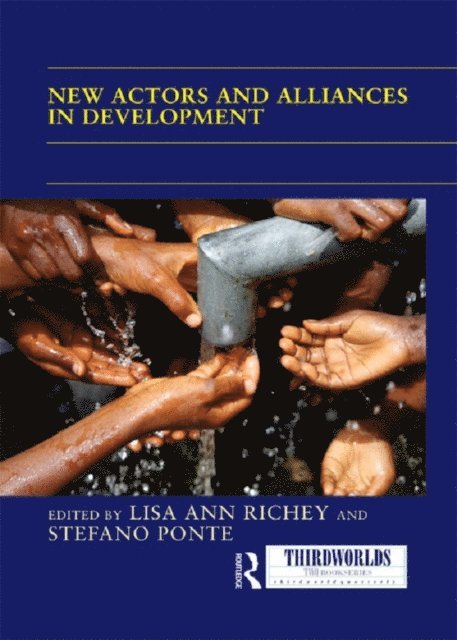
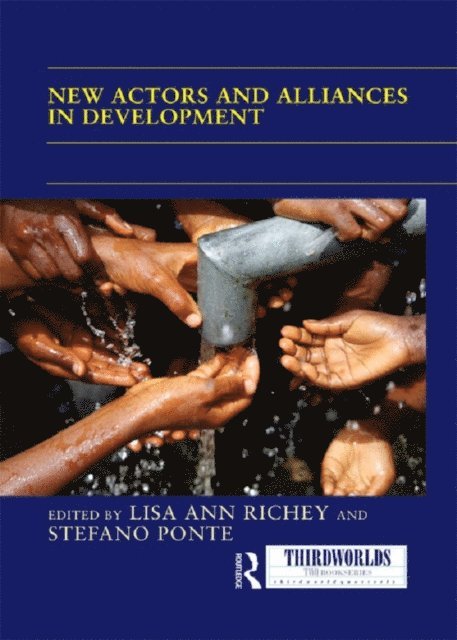
This collection brings together an interdisciplinary group of scholars exploring how development financing and interventions are being shaped by a wider and more complex platform of actors than usually considered in the existing literature. The contributors also trace a changing set of key relations and alliances in development – those between business and consumers; NGOs and celebrities; philanthropic organizations and the state; diaspora groups and transnational advocacy networks; ruling elites and productive capitalists; and between ‘new donors’ and developing country governments. Despite the diversity of these actors and alliances, several commonalities arise: they are often based on hybrid transnationalism and diffuse notions of development responsibility; rather than being new per se, they are newly being studied as engaging in practices that are now coming to be understood as ‘development’; and they are limited in their ability to act as agents of development by their lack of accountability or pro-poor commitment. The articles in this collection point to images and representations as increasingly important in development ‘branding’ and suggest fruitful new ground for critical development studies. This book was originally published as a special issue of Third World Quarterly.
Häftad, Engelska, 2011
195 kr
Skickas inom 5-8 vardagar
“Has there ever been a better reason to shop?” asks an ad for the Product RED American Express card, telling members who use the card that buying “cappuccinos or cashmere” will help to fight AIDS in Africa. Cofounded in 2006 by the rock star Bono, Product RED has been a particularly successful example of a new trend in celebrity-driven international aid and development, one explicitly linked to commerce, not philanthropy. In Brand Aid, Lisa Ann Richey and Stefano Ponte offer a deeply informed and stinging critique of “compassionate consumption.” Campaigns like Product RED and its precursors, such as Lance Armstrong’s Livestrong and the pink-ribbon project in support of breast cancer research, advance the expansion of consumption far more than they meet the needs of the people they ostensibly serve. At the same time, such campaigns sell both the suffering of Africans with AIDS (in the case of Product RED) and the power of the average consumer to ameliorate it through familiar and highly effective media representations. Using Product RED as its focal point, this book explores how corporations like American Express, Armani, Gap, and Hallmark promote compassionate consumption to improve their ethical profile and value without significantly altering their business model, protecting themselves from the threat to their bottom lines posed by a genuinely engaged consumer activism. Coupled with the phenomenon of celebrity activism and expertise as embodied by Bono, Richey and Ponte argue that this “causumerism” represents a deeply troubling shift in relief efforts, effectively delinking the relationship between capitalist production and global poverty.
Inbunden, Engelska, 2017
2 148 kr
Skickas inom 10-15 vardagar
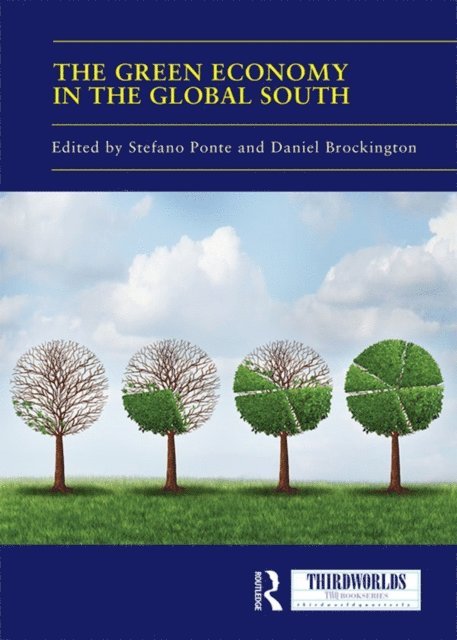
The idea and practice of the ‘green economy’ is gaining momentum, coinciding with financial instability and continued economic woe in the Global North, but generally more positive economic circumstances in the Global South. ‘Green economic initiatives’ in the Global South are multiplying, and include carbon payments, ecotourism, community-based wildlife management, sustainability certification initiatives, and offsets by mining companies exploiting new resources. These initiatives are reallocating resources, redefining inequalities and redistributing the fortune and misfortune of participants of the green economy and those excluded from it. They have also led to resistance – locally, nationally, and transnationally – and to demands for alternatives to market-driven instruments and solutions, which are generally gaining strength and coherence. The articles included in this volume bring together a multi-disciplinary team of scholars from North and South to provide nuanced analyses of green economy experiences in the Global South – analysing the opportunities they provide, but also the redistributions they entail and the kinds of resistances they face. The ultimate aim of the collection is to provide a critical, but balanced, overview of the emerging green economy in the Global South and point the way to possible adjustments, alternatives or radical resistance, depending on different situations. This book was originally published as a special issue of Third World Quarterly.
Inbunden, Engelska, 2014
2 217 kr
Skickas inom 10-15 vardagar
This collection brings together an interdisciplinary group of scholars exploring how development financing and interventions are being shaped by a wider and more complex platform of actors than usually considered in the existing literature. The contributors also trace a changing set of key relations and alliances in development – those between business and consumers; NGOs and celebrities; philanthropic organizations and the state; diaspora groups and transnational advocacy networks; ruling elites and productive capitalists; and between ‘new donors’ and developing country governments. Despite the diversity of these actors and alliances, several commonalities arise: they are often based on hybrid transnationalism and diffuse notions of development responsibility; rather than being new per se, they are newly being studied as engaging in practices that are now coming to be understood as ‘development’; and they are limited in their ability to act as agents of development by their lack of accountability or pro-poor commitment. The articles in this collection point to images and representations as increasingly important in development ‘branding’ and suggest fruitful new ground for critical development studies. This book was originally published as a special issue of Third World Quarterly.
Häftad, Engelska, 2025
310 kr
Skickas
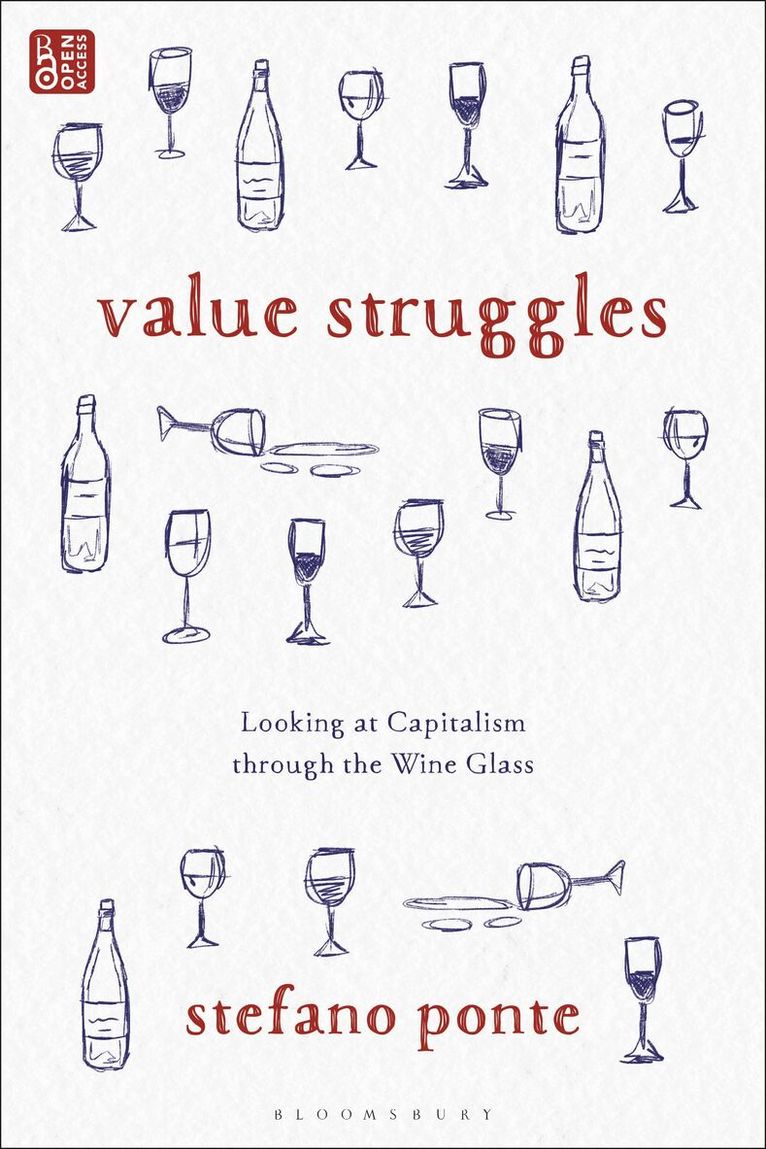
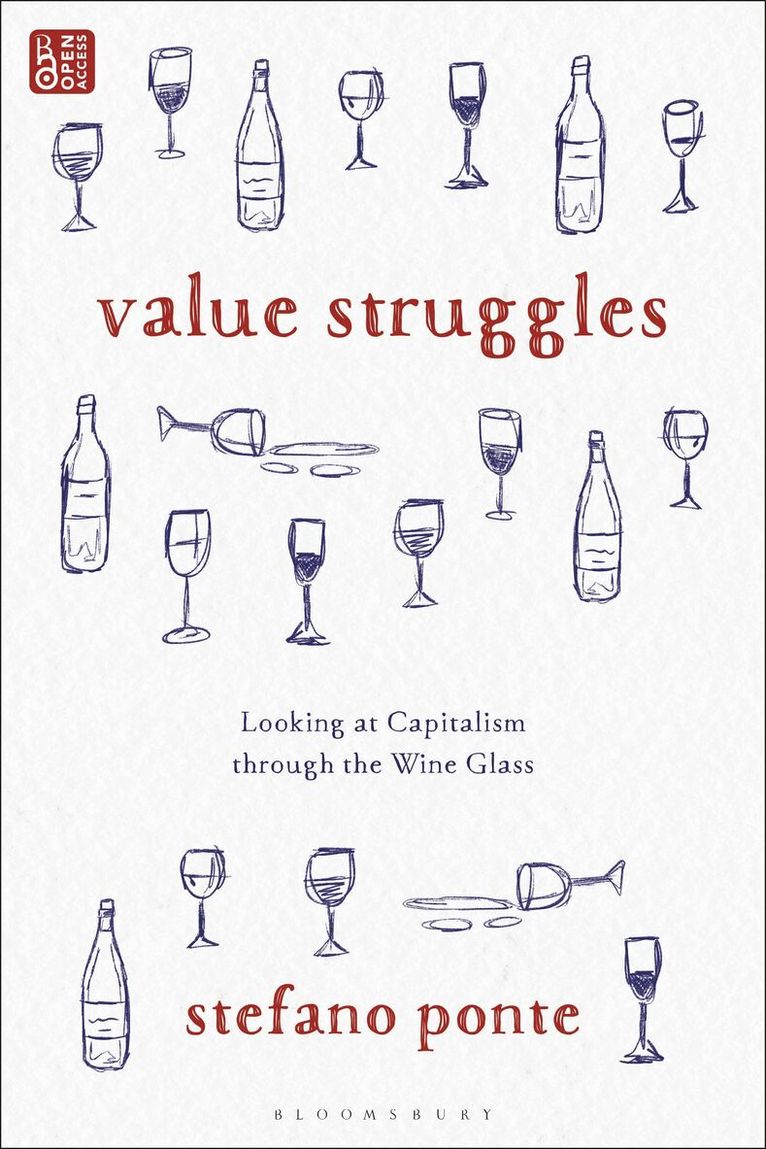
In this open access book, Stefano Ponte offers a theoretically ambitious, empirically rich interrogation of the value struggles at play in global value chains; using the wine industry as an exemplar, he provides a new and fundamental critique of contemporary capitalism and the inequalities it engenders.There is no better product than wine to unmask some of the contradictions of contemporary capitalism. Wine is one of the most fragmented and diversified industries, and one that is not yet completely dominated by large corporate interests. It is also where all sorts of antagonisms against the power of capital are taking place. Value Struggles shows how these tensions and contradictions play out over the valuation of place, nature and people. Through a detailed analysis of South African and Italian wine, it shows that predatory accumulation is about extracting value not only from labour, but also from place, nature and people’s identities as owners of tangible and intangible assets. This book explains how power is exercised in contemporary capitalism, by whom, and with what consequences for producers, workers, and nature – both in the Global South and the Global North. The eBook editions of this book are available open access under a CC BY-NC-ND 4.0 licence on bloomsburycollections.com. Open access was funded by Independent Research Fund Denmark and the Carlsberg Foundation, Denmark.
Inbunden, Engelska, 2025
922 kr
Skickas inom 10-15 vardagar
In this open access book, Stefano Ponte offers a theoretically ambitious, empirically rich interrogation of the value struggles at play in global value chains; using the wine industry as an exemplar, he provides a new and fundamental critique of contemporary capitalism and the inequalities it engenders.There is no better product than wine to unmask some of the contradictions of contemporary capitalism. Wine is one of the most fragmented and diversified industries, and one that is not yet completely dominated by large corporate interests. It is also where all sorts of antagonisms against the power of capital are taking place. Value Struggles shows how these tensions and contradictions play out over the valuation of place, nature and people. Through a detailed analysis of South African and Italian wine, it shows that predatory accumulation is about extracting value not only from labour, but also from place, nature and people’s identities as owners of tangible and intangible assets. This book explains how power is exercised in contemporary capitalism, by whom, and with what consequences for producers, workers, and nature – both in the Global South and the Global North. The eBook editions of this book are available open access under a CC BY-NC-ND 4.0 licence on bloomsburycollections.com. Open access was funded by Independent Research Fund Denmark and the Carlsberg Foundation, Denmark.
Häftad, Engelska, 2019
351 kr
Skickas
The interaction of sustainability governance and global value chains has crucial implications the world over. When it comes to sustainability the last decade has witnessed the birth of hybrid forms of governance where business, civil society and public actors interact at different levels, leading to a focus on concepts of legitimacy within multi-stakeholder initiatives (MSIs).Based in over 15 years of theoretical engagement and field research, Business, Power and Sustainability draws from both labour-intensive value chains, such as in the agro-food sector (coffee, wine, fish, biofuels, palm oil), and from capital-intensive value chains such as in shipping and aviation, to discuss how sustainability governance can be best designed, managed and institutionalized in today’s world of global value chains (GVCs). Examining current theoretical and analytical efforts aimed at including sustainability issues in GVC governance theory, it expands on recent work examining GVC upgrading by introducing the concept of environmental upgrading; and through new conceptions of orchestration, it provides suggestions for how governments and international organizations can best facilitate the achievement of sustainability goals.Essential reading on the governance of sustainability in the twenty-first century.
Inbunden, Engelska, 2019
1 267 kr
Skickas inom 10-15 vardagar
The interaction of sustainability governance and global value chains has crucial implications the world over. When it comes to sustainability the last decade has witnessed the birth of hybrid forms of governance where business, civil society and public actors interact at different levels, leading to a focus on concepts of legitimacy within multi-stakeholder initiatives (MSIs).Based in over 15 years of theoretical engagement and field research, Business, Power and Sustainability draws from both labour-intensive value chains, such as in the agro-food sector (coffee, wine, fish, biofuels, palm oil), and from capital-intensive value chains such as in shipping and aviation, to discuss how sustainability governance can be best designed, managed and institutionalized in today’s world of global value chains (GVCs). Examining current theoretical and analytical efforts aimed at including sustainability issues in GVC governance theory, it expands on recent work examining GVC upgrading by introducing the concept of environmental upgrading; and through new conceptions of orchestration, it provides suggestions for how governments and international organizations can best facilitate the achievement of sustainability goals.Essential reading on the governance of sustainability in the twenty-first century.
Inbunden, Engelska, 2019
4 279 kr
Skickas inom 5-8 vardagar
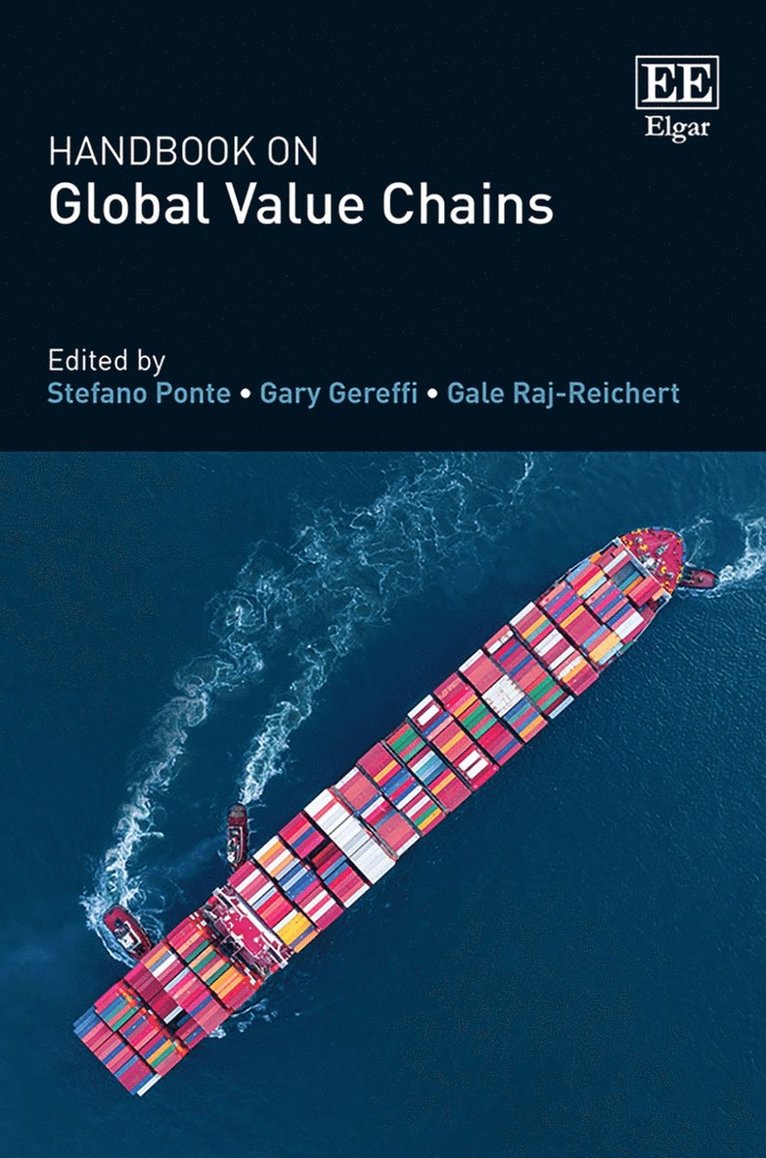
Providing critical insight into the globalization of product conception, production, marketing and distribution, this Handbook comprehensively explores the functioning of global value chains (GVCs) and how they shape the global economy. It provides theoretical, analytical and empirically based policy-relevant tools to understand international production and trade in the modern global economy.Written by a multidisciplinary group of leading scholars, this Handbook offers expert guidance on GVC analysis and the relationship between GVCs and governance, power relations, gender, upgrading and international development. The contributors also provide insight into strategy, innovation and learning, highlighting the dynamism and resilience of GVCs, and critically reflect on how GVCs affect inequality and the nature of work and production.Comprising empirically rich and innovative research, this Handbook will be critical reading for advanced undergraduate and master's level students interested in international business, global industries, sustainable development and the governance of global production systems. Academics researching and teaching in these fields will also benefit from this book's broad and comprehensive approach to GVC analysis.
Häftad, Engelska, 2021
786 kr
Skickas inom 5-8 vardagar
Providing critical insight into the globalization of product conception, production, marketing and distribution, this Handbook comprehensively explores the functioning of global value chains (GVCs) and how they shape the global economy. It provides theoretical, analytical and empirically based policy-relevant tools to understand international production and trade in the modern global economy.Written by a multidisciplinary group of leading scholars, this Handbook offers expert guidance on GVC analysis and the relationship between GVCs and governance, power relations, gender, upgrading and international development. The contributors also provide insight into strategy, innovation and learning, highlighting the dynamism and resilience of GVCs, and critically reflect on how GVCs affect inequality and the nature of work and production.Comprising empirically rich and innovative research, this Handbook will be critical reading for advanced undergraduate and master's level students interested in international business, global industries, sustainable development and the governance of global production systems. Academics researching and teaching in these fields will also benefit from this book's broad and comprehensive approach to GVC analysis.
Inbunden, Engelska, 2005
1 249 kr
Skickas inom 5-8 vardagar
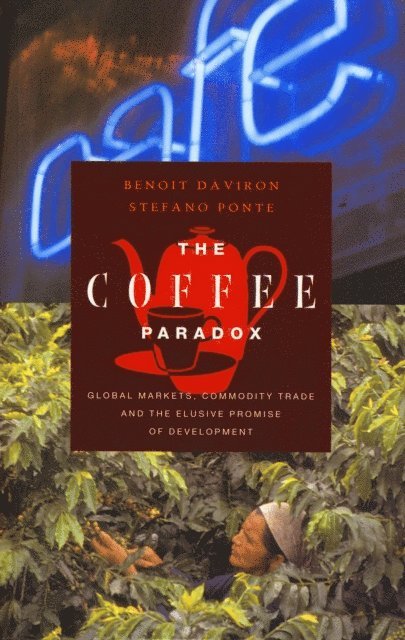
Can developing countries trade their way out of poverty? International trade has grown dramatically in the last two decades in the global economy, and trade is an important source of revenue in developing countries. Yet, many low-income countries have been producing and exporting tropical commodities for a long time. They are still poor. This book is a major analytical contribution to understanding commodity production and trade, as well as putting forward policy-relevant suggestions for ‘solving’ the commodity problem.Through the study of the global value chain for coffee, the authors recast the ‘development problem’ for countries relying on commodity exports in entirely new ways. They do so by analysing the so-called coffee paradox – the coexistence of a ‘coffee boom’ in consuming countries and of a ‘coffee crisis’ in producing countries. New consumption patterns have emerged with the growing importance of specialty, fair trade and other ‘sustainable’ coffees. In consuming countries, coffee has become a fashionable drink and coffee bar chains have expanded rapidly. At the same time, international coffee prices have fallen dramatically and producers receive the lowest prices in decades.This book shows that the coffee paradox exists because what farmers sell and what consumers buy are becoming increasingly ‘different’ coffees. It is not material quality that contemporary coffee consumers pay for, but mostly symbolic quality and in-person services. As long as coffee farmers and their organizations do not control at least parts of this ‘immaterial’ production, they will keep receiving low prices. The Coffee Paradox seeks ways out from this situation by addressing some key questions: What kinds of quality attributes are combined in a coffee cup or coffee package? Who is producing these attributes? How can part of these attributes be produced by developing country farmers? To what extent are specialty and sustainable coffees achieving these objectives?
Häftad, Engelska, 2005
511 kr
Skickas inom 10-15 vardagar
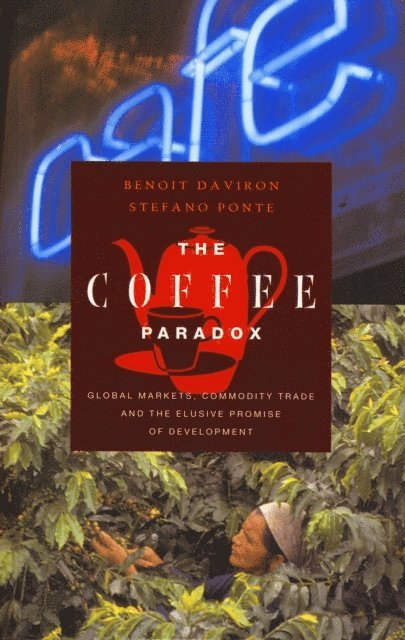
Can developing countries trade their way out of poverty? International trade has grown dramatically in the last two decades in the global economy, and trade is an important source of revenue in developing countries. Yet, many low-income countries have been producing and exporting tropical commodities for a long time. They are still poor. This book is a major analytical contribution to understanding commodity production and trade, as well as putting forward policy-relevant suggestions for ‘solving’ the commodity problem.Through the study of the global value chain for coffee, the authors recast the ‘development problem’ for countries relying on commodity exports in entirely new ways. They do so by analysing the so-called coffee paradox – the coexistence of a ‘coffee boom’ in consuming countries and of a ‘coffee crisis’ in producing countries. New consumption patterns have emerged with the growing importance of specialty, fair trade and other ‘sustainable’ coffees. In consuming countries, coffee has become a fashionable drink and coffee bar chains have expanded rapidly. At the same time, international coffee prices have fallen dramatically and producers receive the lowest prices in decades.This book shows that the coffee paradox exists because what farmers sell and what consumers buy are becoming increasingly ‘different’ coffees. It is not material quality that contemporary coffee consumers pay for, but mostly symbolic quality and in-person services. As long as coffee farmers and their organizations do not control at least parts of this ‘immaterial’ production, they will keep receiving low prices. The Coffee Paradox seeks ways out from this situation by addressing some key questions: What kinds of quality attributes are combined in a coffee cup or coffee package? Who is producing these attributes? How can part of these attributes be produced by developing country farmers? To what extent are specialty and sustainable coffees achieving these objectives?
Del 40 - Eastern Africa Series
Contested Sustainability
The Political Ecology of Conservation and Development in Tanzania
Häftad, Engelska, 2022
341 kr
Skickas inom 5-8 vardagar
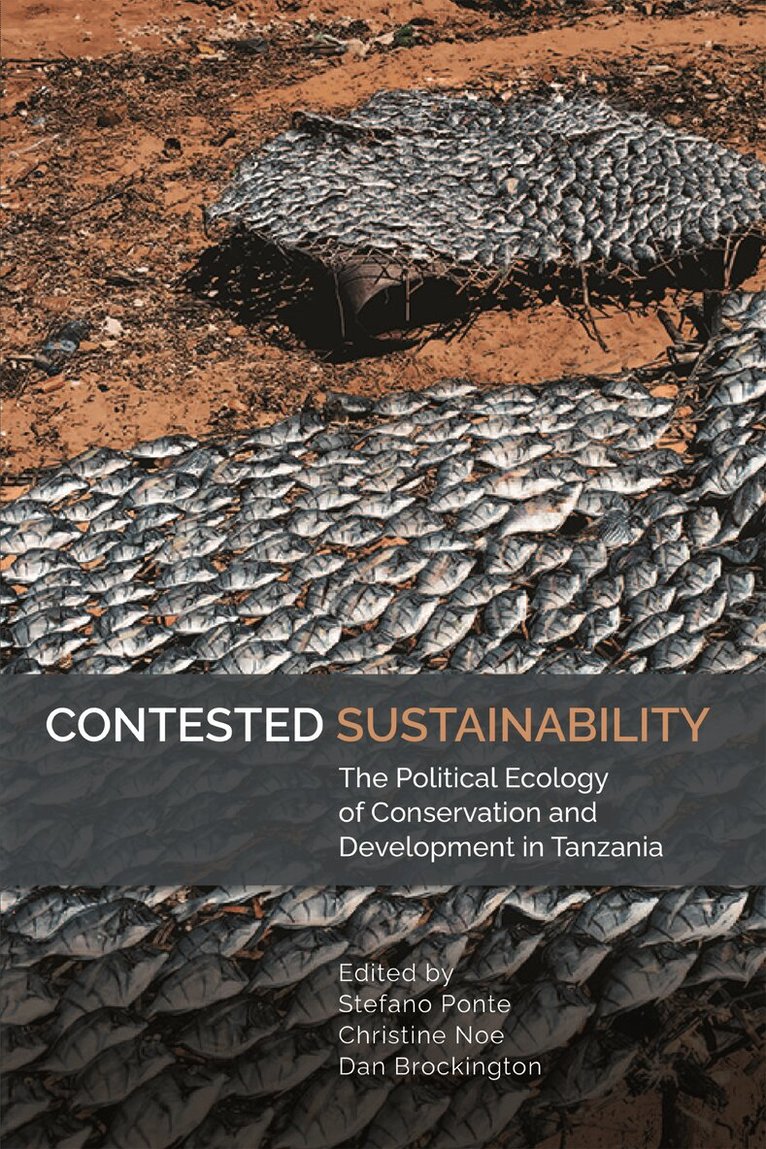
Richly detailed and timely study on conservation, development and sustainability in Tanzania.Provides valuable insights into the successes and failures of the management and governance of wildlife, forestry and coastal resources.Responding to the urgent need to examine the outcome of interventions in governing natural resources, this book analyses different types of sustainability partnerships - with donors, governments, business, NGOs and other actors, and, crucially, assesses which result in better livelihood and environmental outcomes. The contributors, from a range of disciplines, compare 'more complex' partnerships to relatively 'simpler', more traditional top-down and centralized management systems and to location where sustainability partnerships are not in place. Within-sector comparisons allow a fine-tuned analysis that is formed of historical, location and resource-specific issues, which can be used as input for resource-specific policy and partnership design. Experiences and lessons can be drawn from comparisons across the three different sectors, which can be applied to natural resource governance more broadly.This book is openly available in digital formats under Creative Commons license CC BY-NC-ND.
Häftad, Franska, 2021
727 kr
Skickas inom 5-8 vardagar