• Fri frakt över 249 kr
  • •
  • Snabba leveranser
  • •
  • Billiga böcker
Kundservice

Du är på sajten för privatpersoner.

Företag, bibliotek eller offentlig verksamhet?

Du handlar på classic.bokus.com, där alla dina funktioner finns intakta.
Till classic.bokus.com
Bokus logotyp. Gå till startsidan.
  • Erbjudanden
  • Student
  • Topplistor
  • Barn & ungdom
  • Bokus Play
  • E-böcker
  • Ljudböcker
  • Pocketböcker
  • Spel och pussel

Pocketfynda! Hundratals böcker för 49 kr/st →

Sidfot

Mina sidor

    Hjälp

    • Kundservice
    • Vanliga frågor och svar
    • Frakt och leverans
    • Retur vid ångerrätt
    • Reklamera vara
    • Betalning
    • Köpvillkor
    • Allmänna villkor
    • Information om webbplatsens tillgänglighet

    Om Bokus

    • Om oss
    • Pressrum
    • För studenter
    • För företag
    • För bibliotek och offentlig verksamhet
    • För leverantörer
    • Hållbarhet

    Populärt

    • Aktuella erbjudanden
    • Presentkort
    • Studentlitteratur
    • Nya böcker
    • Topplistor
    • Signerade böcker
    • Engelska böcker

    Inspiration

    • Boktips
    • BookTok
    • Barnbokskaraktärer
    • Populära författare
    Logotyp för Bokus
    Följ oss på Facebook (extern länk)Följ oss på Instagram (extern länk)Följ oss på YouTube (extern länk)Följ oss på TikTok (extern länk)
    bokus @ CookiesAnpassa cookiesIntegritetspolicyKöpvillkor
    Till Citymail hemsida (extern länk)Till Budbee hemsida (extern länk)Till Postnord hemsida (extern länk)Till Schenker hemsida (extern länk)Till Early Bird hemsida (extern länk)Till Walleys hemsida (extern länk)
    1. Kultur
    2. Konstböcker
    3. Konstformer

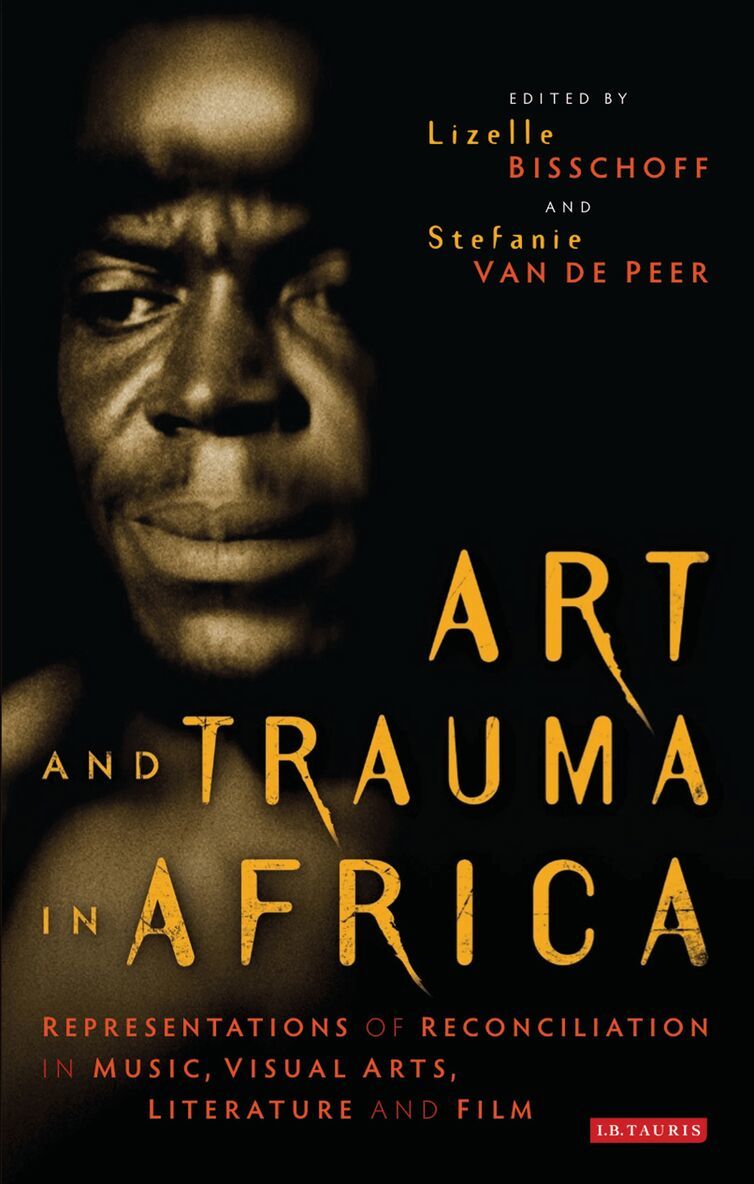
    Art and Trauma in Africa

    Representations of Reconciliation in Music, Visual Arts, Literature and Film

    AvLizelle Bisschoff,Stefanie Van de Peer

    Inbunden, Engelska, 2013

    1 999 kr

    Beställningsvara. Skickas inom 10-15 vardagar. Fri frakt över 249 kr.

    Beskrivning

    The traumas of conflict and war in postcolonial Africa have been widely documented, but less well known are their artistic representations. A number of recent films, novels and other art forms have sought to engage with and overcome postcolonial atrocities and to explore the attempts of reconciliation commissions towards peace, justice and forgiveness. This creativity reflects the memories and social identities of the artists, whilst offering a mirror to African and worldwide audiences coming to terms with a collective memory that is often traumatic in itself. The seeming paradox between creative representation and the reality of horrific events such as genocide presents challenges for the relationship between ethics, poetics and politics. In Art and Trauma in Africa, Lizelle Bisschoff and Stefanie Van de Peer bring together multiple ways of analyzing the ethical responsibility at the heart of an artist's decision to tackle such controversial and painful subjects. Also, to study trauma, conflict and reconciliation through art in a pan-African context offers new perspectives on a continent that is often misrepresented by the Western media.The inexpressible nature of atrocities that are the crux of how Africa is generally regarded from the outside is challenged with new art forms that in and of themselves question perception and interpretation. African artists are renewing the field of trauma studies through representing the unrepresentable in order to incessantly invigorate insights and theories. Art and Trauma in Africa examines a diverse range of art forms, from hip hop in Nigeria and dance in Angola to Moroccan films and South African literature, taking an original pan-African approach. It is in doing so that this groundbreaking volume will inspire those interested in African history and politics as well as those with an interest in trauma, cultural and artistic studies.

    Produktinformation

    • Utgivningsdatum:2013-02-27
    • Mått:138 x 216 x 35 mm
    • Vikt:562 g
    • Format:Inbunden
    • Språk:Engelska
    • Antal sidor:360
    • Förlag:Bloomsbury Publishing PLC
    • ISBN:9781848856929

    Utforska kategorier

    • Konstformer inom Kultur
    • Kulturvetenskap inom Samhälle och politik

    Mer om författaren

    Lizelle Bisschoff is a Lord Kelvin Adam Smith Research Fellow in Film and Television Studies at the University of Glasgow, conducting a three-year research project into digital African arts. She is the Founder and previous Director of the Africa in Motion (AiM) Film Festival in Scotland, now in its eighth year. She holds a PhD in African Cinema from the University of Stirling, in Scotland, for which she researched the role of women in Southern and West African cinema. She has previously conducted a two-year postdoctoral research project into the emerging East African film industries, while based in the Centre of African Studies at the University of Edinburgh. Lizelle has published several articles on sub-Saharan African cinema and regularly attends film festivals in Africa as jury member and speaker. Stefanie Van de Peer is a Research Co-ordinator at the University of St Andrews, Scotland. She received her PhD from the University of Stirling in Scotland. Her research focuses on women's filmmaking in the Middle East and North Africa. Until 2011 she was Co-Director of the Africa in Motion (AiM) Film Festival. She was Research Fellow at the Five Colleges Women's Studies Research Center in Massachusetts, where she also worked on women in cinema. She has published on Tunisian, Egyptian, Moroccan, Syrian and Lebanese women's films and programmed films for the Middle Eastern Film Festival in Edinburgh, the REEL Festival in Damascus and Beirut and the Boston Palestine Film Festival.

    Recensioner i media

    'Art and Trauma in Africa is an illuminating volume, full of insightful and thought-provoking contributions on the representation of reconciliation in music, visual arts, literature and film. A timely, evocative and engaging book, which is made up of a wide range of well-selected case studies: from music, sculptures and photographs, to stories, documentaries and films. This book sheds fresh light onto old conflicts and the role of the arts in Africa on the long, and often complicated, road towards reconciliation.' Jolyon Mitchell, Professor of Communications, Arts and Religion, University of Edinburgh. His most recent book is Promoting Peace, Inciting Violence: The Role of Religion and Media (2012) 'Bisschoff and Van de Peer are to be congratulated on bringing together a particularly timely volume, which will provide a valuable and accessible resource for students of trauma studies, reconciliation and peace studies, and African studies. At the same time as drawing to attention the diversity and complexity of conflict situations in Africa, this book also provides testament to the remarkable range of artistic responses that have emerged in post-conflict nations and communities. It provides a powerful and nuanced argument for the potential of creative practice to stimulate a number of empathetic connections, which in turn underpin broader processes of social and political reconciliation.' Anne Whitehead, Senior Lecturer in Modern and Contemporary Literature, School of English Literature, Language and Linguistics, Newcastle University

    Innehållsförteckning

    • ContentsForewordIntroduction Representing the UnrepresentablePart One: Music Chapter One: Hip Hop Lyrics as Tool for Conflict Resolution in the Niger DeltaChapter Two: ­Grooving on Broken: Dancing War Trauma in Angolan KuduroChapter Three: Local Arts versus Global Terrorism: The Manifestations of Trauma and Modes of Reconciliation in Moroccan Music FestivalsPart Two: Visual ArtsChapter Four: Transforming Arms into Ploughshares: Weapons that Destroy and Heal in Mozambican Urban ArtChapter Five: Unlocking the Doors of Number Four Prison: Curating the Violent Past in Contemporary South AfricaChapter Six: Imaging Life after Death: Photography and the 1994 Genocide in RwandaPart Three: LiteratureChapter Seven: ‘It was a terrible time to be alive’: Narrative Reconciliation in Contemporary West African FictionChapter Eight: Truth Will Set You Free: Implications of a Creative Narrative for the ‘Official’ Discourse of the South African Truth and Reconciliation CommissionChapter Nine: Re-fathoming the Dark of Heartness: Contrapuntal Representations of the Rwandan Genocide     Part Four: Film Chapter Ten: Reconciling the African Nation: Fanta Regina Nacro's La Nuit de la Vérité  Chapter Eleven: Closed Windows onto Morocco’s Past: Leila Kilani’s Our Forbidden Places Chapter Twelve: Beyond ‘Victimology’: Generating Agency through Film in Eastern Democratic Republic of the CongoChapter Thirteen: Truth, Reconciliation and Cinema: Reflections on South Africa’s Recent Past in Ubuntu’s Wounds and Homecoming