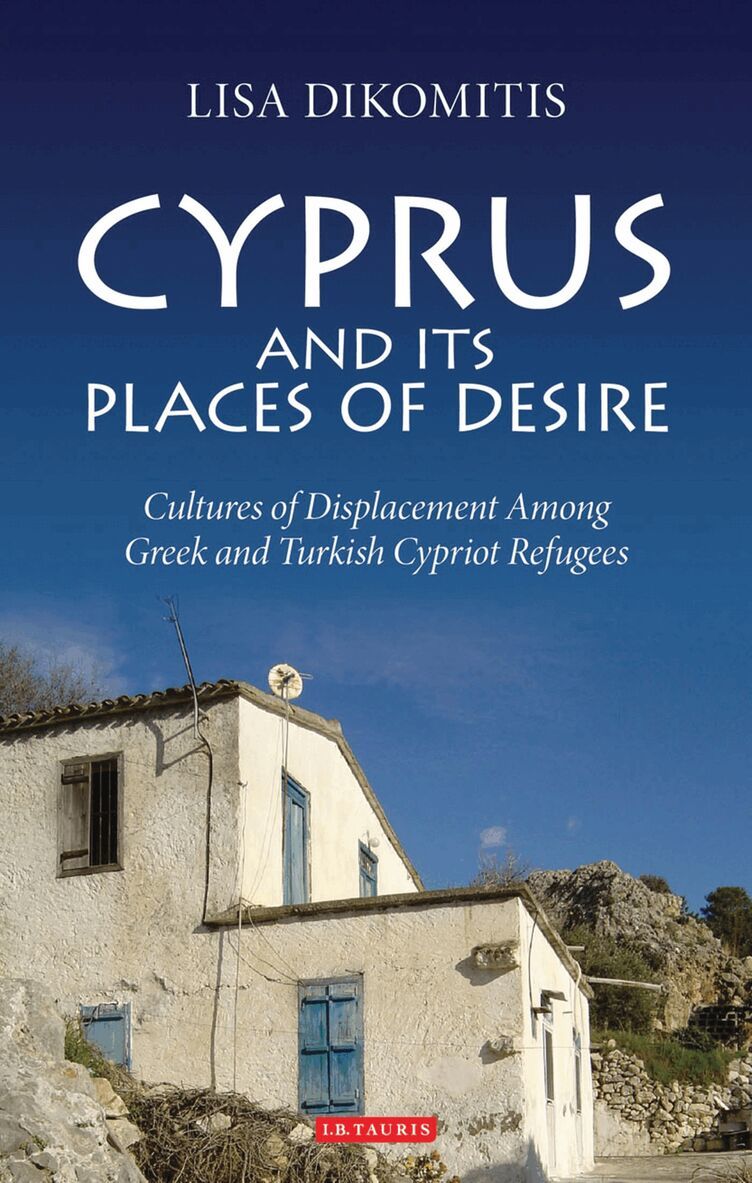
Inbunden, Engelska, 2012
Cyprus and its Places of Desire
Cultures of Displacement among Greek and Turkish Cypriot Refugees
Del i serien International Library of Ethnicity, Identity and Culture
1837 kr
Beställningsvara. Skickas inom 10-15 vardagar. Fri frakt över 249 kr.
Beskrivning
Produktinformation
- Utgivningsdatum: 2012-02-28
- Mått: 146 x 220 x 18 mm
- Vikt: 440 g
- Format: Inbunden
- Språk: Engelska
- Serie: International Library of Ethnicity, Identity and Culture
- Antal sidor: 248
- Förlag: Bloomsbury Publishing PLC
- ISBN: 9781848858992
Utforska kategorier
Mer om författaren
Lisa Dikomitis is Postdoctoral Researcher at Ghent University, where she gained her PhD in Comparative Sciences of Cultures, and the co-editor of When God Comes to Town: Religious Traditions in Urban Contexts.
Recensioner i media
Lisa Dikomitis has written an even-handed account of two groups of people linked by their painful histories of displacement to a single place, Larnakas tis Lapithou in Greek, Kozan in Turkish. It was difficult because she did not have the luxury of a neutral identity, as her father was once an inhabitant of the village in question, but settled in Belgium. Dr. Dikomitis initially enjoyed a fund of goodwill from her Greek Cypriot relatives, but when she made first contacts with Turkish Cypriots, their trust had to be earned the hard way. And while doing so, she risked losing the trust of her Greek Cypriot co-villagers. Fortunately, she met both challenges impressively. One of the great strengths of this book is the continuous use of apt quotations from informants, which brings life and colour into the text. In addition Lisa Dikomitis writes easily, persuasively and clearly. She has integrated ethnography with theory, but wears her learning lightly. These are unusual achievements, a significant contribution to the anthropology of Cyprus, and to the sociological understanding of forced migrations. -Professor Peter Loizos, Emeritus Professor, LSE
Betyg & recensioner
0 recensioner
Inga recensioner tillgängliga.