• Fri frakt över 249 kr
  • •
  • Snabba leveranser
  • •
  • Billiga böcker
Kundservice

Du är på sajten för privatpersoner.

Företag, bibliotek eller offentlig verksamhet?

Du handlar på classic.bokus.com, där alla dina funktioner finns intakta.
Till classic.bokus.com
Bokus logotyp. Gå till startsidan.
  • Erbjudanden
  • Nyheter
  • Student
  • Topplistor
  • Barn & ungdom
  • Bokus Play
  • E-böcker
  • Pocketböcker
  • Spel & pussel

10% rabatt på allt med kod NYSTART10 →

Sidfot

Mina sidor

    Hjälp

    • Kundservice
    • Vanliga frågor och svar
    • Frakt och leverans
    • Retur vid ångerrätt
    • Reklamera vara
    • Betalning
    • Köpvillkor
    • Allmänna villkor
    • Information om webbplatsens tillgänglighet

    Om Bokus

    • Om oss
    • Pressrum
    • För studenter
    • För företag
    • För bibliotek och offentlig verksamhet
    • För leverantörer
    • Hållbarhet

    Populärt

    • Aktuella erbjudanden
    • Presentkort
    • Studentlitteratur
    • Nya böcker
    • Topplistor
    • Signerade böcker
    • Engelska böcker

    Inspiration

    • Boktips
    • BookTok
    • Populära bokserier
    • Barnbokskaraktärer
    • Populära författare
    Logotyp för Bokus
    Följ oss på Facebook (extern länk)Följ oss på Instagram (extern länk)Följ oss på YouTube (extern länk)Följ oss på TikTok (extern länk)
    bokus @ CookiesAnpassa cookiesIntegritetspolicyKöpvillkor
    Till Citymail hemsida (extern länk)Till Budbee hemsida (extern länk)Till Postnord hemsida (extern länk)Till Schenker hemsida (extern länk)Till Early Bird hemsida (extern länk)Till Walleys hemsida (extern länk)
    1. Naturvetenskap och teknik
    2. Teknik och industri
    3. Teknik: allmänt

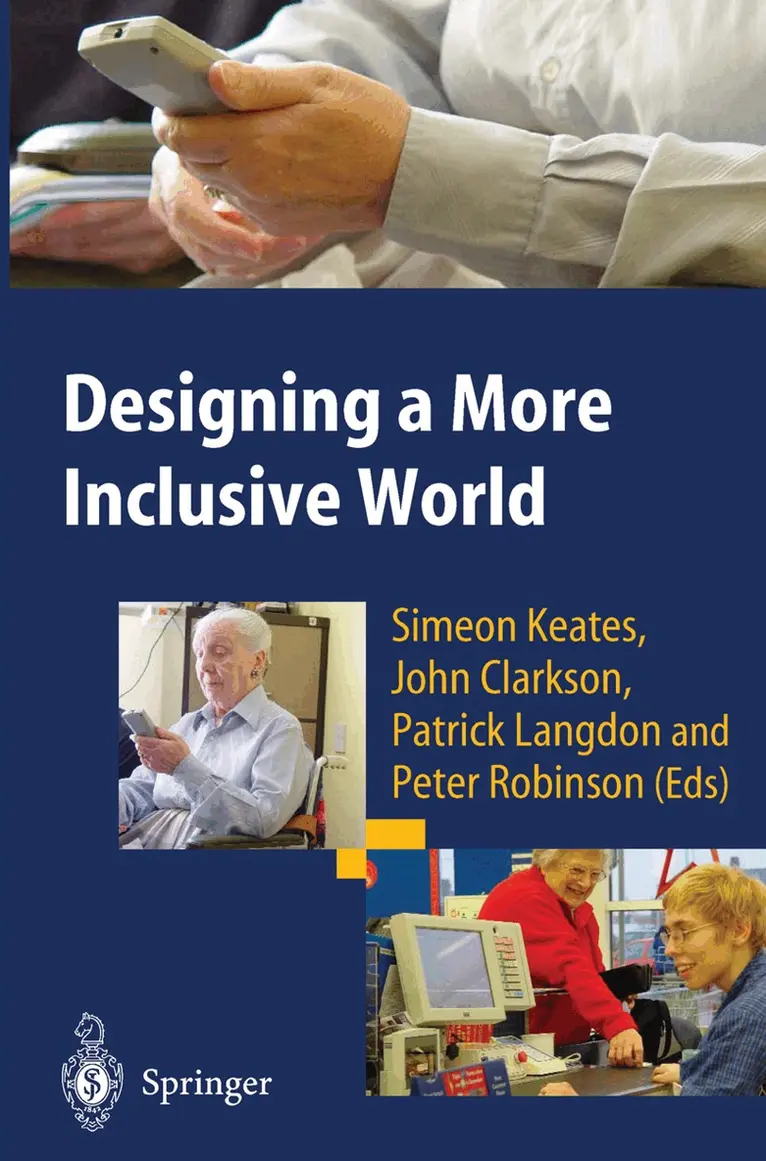
    Designing a More Inclusive World

    AvSimeon Keates,John Clarkson

    Inbunden, Engelska, 2004

    2 164 kr

    Beställningsvara. Skickas inom 10-15 vardagar. Fri frakt över 249 kr.

    Beskrivning

    Designing inclusively is no longer an option for companies. It is a business essential. Global populations are getting older, legislation is increasingly prohibitive of unnecessary exclusion and consumer attitudes are beginning to change. Exclusivity is out, inclusivity is in. Research communities the world over are responding to this change in design emphasis. Conferences such as the Cambridge Workshops on Universal Access and Assistive Technology (CWUAAT) offer a forum for researchers from diverse and varied disciplines to bring their perspectives on inclusive design together. This book has been inspired by the second CWUAAT, held in Cambridge, England in March 2004. It contains chapters from an international group of leading researchers in this field. Contributions focus on the following topics: design issues for universal access and assistive technology; enabling computer access and new technologies; and, assistive technology and rehabilitation robotics. This series of conferences is aimed at a broad range of interests, with a general focus on the development of products and solutions. Numerous case studies are used to raise awareness of the challenges faced in developing truly

    Produktinformation

    • Utgivningsdatum:2004-03-15
    • Mått:155 x 235 x 21 mm
    • Vikt:594 g
    • Format:Inbunden
    • Språk:Engelska
    • Antal sidor:268
    • Upplaga:2004
    • Förlag:Springer London Ltd
    • ISBN:9781852338190

    Utforska kategorier

    • Teknik: allmänt inom Naturvetenskap och teknik

    Innehållsförteckning

    • I Design Issues for Universal Access and Assistive Technology.- 1. Is Universal Design a Critical Theory?.- 2. Cross-market Product and Service Innovation — the DBA Challenge Example.- 3. Introducing User-Centred Design Methods into Design Education.- 4. Comparing Product Assessment Methods for Inclusive Design.- 5. Virtual Learning Environments: Improving Accessibility Using Profiling.- 6. Assessment, Insight and Awareness in Design for Users with Special Needs.- 7. New Cognitive Capability Scales For Inclusive Product Design.- II Enabling Computer Access and New Technologies.- 8. An AAC-Enabled Internet: From User Requirements to Guidelines.- 9. Gathering Requirements for Mobile Devices Using Focus Groups with Older People.- 10. Devices and Desires: Identifying the Acceptability of AT to Older People.- 11. Beyond Functionality — Product Semantics in Assistive Device Design.- 12. Consensus-based Adaptive User Interface Implementation in Product Promotion.- 13. Transforming Musical Notations for Universal Access.- 14. Evaluation of Multimodal Techniques for Blind People to Track Moving Objects.- 15. Movement Time Prediction for Tasks Assisted by Force-feedback.- 16. Recognising Expression in Speech for Human Computer Interaction.- 17. Emotional Hearing Aid: An Assistive Tool for Children with Asperger's Syndrome.- 18. Fostering Universal Access: Lessons from Telecommunications and Disability.- 19. Assessing the Accessibility of Digital Television Set-Top Boxes.- III Assistive Technology and Rehabilitation Robotics.- 20. Robot Technology in Rehabilitation and Support —State of the Art.- 21. Powered Lower Limb Orthosis for Assisting Standing Up and Sitting Down Movements.- 22. Collaborative Control Aspects for Rehabilitation Robots.- 23. Effects of Repeated Exposureto a Humanoid Robot on Children with Autism.- 24. The Gloucester Smart House for People with Dementia —User-Interface Aspects.- 25. Standards and the Dependability of Electronic Assistive Technology.- 26. If I had a Robot at Home... Peoples' Representation of Domestic Robots.- Index of Contributors.