• Fri frakt över 249 kr
  • •
  • Snabba leveranser
  • •
  • Billiga böcker
Kundservice

Du är på sajten för privatpersoner.

Företag, bibliotek eller offentlig verksamhet?

Du handlar på classic.bokus.com, där alla dina funktioner finns intakta.
Till classic.bokus.com
Bokus logotyp. Gå till startsidan.
  • Erbjudanden
  • Nyheter
  • Student
  • Topplistor
  • Barn & ungdom
  • Bokus Play
  • E-böcker
  • Pocketböcker
  • Spel & pussel

10% rabatt på allt med kod NYSTART10 →

Sidfot

Mina sidor

    Hjälp

    • Kundservice
    • Vanliga frågor och svar
    • Frakt och leverans
    • Retur vid ångerrätt
    • Reklamera vara
    • Betalning
    • Köpvillkor
    • Allmänna villkor
    • Information om webbplatsens tillgänglighet

    Om Bokus

    • Om oss
    • Pressrum
    • För studenter
    • För företag
    • För bibliotek och offentlig verksamhet
    • För leverantörer
    • Hållbarhet

    Populärt

    • Aktuella erbjudanden
    • Presentkort
    • Studentlitteratur
    • Nya böcker
    • Topplistor
    • Signerade böcker
    • Engelska böcker

    Inspiration

    • Boktips
    • BookTok
    • Populära bokserier
    • Barnbokskaraktärer
    • Populära författare
    Logotyp för Bokus
    Följ oss på Facebook (extern länk)Följ oss på Instagram (extern länk)Följ oss på YouTube (extern länk)Följ oss på TikTok (extern länk)
    bokus @ CookiesAnpassa cookiesIntegritetspolicyKöpvillkor
    Till Citymail hemsida (extern länk)Till Budbee hemsida (extern länk)Till Postnord hemsida (extern länk)Till Schenker hemsida (extern länk)Till Early Bird hemsida (extern länk)Till Walleys hemsida (extern länk)
    1. Samhälle och politik
    2. Samhälle och kultur
    3. Kultur och medier
    4. Kulturvetenskap

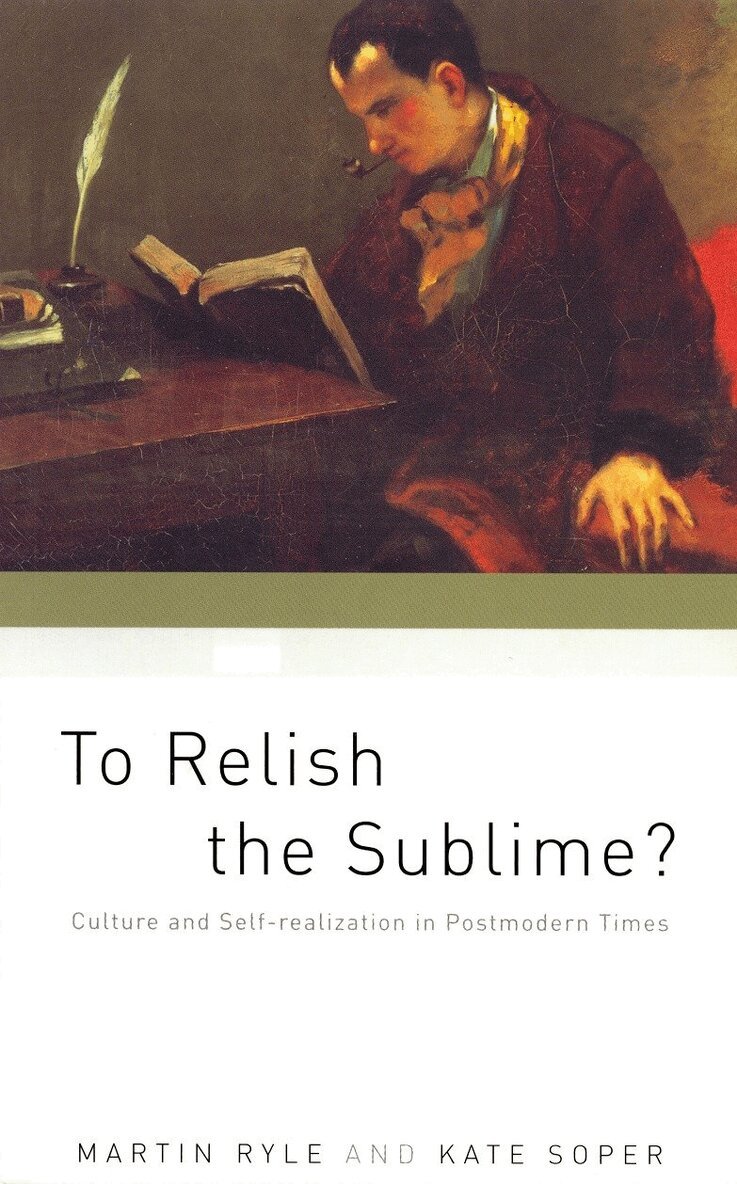
    To Relish the Sublime?

    Culture and Self-Realization in Postmodern Times

    AvKate Soper,Martin Ryle

    Häftad, Engelska, 2002

    416 kr

    Beställningsvara. Skickas inom 3-6 vardagar. Fri frakt över 249 kr.

    Fler format och utgåvor

    E-bok

    193 kr

    Beskrivning

    More than 130 years from Matthew Arnold's pronouncement that human beings 'must be compelled to relish the sublime', education in the humanities still relies on the ideal of culture as the means of intellectual development. In this distinctive and original work, Martin Ryle and Kate Soper explore the growing tensions and contradictions between this and the contemporary world of work, pleasure, and consumption.While critical of the hypocrisies and elitism that can attach to notions of cultural self-realization, the authors nonetheless defend its overall educational and social value. Their wide-ranging discussion takes in critiques of philosophers from Kant and Schiller to Nietzsche and Marx, and includes historically contextualized readings of novels by Wollstonecraft, Hardy, Gissing, London, and Woolf. In their sustained defense of a conception of personal worth and self-fulfillment for its own sake, Ryle and Soper not only offer a powerful critique of the continuing dominance of work in contemporary society, but also provide a compelling alternative to the standard postmodern skepticism about the relevance of high culture.

    Produktinformation

    • Utgivningsdatum:2002-12-17
    • Mått:137 x 216 x 23 mm
    • Vikt:357 g
    • Format:Häftad
    • Språk:Engelska
    • Antal sidor:264
    • Förlag:Verso Books
    • ISBN:9781859844618

    Utforska kategorier

    • Kulturvetenskap inom Samhälle och politik
    • Filosofiska discipliner inom Filosofi och religion
    • Litteraturvetenskap inom Skönlitteratur

    Mer om författaren

    Martin Ryle is Senior Lecturer in Continuing Education at the University of Sussex. His previous books include The Politics of Nuclear Disarmament, Ecology and Socialism, and Journeys in Ireland.Kate Soper teaches philosophy and cultural theory at the University of North London. Her previous works include On Human Needs, What is Nature? Culture, Politics and the Non-Human and, with Verso, Troubled Pleasures.

    Recensioner i media

    The idea of culture as a means of self-realisation and an embodiment of universal values has been derided by most progressive critics for more than a generation, and by many reactionary ones too. But perhaps they have all been wrong. This well-informed study of history, politics and literature makes an eloquent case for reinstating it: a powerful and timely book.