• Fri frakt över 249 kr
  • •
  • Snabba leveranser
  • •
  • Billiga böcker
Kundservice

Du är på sajten för privatpersoner.

Företag, bibliotek eller offentlig verksamhet?

Du handlar på classic.bokus.com, där alla dina funktioner finns intakta.
Till classic.bokus.com
Bokus logotyp. Gå till startsidan.
  • Erbjudanden
  • Nyheter
  • Student
  • Topplistor
  • Barn & ungdom
  • Bokus Play
  • E-böcker
  • Pocketböcker
  • Spel & pussel

10% rabatt på allt med kod NYSTART10 →

Sidfot

Mina sidor

    Hjälp

    • Kundservice
    • Vanliga frågor och svar
    • Frakt och leverans
    • Retur vid ångerrätt
    • Reklamera vara
    • Betalning
    • Köpvillkor
    • Allmänna villkor
    • Information om webbplatsens tillgänglighet

    Om Bokus

    • Om oss
    • Pressrum
    • För studenter
    • För företag
    • För bibliotek och offentlig verksamhet
    • För leverantörer
    • Hållbarhet

    Populärt

    • Aktuella erbjudanden
    • Presentkort
    • Studentlitteratur
    • Nya böcker
    • Topplistor
    • Signerade böcker
    • Engelska böcker

    Inspiration

    • Boktips
    • BookTok
    • Populära bokserier
    • Barnbokskaraktärer
    • Populära författare
    Logotyp för Bokus
    Följ oss på Facebook (extern länk)Följ oss på Instagram (extern länk)Följ oss på YouTube (extern länk)Följ oss på TikTok (extern länk)
    bokus @ CookiesAnpassa cookiesIntegritetspolicyKöpvillkor
    Till Citymail hemsida (extern länk)Till Budbee hemsida (extern länk)Till Postnord hemsida (extern länk)Till Schenker hemsida (extern länk)Till Early Bird hemsida (extern länk)Till Walleys hemsida (extern länk)
    1. Kultur
    2. Konstböcker

    Monument

    Art and Vulgarity in Saddam Hussein's Iraq

    AvKanan Makiya

    Häftad, Engelska, 2003

    351 kr

    Beställningsvara. Skickas inom 10-15 vardagar. Fri frakt över 249 kr.

    Fler format och utgåvor

    E-bok

    373 kr

    Beskrivning

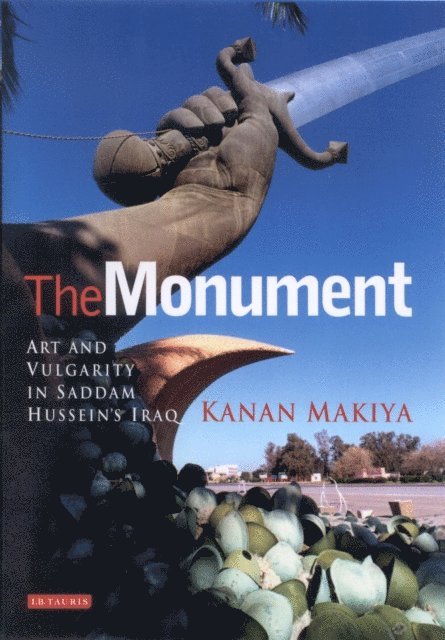
    In Baghdad, an enormous monument nearly twice the size of the Arc de Triomphe towers over the city. Two huge forearms emerge from the ground, clutching two swords that clash overhead. Those arms are enlarged casts of those of Saddam Hussein, showing every bump and follicle. The "Victory Arch" celebrates a victory over Iran (in their eight-year-long war) that never happened. This text is a study of the interplay between art and politics - of how culture, normally an unquestioned good, can play into the hands of a power with devastating effects. Kanan Makiya uses the culture invented by Saddam Hussein as a window into the nature of totalitarianism and shows how art can become the weapon of dictatorship. Under Saddam Hussein, culture connived in his evil - this text explains how. It should be useful reading for anyone concerned with the power of culture and the culture of power.
    Produktinformation

    • Utgivningsdatum:2003-12-31
    • Mått:148 x 210 x 19 mm
    • Vikt:229 g
    • Format:Häftad
    • Språk:Engelska
    • Antal sidor:176
    • Förlag:Bloomsbury Publishing PLC
    • ISBN:9781860649660

    Utforska kategorier

    • Konstböcker inom Kultur
    • Arkitektur inom Kultur
    • Kulturvetenskap inom Samhälle och politik

    Mer om författaren

    Kanan Makiya is one of Iraq's leading dissidents. He is the author of the highly acclaimed 'Republic of Fear,' ' Cruelty and Silence' and 'The Rock.' He directs the Iraq Research and Documentation Project at Harvard University, and is a Professor at Brandeis.

    Recensioner i media

    "Brilliant and moving. The kind of totalitarian propaganda discussed by Makiya is relevant not only to explain the grip of power of Saddam Hussein but to other Arab countries." -Peter Partner, The New York Review of Books "...elegantly savage critique of Saddam Hussein's architectural follies... His book deserves to rank with the classic analyses of Nazi and Stalinist art: superb, as a study of kitsch, a study of tyranny - and an account of why the latter always loves the former." -Boyd Tonkin, The Independent "The Monument provides an unusual and groundbreaking examination of the cultural control that Saddam Hussein exercised on his people, and the importance of his so-called artistic legacy... shows how art can become the weapon of dictatorship." -Fred Rhodes, The Middle East Magazine "Makiya writes stridently, but he is also capable of patient rational analysis unravelling what the Monument teaches about the abuse of art for political purposes." -Robert Hillenbrand, Times Literary Supplement