• Fri frakt över 249 kr
  • •
  • Snabba leveranser
  • •
  • Billiga böcker
Kundservice

Du är på sajten för privatpersoner.

Företag, bibliotek eller offentlig verksamhet?

Du handlar på classic.bokus.com, där alla dina funktioner finns intakta.
Till classic.bokus.com
Bokus logotyp. Gå till startsidan.
  • Erbjudanden
  • Nyheter
  • Student
  • Topplistor
  • Barn & ungdom
  • Bokus Play
  • E-böcker
  • Pocketböcker
  • Spel & pussel

10% rabatt på allt med kod: NYSTART10 →

Sidfot

Mina sidor

    Hjälp

    • Kundservice
    • Vanliga frågor och svar
    • Frakt och leverans
    • Retur vid ångerrätt
    • Reklamera vara
    • Betalning
    • Köpvillkor
    • Allmänna villkor
    • Information om webbplatsens tillgänglighet

    Om Bokus

    • Om oss
    • Pressrum
    • För studenter
    • För företag
    • För bibliotek och offentlig verksamhet
    • För leverantörer
    • Hållbarhet

    Populärt

    • Aktuella erbjudanden
    • Presentkort
    • Studentlitteratur
    • Nya böcker
    • Topplistor
    • Signerade böcker
    • Engelska böcker

    Inspiration

    • Boktips
    • BookTok
    • Populära bokserier
    • Barnbokskaraktärer
    • Populära författare
    Logotyp för Bokus
    Följ oss på Facebook (extern länk)Följ oss på Instagram (extern länk)Följ oss på YouTube (extern länk)Följ oss på TikTok (extern länk)
    bokus @ CookiesAnpassa cookiesIntegritetspolicyKöpvillkor
    Till Citymail hemsida (extern länk)Till Budbee hemsida (extern länk)Till Postnord hemsida (extern länk)Till Schenker hemsida (extern länk)Till Early Bird hemsida (extern länk)Till Walleys hemsida (extern länk)
    1. Historia och arkeologi
    2. Historia
    3. Europas historia

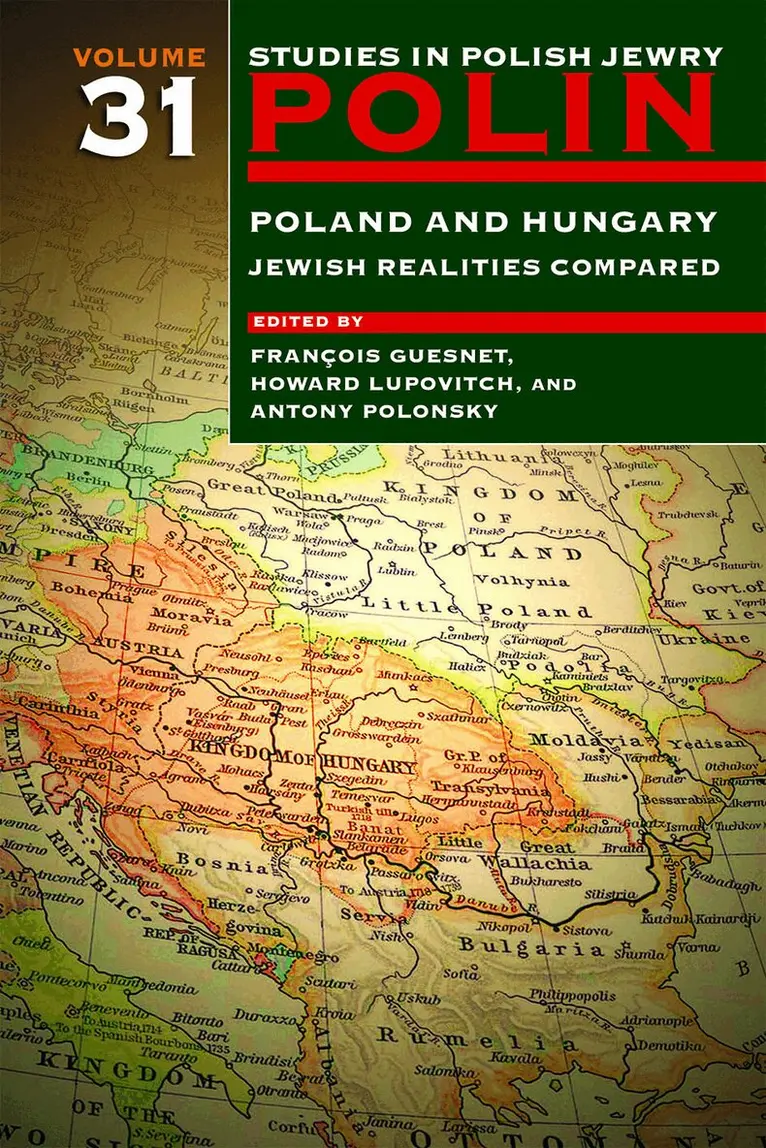
    Polin: Studies in Polish Jewry Volume 31

    Poland and Hungary: Jewish Realities Compared

    AvFrançois Guesnet,Howard Lupovitch

    Häftad, Engelska, 2018

    Del 31 i serien Polin: Studies in Polish Jewry

    533 kr

    Beställningsvara. Skickas inom 5-8 vardagar. Fri frakt över 249 kr.

    Beskrivning

    At the beginning of the twentieth century, the Jewish communities of Poland and Hungary were the largest in the world and arguably the most culturally vibrant, yet they have rarely been studied comparatively. Despite the obvious similarities, historians have mainly preferred to highlight the differences and emphasize instead the central European character of Hungarian Jewry. Collectively, these essays offer a different perspective. The volume has five sections. The first compares Jewish acculturation and integration in the two countries, analysing the symbiosis of magnates and Jews in each country’s elites and the complexity of integration in multi-ethnic environments. The second considers the similarities and differences in Jewish religious life, discussing the impact of Polish hasidism in Hungary and the nature of ‘progressive’ Judaism in Poland and the Neolog movement in Hungary. Jewish popular culture is the theme of the third section, with accounts of the Jewish involvement in Polish and Hungarian cabaret and film. The fourth examines the deterioration of the situation in both countries in the interwar years, while the final section compares the implementation of the Holocaust and the way it is remembered. The volume concludes with a long interview with the doyen of historians of Hungary, István Deák.

    Produktinformation

    • Utgivningsdatum:2018-12-19
    • Mått:156 x 234 x undefined mm
    • Format:Häftad
    • Språk:Engelska
    • Serie:Polin: Studies in Polish Jewry
    • Antal sidor:572
    • Förlag:Liverpool University Press
    • ISBN:9781906764722

    Utforska kategorier

    • Europas historia inom Historia och arkeologi
    • Sociala grupper och identitet inom Samhälle och politik

    Mer om författaren

    Co-editor, with Antony Polonsky, of Jewish Self-Government in Eastern Europe, Polin, 34 (2022), and, with Jerzy Tomaszewski, of Sources on Jewish Self-Government in the Polish Lands from Its Inception to the Present (2022). He is chair of the Institute for Polish-Jewish Studies and secretary of the European Association for Jewish Studies. He has held research fellowships and visiting teaching positions at University of Pennsylvania, University of Oxford, the Hebrew University of Jerusalem, Dartmouth College, Potsdam University, Vilnius University, and the Jagiellonian University Kraków.Howard Lupovitch is an associate professor of history and director of the Cohn-Haddow Center for Judaic Studies at Wayne State University. He is the author of Jews at the Crossroads: Tradition and Accommodation during the Golden Age of the Hungarian Nobility, 1729—1878 (Budapest, 2007) and is currently writing a history of the Neolog movement. Author of The Jews in Poland and Russia, 3 vols. (Littman Library, 2010–12), also published in an abridged version: The Jews in Poland and Russia: A Short History (2014). In 2012 The Jews in Poland and Russia was awarded the Pro Historia Polonorum prize of the Polish Senate for the best book on the history of Poland in a non-Polish language written in the previous five years. Holds honorary doctorates from the University of Warsaw (2010) and the Jagiellonian University (2014). In 2011 he was awarded the Officer’s Cross of the Order of Merit of Polonia Restituta and the Officer’s Cross of the Order of Merit of Independent Lithuania.

    Innehållsförteckning

    • PART I POLAND AND HUNGARY: JEWISH REALITIES COMPAREDIntroduction François Guesnet, Howard Lupovitch, and Antony PolonskyJEWISH ACCULTURATION AND INTEGRATIONThe Magnate–Jewish Symbiosis: Hungarian and Polish Variations on a Theme Howard LupovitchEthnic Triangles, Assimilation, and the Complexities of Acculturation in a Multi-ethnic Society Kristian GernerBetween Poland and Hungary: The Process of Jewish Integration from a Comparative Perspective Guy MironThe Ashkenaz of the South: Hungarian Jewry in the Long Nineteenth Century Victor KarádyJews and Poles, 1860–1914: Assimilation, Emancipation, Antisemitism Theodore R. WeeksJewish Women in Poland and Hungary Katalin FenyvesMorality, Motherland, and Freedom: The Arduous and Triumphant Journey of Michael Heilprin to America Ferenc Raj and Howard LupovitchGender and Scholarship in the Goldziher Household: Jewish Men and Women in Late Nineteenth- and Early Twentieth-Century Hungarian Academia Katalin Franciska RacJEWISH RELIGIOUS LIFEPolish Hasidism and Hungarian Orthodoxy in a Borderland: The Munkács Rabbinate Levi CooperPolish ‘Progressive’ Judaism and Hungarian Neolog Judaism: A Comparison Benjamin MatisJEWS IN POPULAR CULTUREIntegration and Its Discontents: Humorous Magazines and Music Halls as Reflections of the Ambiguous Transformation of Budapest Jews into Magyars of the Jewish Faith Mary GluckCabaret Nation: The Jewish Foundations of Kabaret Literacki, 1920–1939 Beth HolmgrenThe Politics of Exclusion: The Turbulent History of Hungarian and Polish Film, 1896–1945 Susan M. Papp and Antony B. PolonskyTHE INTERWAR YEARSAbnormal Times: Intersectionality and Anti-Jewish Violence in Hungary and Poland, 1918–1922 Emily GioielliSuicides of the Polish and Hungarian Types: Jewish Self-Destruction and Social Cohesion in Interwar Warsaw and Budapest Daniel RosenthalTHE HOLOCAUST AND ITS AFTERMATHOn the Margin of a Historic Friendship: Polish Jewish Refugees in Hungary during the Second World War Tamás KovácsPlacing the Ghetto: Warsaw and Budapest, 1939–1945 Tim ColeWarsaw and Budapest, 1939–1945: Two Ghettos, Two Policies, Two Outcomes Laszlo KarsaiPolish and Hungarian Poets on the Holocaust George Gömöri ‘Anti-Fascist Literature’ as Holocaust Literature? The Holocaust in the Hungarian Socialist Literary Marketplace, 1956–1970 Richard S. EsbenshadeHolocaust Remembrance in Hungary after the Fall of Communism Zsuzsanna Agora‘Nicht vor dem Kind!’ Testimonies on the Yellow-Star Houses of Budapest Gwen Jones ‘Non-Remembering’ the Holocaust in Hungary and Poland Andrea PetőJews in Museums: Narratives of Nation and ‘Jewishness’ in Post-Communist Hungarian and Polish Public Memory Anna ManchinPERSONAL REFLECTIONSPolish and Hungarian Jews: So Different, Yet So Interconnected: An Interview with István Deák Howard LupovitchPART IINEW VIEWSPolish National Antisemitism Ireneusz Krzemiński