• Fri frakt över 249 kr
  • •
  • Snabba leveranser
  • •
  • Billiga böcker
Kundservice

Du är på sajten för privatpersoner.

Företag, bibliotek eller offentlig verksamhet?

Du handlar på classic.bokus.com, där alla dina funktioner finns intakta.
Till classic.bokus.com
Bokus logotyp. Gå till startsidan.
  • Erbjudanden
  • Nyheter
  • Student
  • Topplistor
  • Barn & ungdom
  • Bokus Play
  • E-böcker
  • Pocketböcker
  • Spel & pussel

10% rabatt på allt med kod: NYSTART10 →

Sidfot

Mina sidor

    Hjälp

    • Kundservice
    • Vanliga frågor och svar
    • Frakt och leverans
    • Retur vid ångerrätt
    • Reklamera vara
    • Betalning
    • Köpvillkor
    • Allmänna villkor
    • Information om webbplatsens tillgänglighet

    Om Bokus

    • Om oss
    • Pressrum
    • För studenter
    • För företag
    • För bibliotek och offentlig verksamhet
    • För leverantörer
    • Hållbarhet

    Populärt

    • Aktuella erbjudanden
    • Presentkort
    • Studentlitteratur
    • Nya böcker
    • Topplistor
    • Signerade böcker
    • Engelska böcker

    Inspiration

    • Boktips
    • BookTok
    • Populära bokserier
    • Barnbokskaraktärer
    • Populära författare
    Logotyp för Bokus
    Följ oss på Facebook (extern länk)Följ oss på Instagram (extern länk)Följ oss på YouTube (extern länk)Följ oss på TikTok (extern länk)
    bokus @ CookiesAnpassa cookiesIntegritetspolicyKöpvillkor
    Till Citymail hemsida (extern länk)Till Budbee hemsida (extern länk)Till Postnord hemsida (extern länk)Till Schenker hemsida (extern länk)Till Early Bird hemsida (extern länk)Till Walleys hemsida (extern länk)
    1. Psykologi och pedagogik
    2. Psykologi

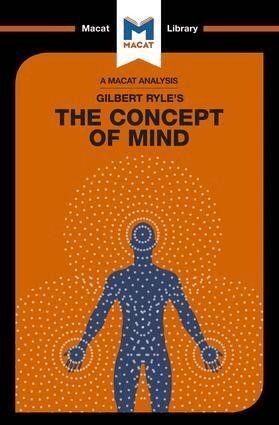
    Analysis of Gilbert Ryle's The Concept of Mind

    AvMichael O'sullivan

    Häftad, Engelska, 2017

    Del i serien Macat Library

    111 kr

    Skickas . Fri frakt över 249 kr.

    Fler format och utgåvor

    E-bok

    135 kr

    E-bok

    135 kr

    Inbunden

    288 kr

    Beskrivning

    Gilbert Ryle’s 1949 The Concept of Mind is now famous above all as the origin of the phrase “the ghost in the machine” – a phrase Ryle used to attack the popular idea that our bodies and minds are separate. His own position was that mental acts are not at all distinct from bodily actions. Indeed, they are the same thing, merely described in different ways – and if one cuts through the confusing language of the old philosophical debates, he suggests, that becomes clear. While, in many ways, modern philosophers of mind have moved on from or discarded Ryle’s actual arguments, The Concept of Mind remains a classic example of two central critical thinking skills: interpretation and reasoning. Ryle was what is known as an “ordinary language” philosopher – a school who considered many philosophical problems to exist purely because of philosophical language. He therefore considered his task as a philosopher to be one of cutting through confusing language, and clarifying matters – exemplifying the critical thinking skill of interpretation at its best. Rather than adding to philosophical knowledge as such, moreover, he saw his role as one of mapping it – giving it what he called a “logical geography.” As such, The Concept of Mind is also all about reasoning: laying out, organizing, and systematizing clear arguments.

    Produktinformation

    • Utgivningsdatum:2017-07-04
    • Mått:129 x 198 x 6 mm
    • Vikt:102 g
    • Format:Häftad
    • Språk:Engelska
    • Serie:Macat Library
    • Antal sidor:96
    • Förlag:Macat International Limited
    • ISBN:9781912127139

    Utforska kategorier

    • Psykologi inom Psykologi och pedagogik
    • Filosofi inom Filosofi och religion
    • Studieteknik och inlärningsförmåga inom Psykologi och pedagogik

    Mer om författaren

    Dr Michael O’Sullivan is a tutor in the Department of Philosophy, King’s College London. He is the editor of Wittgenstein and Perception.

    Innehållsförteckning

    • Ways in to the Text Who was Gilbert Ryle? What does The Concept of Mind Say? Why does The Concept of Mind Matter? Section 1: Influences Module 1: The Author and the Historical Context Module 2: Academic Context Module 3: The Problem Module 4: The Author's Contribution Section 2: Ideas Module 5: Main Ideas Module 6: Secondary Ideas Module 7: Achievement Module 8: Place in the Author's Work Section 3: Impact Module 9: The First Responses Module 10: The Evolving Debate Module 11: Impact and Influence Today Module 12: Where Next? Glossary of Terms People Mentioned in the Text Works Cited