• Fri frakt över 249 kr
  • •
  • Snabba leveranser
  • •
  • Billiga böcker
Kundservice

Du är på sajten för privatpersoner.

Företag, bibliotek eller offentlig verksamhet?

Du handlar på classic.bokus.com, där alla dina funktioner finns intakta.
Till classic.bokus.com
Bokus logotyp. Gå till startsidan.
  • Erbjudanden
  • Nyheter
  • Student
  • Topplistor
  • Barn & ungdom
  • Bokus Play
  • E-böcker
  • Pocketböcker
  • Spel & pussel

Må bättre, för mindre! Upp till 50% rabatt på hälsoböcker

Sidfot

Mina sidor

    Hjälp

    • Kundservice
    • Vanliga frågor och svar
    • Frakt och leverans
    • Retur vid ångerrätt
    • Reklamera vara
    • Betalning
    • Köpvillkor
    • Allmänna villkor
    • Information om webbplatsens tillgänglighet

    Om Bokus

    • Om oss
    • Pressrum
    • För studenter
    • För företag
    • För bibliotek och offentlig verksamhet
    • För leverantörer
    • Hållbarhet

    Populärt

    • Aktuella erbjudanden
    • Presentkort
    • Studentlitteratur
    • Nya böcker
    • Topplistor
    • Signerade böcker
    • Engelska böcker

    Inspiration

    • Boktips
    • BookTok
    • Populära bokserier
    • Barnbokskaraktärer
    • Populära författare
    Logotyp för Bokus
    Följ oss på Facebook (extern länk)Följ oss på Instagram (extern länk)Följ oss på YouTube (extern länk)Följ oss på TikTok (extern länk)
    bokus @ CookiesAnpassa cookiesIntegritetspolicyKöpvillkor
    Till Citymail hemsida (extern länk)Till Budbee hemsida (extern länk)Till Postnord hemsida (extern länk)Till Schenker hemsida (extern länk)Till Early Bird hemsida (extern länk)Till Walleys hemsida (extern länk)
    1. Psykologi och pedagogik
    2. Psykologi

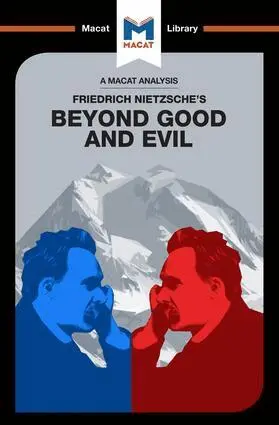
    Analysis of Friedrich Nietzsche's Beyond Good and Evil

    AvDon Berry

    Häftad, Engelska, 2017

    Del i serien Macat Library

    112 kr

    Beställningsvara. Skickas inom 10-15 vardagar. Fri frakt över 249 kr.

    Fler format och utgåvor

    E-bok

    135 kr

    E-bok

    509 kr

    Inbunden

    331 kr

    Beskrivning

    No philosopher could be a better example of creative thinking in action than Friedrich Nietzsche: a German iconoclast who systematically attacked the traditionally accepted views of academic philosophers, seeking to tear down their rickety platform and replace it with a platform of his own. Creative thinkers are people who redefine issues and topics in novel ways to create novel connections, explanations and hypotheses – people, in short, who can turn a topic on its head and present it in an entirely new light. Nietzsche called them “free spirits” – those unwilling to accept the dogmas of the past, wanting instead to think clearly for themselves. In Beyond Good and Evil, Nietzsche focuses his attention on nothing less than the underlying basis of our moral assumptions, unleashing a powerful, polemical critique of the moral dogmas of the past and his own time. His book, which remains one of the most influential works of moral philosophy ever written, is not just an example of creative thinking at work, it is also a passionate argument for its importance. As Nietzsche wrote, “Morality in Europe … is the morality of herd animals.” But if one is ready to think differently and stand out from the herd, “other (and especially higher) moralities are … possible.”

    Produktinformation

    • Utgivningsdatum:2017-07-04
    • Mått:129 x 198 x 14 mm
    • Vikt:124 g
    • Format:Häftad
    • Språk:Engelska
    • Serie:Macat Library
    • Antal sidor:112
    • Förlag:Macat International Limited
    • ISBN:9781912127757

    Utforska kategorier

    • Psykologi inom Psykologi och pedagogik
    • Filosofi inom Filosofi och religion
    • Studieteknik och inlärningsförmåga inom Psykologi och pedagogik

    Mer om författaren

    Dr Don Berry holds a PhD in philosophy from University College London and an honors degree in mathematics from Cambridge. His research focuses on bioethics.

    Innehållsförteckning

    • Ways In to the Text Who was Friedrich Nietzsche? What does Beyond Good and Evil Say? Why does Beyond Good and Evil Matter? Section 1: Influences Module 1: The Author and the Historical Context Module 2: Academic Context Module 3: The Problem Module 4: The Author's Contribution Section 2: Ideas Module 5: Main Ideas Module 6: Secondary Ideas Module 7: Achievement Module 8: Place in the Author's Work Section 3: Impact Module 9: The First Responses Module 10: The Evolving Debate Module 11: Impact and Influence Today Module 12: Where Next? Glossary of Terms People Mentioned in the Text Works Cited