• Fri frakt över 249 kr
  • •
  • Snabba leveranser
  • •
  • Billiga böcker
Kundservice

Du är på sajten för privatpersoner.

Företag, bibliotek eller offentlig verksamhet?

Du handlar på classic.bokus.com, där alla dina funktioner finns intakta.
Till classic.bokus.com
Bokus logotyp. Gå till startsidan.
  • Erbjudanden
  • Nyheter
  • Student
  • Topplistor
  • Barn & ungdom
  • Bokus Play
  • E-böcker
  • Pocketböcker
  • Spel & pussel

10% rabatt på allt med kod: NYSTART10 →

Sidfot

Mina sidor

    Hjälp

    • Kundservice
    • Vanliga frågor och svar
    • Frakt och leverans
    • Retur vid ångerrätt
    • Reklamera vara
    • Betalning
    • Köpvillkor
    • Allmänna villkor
    • Information om webbplatsens tillgänglighet

    Om Bokus

    • Om oss
    • Pressrum
    • För studenter
    • För företag
    • För bibliotek och offentlig verksamhet
    • För leverantörer
    • Hållbarhet

    Populärt

    • Aktuella erbjudanden
    • Presentkort
    • Studentlitteratur
    • Nya böcker
    • Topplistor
    • Signerade böcker
    • Engelska böcker

    Inspiration

    • Boktips
    • BookTok
    • Populära bokserier
    • Barnbokskaraktärer
    • Populära författare
    Logotyp för Bokus
    Följ oss på Facebook (extern länk)Följ oss på Instagram (extern länk)Följ oss på YouTube (extern länk)Följ oss på TikTok (extern länk)
    bokus @ CookiesAnpassa cookiesIntegritetspolicyKöpvillkor
    Till Citymail hemsida (extern länk)Till Budbee hemsida (extern länk)Till Postnord hemsida (extern länk)Till Schenker hemsida (extern länk)Till Early Bird hemsida (extern länk)Till Walleys hemsida (extern länk)
    1. Samhälle och politik
    2. Sociologi och antropologi
    3. Antropologi

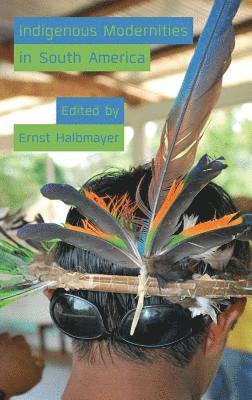
    Indigenous Modernities in South America

    AvErnst Halbmayer

    Inbunden, Engelska, 2018

    964 kr

    Beställningsvara. Skickas inom 5-8 vardagar. Fri frakt över 249 kr.

    Beskrivning

    Indigenous peoples have been cast as representing modernity’s fading premodern Other. This volume starts from the opposite assumption, namely that contemporary indigenous peoples are specifically modern societies, profoundly shaped by their specific ways of dealing with, making use of and transforming the contexts imposed by nation-states, colonial systems and globalization. They do that from a position alternative to that of the modern West. The book aims to understand these processes and the resulting forms of indigenous modernities in Lowland South America through ethnographic case studies. It argues that there is more about indigenous modernities than the simple assertion that indigenous peoples are now modern too. Indigenous groups are modern in multiple, complex and alternative ways. As the contributions show this holds true for current forms of shamanism and indigenous Christian churches, new meanings of traditional clothing, as well as indigenous cosmologies that confront western concepts, technology and welfare programs. The notion of indigenous modernities refers to a space beyond old modernist dichotomies. The paradox, like the disturbing Otherness it brings to our attention, is the result of a relation in which assumptions we take ontologically for granted are confronted by other realities. Looking at the creative ways indigenous peoples’ practices subvert such assumptions may result in substantial irritation and is a starting point for a renewed reflection on classical assumptions about modernities and indigenous ways of both being modern and exceeding modernity in the face of long-standing power inequalities and the imposition of logics of Western ontology.

    Produktinformation

    • Utgivningsdatum:2018-08-10
    • Mått:156 x 234 x 16 mm
    • Vikt:524 g
    • Format:Inbunden
    • Språk:Engelska
    • Antal sidor:246
    • Förlag:Sean Kingston Publishing
    • ISBN:9781912385010

    Utforska kategorier

    • Antropologi inom Samhälle och politik
    • Referensverk och tvärvetenskap inom Samhälle och politik
    • Etnicitet inom Samhälle och politik

    Mer om författaren

    Editor: Ernst Halbmayer is Professor of Social and Cultural Anthropology at the Institutefor Comparative Cultural Research, University of Marburg, Germany. Contributors: Aníbal G. Arregui, Luiza Garnelo, Wolfgang Kapfhammer, Elke Mader, Anne Meiser, Dan Rosengren, Katinka Weber.

    Recensioner i media

    Indigeneous Modernity makes a major contribution to South American studies and is a “must read” by every ethnographer, historian, ethnohistorian, and analyst of South American peoples. It challenges the very basis of so-called “modernization theory” and opens new doors to the understanding of indigenous agency and indigenous powers; Norman E. Whitten Jr, Professor of Anthropology and Latin American Studies and Curator of the Spurlock Museum, University of Illinois at Urbana-Champaign;Reading this book is one step (and an important one, might it even be a giant leap?) to decolonizing the mind, as the reader is confronted with an intermingling multitude of perspectives, values, worldviews and futures. This book is especially valuable for senior scholars and students alike, for anybody seriously concerned with social processes of marginalization, resistance, adaptation, appropriation and the creative and constructive shaping of social realities; Bernd Brabec de Mori, Senior Scientist,Institute of Ethnomusicology,University of Music and Performing Arts Graz.

    Innehållsförteckning

    • Chapter 1 Indigenous peoples and the transformations of modernity: Introductory thoughts on contemporary indigeneities (Ernst Halbmayer); Chapter 2 Shamanic modernities and ritual dynamics among the Shuar (Elke Mader); Chapter 3 Yukpa modernity as joint becoming: Ontology, creolization and the affirmation of difference (Ernst Halbmayer); Chapter 4 The fashion of politics and the politics of fashion: On indigenous modernities and Matsigenka struggles (Dan Rosengren); Chapter 5 Christian indigenous identities and alter-native modernities in the upper Amazon (Anna Meiser); Chapter 6 `We bought a television set from Lídia’: Social programmes and indigenous agency among the Sateré-Mawé of the Brazilian lower Amazon (Wolfgang Kapfhammer and Luiza Garnelo); Chapter 7 Ribeirinho hunting techno-animism: On the inexact lines of Amazonian modernity (Aníbal G. Arregui); Chapter 8 The modernity of indigenous movements: Multiple voices between pragmatism, pressureand agency (Katinka Weber); Chapter 9 `More than modern’ indigenous modernities: Tautology, paradox, excess (Ernst Halbmayer); Contributors; Index.