• Fri frakt över 249 kr
  • •
  • Snabba leveranser
  • •
  • Billiga böcker
Kundservice

Du är på sajten för privatpersoner.

Företag, bibliotek eller offentlig verksamhet?

Du handlar på classic.bokus.com, där alla dina funktioner finns intakta.
Till classic.bokus.com
Bokus logotyp. Gå till startsidan.
  • Erbjudanden
  • Nyheter
  • Student
  • Topplistor
  • Barn & ungdom
  • Bokus Play
  • E-böcker
  • Pocketböcker
  • Spel & pussel

10% rabatt på allt med kod NYSTART10 →

Sidfot

Mina sidor

    Hjälp

    • Kundservice
    • Vanliga frågor och svar
    • Frakt och leverans
    • Retur vid ångerrätt
    • Reklamera vara
    • Betalning
    • Köpvillkor
    • Allmänna villkor
    • Information om webbplatsens tillgänglighet

    Om Bokus

    • Om oss
    • Pressrum
    • För studenter
    • För företag
    • För bibliotek och offentlig verksamhet
    • För leverantörer
    • Hållbarhet

    Populärt

    • Aktuella erbjudanden
    • Presentkort
    • Studentlitteratur
    • Nya böcker
    • Topplistor
    • Signerade böcker
    • Engelska böcker

    Inspiration

    • Boktips
    • BookTok
    • Populära bokserier
    • Barnbokskaraktärer
    • Populära författare
    Logotyp för Bokus
    Följ oss på Facebook (extern länk)Följ oss på Instagram (extern länk)Följ oss på YouTube (extern länk)Följ oss på TikTok (extern länk)
    bokus @ CookiesAnpassa cookiesIntegritetspolicyKöpvillkor
    Till Citymail hemsida (extern länk)Till Budbee hemsida (extern länk)Till Postnord hemsida (extern länk)Till Schenker hemsida (extern länk)Till Early Bird hemsida (extern länk)Till Walleys hemsida (extern länk)
    1. Naturvetenskap och teknik
    2. Matematik och naturvetenskap
    3. Naturvetenskap:allmänt
    4. Populärvetenskap

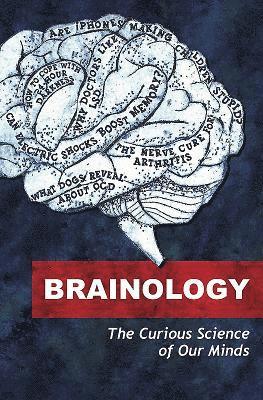
    Brainology

    The Curious Science of Our Minds

    AvWill Storr,John Walsh

    Häftad, Engelska, 2018

    181 kr

    Beställningsvara. Skickas inom 5-8 vardagar. Fri frakt över 249 kr.

    Beskrivning

    16 revealing stories about the human brain.Ever wondered how Scandinavians cope with 24-hour darkness, why we feel pain - or whether smartphones really make children stupid?Have you heard about the US army's research into supercharging minds?You need some Brainology. Written for Wellcome, the health charity, these stories follow doctors as they solve the puzzle of our emotions, nerves and behaviour.Discover fascinating and intriguing stories from the world of science.ContentsOuch! The science of pain - John WalshWhy doctors are reclaiming LSD and ecstasy - Sam WongInside the mind of an interpreter - Geoff WattsHow should we deal with dark winters? - Linda GeddesSmartphones won’t* make your kids dumb (*Probably) - Olivia SolonYou can train your mind into ‘receiving’ medicine - Jo MarchantCharting the phenomenon of deep grief - Andrea VolpeThe mirror cure for phantom limb pain - Srinath PerurCan you think yourself into a different person? - Will StorrHow to survive a troubled childhood - Lucy MaddoxWhat tail-chasing dogs reveal about humans - Shayla LoveA central nervous solution to arthritis - Gaia VinceCould virtual reality headsets relieve pain? - Jo MarchantWhat it means to be homesick in the 21st Century - John Osborne Lighting up brain tumours with Project Violet - Alex O'BrienThe US military plan to supercharge brains - Emma YoungEXTRACTOuch! The science of pain.John WalshOne night in May, my wife sat up in bed and said, ‘I’ve got this awful pain just here.’ She prodded her abdomen and made a face. ‘It feels like something’s really wrong.’ Woozily noting that it was 2am, I asked what kind of pain it was. ‘Like something’s biting into me and won’t stop,’ she said.‘Hold on,’ I said blearily, ‘help is at hand.’ I brought her a couple of ibuprofen with some water, which she downed, clutching my hand and waiting for the ache to subside.An hour later, she was sitting up in bed again, in real distress. ‘It’s worse now,’ she said, ‘really nasty. Can you phone thedoctor?’ Miraculously, the family doctor answered the phone at 3am, listened to her recital of symptoms and concluded, ‘It might be your appendix. Have you had yours taken out?’ No, she hadn’t. ‘It could be appendicitis,’ he surmised, ‘but if it was dangerous you’d be in much worse pain than you’re in. Go to the hospital in the morning, but for now, take some paracetamol and try to sleep.’Barely half an hour later, the balloon went up. She was awakened for the third time, but now with a pain so savage and uncontainable it made her howl like a tortured witch face down on a bonfire. The time for murmured assurances and spousal procrastination was over. I rang a local minicab, struggled into my clothes, bundled her into a dressing gown, and we sped to St Mary’s Paddington at just before 4am.The flurry of action made the pain subside, if only through distraction, and we sat for hours while doctors brought forms to be filled, took her blood pressure and ran tests. A registrar poked a needle into my wife’s wrist and said, ‘Does that hurt? Does that? How about that?’ before concluding: ‘Impressive. You have a very high pain threshold.’The pain was from pancreatitis, brought on by rogue gallstones that had escaped from her gall bladder and made their way, like fleeing convicts, to a refuge in her pancreas, causing agony. She was given a course of antibiotics and, a month later, had an operation to remove her gall bladder.‘It’s keyhole surgery,’ said the surgeon breezily, ‘so you’ll be back to normal very soon. Some people feel well enough to take the bus home after the operation.’ His optimism was misplaced. My lovely wife, she of the admirably high pain threshold, had to stay overnight, and came home the following day filled with painkillers; when they wore off, she writhed with suffering. After three days she rang the specialist, only to be told:'

    Produktinformation

    • Utgivningsdatum:2018-05-03
    • Mått:129 x 198 x 14 mm
    • Vikt:268 g
    • Format:Häftad
    • Språk:Engelska
    • Antal sidor:272
    • Förlag:Canbury Press
    • ISBN:9781912454006

    Utforska kategorier

    • Populärvetenskap inom Naturvetenskap och teknik
    • Hälsa inom Hälsa och familj

    Mer om författaren

    Top science writers report for Mosaic Science, a project founded by the health charity Wellcome to promote high-quality science writing.Mosaic has published dozens of stories exploring the science people care about. Canbury Press has curated these long-form stories into two books, Bodyology: The Curious Science of Our Bodies (ISBN  9780995497863) and Brainology: The Curious Science of Our Minds  (ISBN 9781912454006).The leading authors who contributed to Brainology are: John Walsh, Sam Wong, Geoff Watts, Linda Geddes, Olivia Solon, Jo Marchant, Andrea Volpe, Srinath Perur, Will Storr, Lucy Maddox, Shayla Love, Gaia Vince, Jo Marchant, John Osborne, Alex O'Brien, Emma Young

    Recensioner i media

    'A companion to Bodyology, Brainology consists of articles originally published on the Mosaic Science website and funded by medical charity Wellcome. These are well-written, professional articles: if you hit on a topic that interest you, it's very easy to be sucked in. Because I'm not a great fan of medical journalism, I was less interested by topics such as 'the nerve cure for arthritis' and 'you can train your body to receive medicine.' However, some of the other articles really rewarded my read: for example, 'How should we deal with dark winters' and (despite the 'doctor' word) 'How doctors are reclaiming LSD', which was genuinely interesting on the history of attempts to use LSD and MDMA for medical purposes (though perhaps a little light on the deaths allegedly caused by the latter).  For me, though, the standout article was 'What tail-chasing dogs reveal about humans', which uses studies of the compulsive behaviour of dogs to try to get insights into OCD. If I'm honest, I wasn't very interested in the human side, but the idea that dogs could have such behaviour - one dog, for example, apparently had to put seven pieces of food into recesses in a couch before eating - was fascinating. In reviewing Bodyology, I complained about the over-heavy use of 'true life stories'. This is also the case with Brainology, though more of them here are first person, which tend to have less of the over-dramatised wording. Perhaps because of limiting the book to a single organ - even one as interesting as the brain - though, I found there were fewer stories that really grabbed me. However, the ones that did were superb. As with Bodyology, it's a great collection to dip into for a single item as a quick read - though it's very tempting then to read just one more. And another. Makes a potentially heavy topic approachable and fascinating.'

    Innehållsförteckning

    • INTRODUCTION. All of the stories in this book were first published by Mosaic (mosaicscience.com), created by Wellcome, a global charitable foundation dedicated to improving human health. They are republished here under a Creative Commons licence. Some edits have been made, including to the headlines1. OOUCH! THE SCIENCE OF PAIN. There seemed to be a chasm of understanding in human discussions of pain. Let's find out how the medical profession apprehends pain – the language it uses for something that’s invisible, that can’t be measured save for asking for a sufferer’s subjective description2. WHY DOCTORS ARE RECLAIMING LSD AND ECSTASY. The early LSD researchers had no way to look at what it was doing inside the brain. Now we have brain scans. Robin Carhart-Harris has carried out such studies with psilocybin, LSD and MDMA. He says there are two basic principles of how psychedelics work3. INSIDE THE MIND OF AN INTERPRETER. So much goes on in an interpreter’s brain that it’s hard even to know where to start. Recently, however, a handful of enthusiasts have taken up the challenge, and one region of the brain – the caudate nucleus – has already caught their attention4. HOW SHOULD WE DEAL WITH DARK WINTERS? For most, it's a mild malaise, winter blues. For a few seasonal affective disorder (SAD) is a form of depression. Now the town of Rjukan in southern Norway has installed giant mirrors to make the most of the winter sun. Do they cheer up the inhabitants?5. SMARTPHONES WON'T* MAKE YOUR KIDS DUMB (*PROBABLY). The concern among some experts is that these devices, if used in particular ways, could be changing children’s brains for the worse – potentially affecting their attention, motor control, language skills and eyesight, especially in under-fives6. YOU CAN TRAIN YOUR BODY INTO 'RECEIVING' MEDICINE. A quiet revolution is taking place in immunology. Lowering drug doses could minimise harmful side effects and save billions in health costs. How? By teaching the body how to respond to a medicine, so it can trigger the same change on its own7. CHARTING THE PHENOMENON OF DEEP GRIEF. 'Complicated grief' affects 10-20% of people after a spouse or romantic partner dies, or when the death of a loved one is sudden or violent. It is even more common among parents who have lost a child. It is very debilitating and treatable8. THE MIRROR CURE FOR PHANTOM LIMB PAIN. An American, Stephen Sumner, is helping Cambodian amputees, who have lost a limb due to landmines, to stop suffering debilitating pain and anxiety – with a usual and highly successful technique. He cycles around villages and hospitals looking for amputees9. CAN YOU THINK YOURSELF INTO A DIFFERENT PERSON? Divorced and with another break-up, Debbie Hampton took an overdose and damaged her brain: encephalopathy. Then she tried a new treatment called neurofeedback. Then she read The Brain That Changes Itself. Now she runs thebestbrainpossible.com10. HOW TO SURVIVE A TROUBLED CHILDHOOD. In Hawaii, researchers into trauma found two-thirds of 'high-risk' children developed significant problems. But totally unexpectedly, one-third didn’t. They became competent, confident and caring adults. Why?11. WHAT TAIL-CHASING DOGS REVEAL ABOUT HUMANS. Sputnik has canine compulsive disorder (CCD) and is at Tufts for a checkup with Nicholas Dodman, a veterinarian who has been studying CCD for over two decades. When he started, he realised he had a potentially ideal animal study model for human OCD12. A CENTRAL NERVOUS SOLUTION TO ARTHRITIS. Operating far below the level of our conscious minds, the vagus nerve is vital for keeping our bodies healthy. It is an essential part of the parasympathetic nervous system, which is responsible for calming organs after the adrenaline response to danger13. COULD VIRTUAL REALITY HEADSETS RELIEVE PAIN? Playing SnowWorld during wound-care sessions eases patients’ reported pain up to 50 per cent in addition to the pain relief they get from drugs – significantly better than other forms of distraction, such as music or video games. VR's immersion is crucial14. WHAT IT MEANS TO BE HOMESICK IN THE 21ST CENTURY. Dr Miranda van Tilburg has written extensively about homesickness and is the editor of a collection of articles called Psychological Aspects of Geographical Moves, all of which focus on homesickness and acculturation stress (the psychological impact)15. LIGHTING UP BRAIN TUMOURS WITH PROJECT VIOLET. Fluorescence imaging literally lights up tumours so surgeons can see them, providing real-time image guidance. 5-ALA, also called Gliolan, makes brain tumour cells glow red under UV light. The dye is swallowed by patients 3–4 hours before surgery16. THE US MILITARY PLAN TO SUPERCHARGE BRAINS. DARPA-funded researchers imaged volunteers’ brains to see which regions were active as they learned to spot threats. Then they applied 2 milliamps of direct current for 30 minutes to that crucial region: the inferior frontal cortex. It halved learning time17. MICROCHIPPING THE YOUNG AT THE CYBORG FAIR. Michael Bareev-Rudy never expected to have his finger implanted with a magnet. But in November 2015, the 18-year-old decided to embed a 3 mm x 1 mm magnet in his index finger at an event held in Dusseldorf, Germany. A crowd watched the €100 operationACKNOWLEDGEMENTS. Canbury Press wishes to thank Mosaic and the Wellcome Foundation for its assistance with Brainology. And the following for writing, editing, fact-checking, or art directing the articles in this book: John Walsh, Louisa Saunders, Liana Aghajanian, Rob Reddick, Charlie Hall, Sam Wong