• Fri frakt över 249 kr
  • •
  • Snabba leveranser
  • •
  • Billiga böcker
Kundservice

Du är på sajten för privatpersoner.

Företag, bibliotek eller offentlig verksamhet?

Du handlar på classic.bokus.com, där alla dina funktioner finns intakta.
Till classic.bokus.com
Bokus logotyp. Gå till startsidan.
  • Erbjudanden
  • Nyheter
  • Student
  • Topplistor
  • Barn & ungdom
  • Bokus Play
  • E-böcker
  • Pocketböcker
  • Spel & pussel

10% rabatt på allt med kod: NYSTART10 →

Sidfot

Mina sidor

    Hjälp

    • Kundservice
    • Vanliga frågor och svar
    • Frakt och leverans
    • Retur vid ångerrätt
    • Reklamera vara
    • Betalning
    • Köpvillkor
    • Allmänna villkor
    • Information om webbplatsens tillgänglighet

    Om Bokus

    • Om oss
    • Pressrum
    • För studenter
    • För företag
    • För bibliotek och offentlig verksamhet
    • För leverantörer
    • Hållbarhet

    Populärt

    • Aktuella erbjudanden
    • Presentkort
    • Studentlitteratur
    • Nya böcker
    • Topplistor
    • Signerade böcker
    • Engelska böcker

    Inspiration

    • Boktips
    • BookTok
    • Populära bokserier
    • Barnbokskaraktärer
    • Populära författare
    Logotyp för Bokus
    Följ oss på Facebook (extern länk)Följ oss på Instagram (extern länk)Följ oss på YouTube (extern länk)Följ oss på TikTok (extern länk)
    bokus @ CookiesAnpassa cookiesIntegritetspolicyKöpvillkor
    Till Citymail hemsida (extern länk)Till Budbee hemsida (extern länk)Till Postnord hemsida (extern länk)Till Schenker hemsida (extern länk)Till Early Bird hemsida (extern länk)Till Walleys hemsida (extern länk)
    1. Historia och arkeologi
    2. Historia
    3. Historia: särskilda händelser och ämnen
    4. Socialhistoria och kulturhistoria

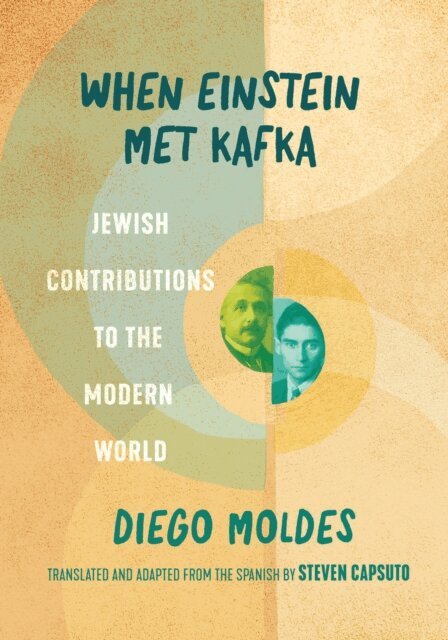
    When Einstein Met Kafka

    Jewish Contributions to the Modern World

    AvDiego Moldes,Steven Capsuto

    Inbunden, Engelska, 2025

    295 kr

    Beställningsvara. Skickas inom 5-8 vardagar. Fri frakt över 249 kr.

    Fler format och utgåvor

    E-bok

    267 kr

    Beskrivning

    In April 1911, Prague artists, writers, and intellectuals often gathered nightly at the Café Louvre, an intellectual center where music was played and high-level discussions were held. Many of the attendees were German-speaking Jews, such as Franz Kafka and his faithful friend Max Brod, Hugo Bergmann, Oskar Kraus, Franz Werfel, the mathematician Georg Pick, and a new arrival to the city, thirty-two-year-old Albert Einstein. Is it possible that Kafka and Einstein met and exchanged ideas? Did they influence each other from a philosophical or deep-thinking perspective? In neither Kafka's nor Einstein’s correspondence there is not even the slightest mention of each other. But Einstein and Kafka, two icons of our modern era, serve as the starting point for this book on the enormous contributions in the fields of the empirical sciences, humanities, letters, and arts by individuals of Jewish origin in modernity. In this book, the reader will encounter numerous names in the pages that all spring from the fountainhead of these two antecedents, the Einsteinian and the Kafkian.While Jews account for 0.2 percent of the world’s population and no more than 2.5 percent of any country except Israel, they have made some of the greatest contributions to Western Culture in diverse fields that range from physics and philosophy to music and art. One register of these contributions is the Nobel Prizes: from their first recipients in 1901, 26 percent of awardees in the Nobel’s six fields — among them, physics, physiology/medicine, and economics — have been Jews. What accounts for the extraordinary breadth of these achievements? This is a question that Diego Moldes examines in When Einstein Met Kafka.His answers include the history of Jewish culture itself, whether religious or secular, with its emphasis on literacy, learning, and especially inquiry and questioning. Until the European Enlightenment in the 18th century, Jews did not have full citizenship and civil rights — they were barred from universities, from government, and from entire professions. The Enlightenment opened the doors!Despite the outbreaks of violent anti-Semitism — or what Diego Moldes calls Judeophobia — and continuing discrimination in all Western countries, Jews now had legal rights, and they persevered. In a near-encyclopedic fashion, he profiles just how thousands of individual Jews, by name, made original contributions to fields as diverse as medicine, artificial intelligence, philosophy, history, economics, business, world finance, computing, sports, film, architecture, and more! The book itself is an extraordinary achievement, the result of twenty years of intensive research, yet written in an immensely engaging style that has been translated and adapted for English readers from the Spanish by Steven Capsuto.

    Produktinformation

    • Utgivningsdatum:2025-10-30
    • Mått:177 x 254 x 44 mm
    • Vikt:1 428 g
    • Format:Inbunden
    • Språk:Engelska
    • Antal sidor:700
    • Förlag:Mandel Vilar Press
    • ISBN:9781942134398
    • Översättare:Steven Capsuto

    Utforska kategorier

    • Socialhistoria och kulturhistoria inom Historia och arkeologi
    • Allmän historia och världshistoria inom Historia och arkeologi
    • Biografier inom Biografier

    Mer om författaren

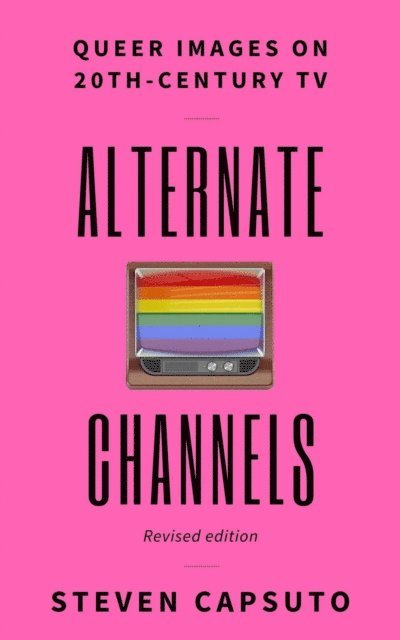
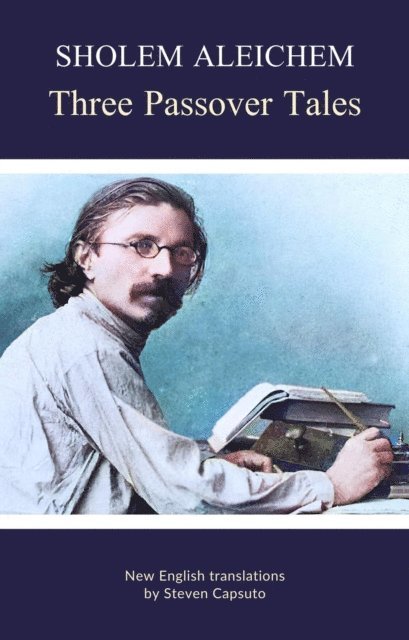
    Diego Moldes is a Spanish writer, an essayist, novelist, poet, critic and historian of cinema and culture. He holds a PhD in Information Sciences (Complutense University, Madrid), a BA degree in Advertising and Public-Relations, an MA in Publishing and an MA in Foundation Management. In 2019, Galaxia Gutenberg published his book Cuando Einstein encontró a Kafka, Contribuciones de los Judíos al mundo moderno. His connection to Judaism led him to collaborate with Raíces: Revista judía de cultura (Roots: A Jewish Cultural Magazine). From 2015 to 2018, he served as the executive director of the Fundación Hispanojudía (the Hispanic-Jewish Foundation). In 2015, he became president and co-founder of ONG Asociación Fania (the Fania Association), a group which combats antisemitism and supports Jewish cultural endeavors. To date, Diego Moldes has published 14 books. Steven Capsuto translates from Spanish, Portuguese, Catalan, French, Galician and Ladino. His most recent published translation was Amazônia by Sebastiao Salgado (Taschen, 2022); since 2019 he has been the main Ladino-English translator for the ten-volume Posen Library of Jewish Culture (Yale). He is also the author of Alternate Channels: Queer Images on 20th-Century TV (Original edition Ballantine Books, 2000, revised 20th Anniversary edition, 2020).

    Recensioner i media

    "Diego Moldes chronicles the key Jewish characters who shaped many of the most important areas of Jewish life, be they science, fashion, film, or literature. Both exhaustive and informative, the book is a helpful resource for those looking to study the people, writings, and thinkings of Jews who shaped Western civilization.Moldes, who is not Jewish, describes himself as an admirer of Jewish culture. This book is just one example of his allyship; he has served as the Executive Director of the Foundacion Hispanojudia (the Hispanic-Jewish Foundation) and as President and co-founder of ONG Associacion Fania (The Fania Association)  a group that combats antisemitism and supports Jewish cultural endeavors....Before discussing individual Jewish thinkers and leaders, Moldes spends over seventy pages answering two important questions: where does antisemitism come from, and how does one define a Jew? These two sections are impressive for their breadth of sources and detail .... Since Moldes is well-read in many languages, even the most educated American readers will encounter new thinkers and names....After these opening sections, the book turns to the Jews who shaped the modern world. Moving through topics as diverse as the inventions of glass, linguistics, computing, medicine, and sports, the book is full of thousands of names of history's most important Jews ... One can't help remark ... that the world would look very different, indeed  much poorer, had these Jews not between around to invent the products, found the companies, and imagine the ideas that we often take for granted....But those looking to appreciate how our world  has been shaped by the Jewish people will, after reading this book, marvel at our accomplishments and Moldes' extensive knowledge of them."--The Jewish Book Council Review, by Rabbi Mark Katz, Rabbi at Temple Ner Tamid, Bloomfield, NJ and author of several books including The Heart of Loneliness: How Jewish Wisdom Can Help You Cope and Find Comfort, a finalist for the National Jewish Book Award

    Innehållsförteckning

    • When Einstein Met KafkaTable of ContentsPart 11.Anti-SemitismEducation and JudaismWorld Map of Anti-Semitism2.Jewish IdentityJudeo-Christianity, Judeo-Christian, or Judaism and Christianity?Part 21. Modern Geniuses of HumanityIntelligence Quotient (IQ)“Overeducation”2. Science and InventionsMathematicsSix Degrees of SeparationArtificial IntelligenceTopologyStatisticsInvention of the Gasoline-Powered CarInvention of AspirinUNICEFOrigins of the City, Origins of CementInvention of Glass3. Literature and CultureHebrew and Jewish Modern Literature (Eighteenth to Twenty-First Centuries)A Nation without a Territory (Extraterritoriality)Modern Literature (Authors Born in the Nineteenth and Twentieth Centuries)“Electric-Fan Writers”and “Sponge Writers”Franz KafkaMarcel ProustStefan ZweigSome Modern Jewish AuthorsAngel Wagenstein’s Remarkable Trilogy of NovelsDutch Jewish WritersDanilo KišLiterature of the HolocaustFranceTwo Notable Cases: Canetti and KoestlerOther ExamplesItalyHugo Bettauer and The City without JewsExilliteraturNorth AmericaThe Pawnbroker, Edward Lewis Wallant’s Great NovelPlaywrights of Jewish OriginTwo Spanish Examples: Aub and Cansinos AssensOther Contemporary CasesClarice LispectorLatin AmericaInterview with Gabi GleichmannInterview with Ezequiel SzafirIsraeli Literature in HebrewThe Hare with Amber Eyes: The Story of the EphrussisJewish, Part Jewish, or Non-Jewish?Conversos in Castile in the Fifteenth, Sixteenth, and Seventeenth Centuries4. Philosophy, History, and ThoughtThe Frankfurt SchoolAnthropologyLinguisticsPsychology and PsychiatryFilm Criticism and EssaysHinduism and SanskritA Spanish Cultural ExampleHistorians from Jewish Backgrounds5. Business, Banking, and the World of FinanceBuilding American CapitalismExamples from the Twentieth and Twenty-First CenturiesNobel PrizesVarious Economic ExamplesReal EstateShellMattelHasbroKraftDanone (Dannon)Nivea Mercedes-Benz CitroënPhilipsHeinekenHartz Mountain Dunkin’ DonutsLife InsuranceSara Lee CorporationLouis Dreyfus Group BlackRockTamares GroupBernie MadoffThe FIAT GroupGlencoreCoca-ColaPrivate AviationConsulting and Auditing: The Big FourJews Prominent in Germany’s Economy before the Holocaust (1825–1933)Jews Prominent in the United Kingdom’s EconomyJews Prominent in Canada’s EconomyJews Prominent in Brazil’s EconomyJews Prominent in Argentina’s EconomyJews Prominent in Russia’s EconomyJews Prominent in Asia’s EconomyJews Prominent in Spain’s EconomyJews Prominent in the International Diamond TradeJews Prominent in MarketingAnti-Semitic MagnatesSummary6. Computing and the InternetGoogleBeginningsThe Example of Israel: A Start-Up NationComputer Scientists and Computer Engineers7. Fashion, Textile Industry, Cosmetics, and RetailRetailBookstore Chains 8. SportsSoccerBasketballEuropean BasketballChessBoxingParalympic Games9. Cinema, Television, Music, and EntertainmentJews and the MoviesJewish Producers in HollywoodJewish Producers Who Won Oscars (or Had Best Picture Nominations)Jewish Film Directors in HollywoodOther ExamplesBritish CinemaFilm Studios in the Twenty-First CenturyThe “Big Three” Entertainment Agencies: WME, CAA, and UTAOther Parts of the WorldActingJewish ActressesActresses Who Converted to JudaismA Mysterious Case: John M. StahlCornel Wilde: Kornél Lajos WeiszJon FavreauSome Examples in Modern CinemaFilm ScoresHollywood Films about Anti-SemitismJewish CasablancaExamples of Jewish-Themed European CinemaKapo (Kapò, 1959)Romeo, Juliet and Darkness (Romeo, Julie a tma, 1959)Passenger (Pasazerka, 1961–63)The Trial (Le procès / Il processo / Der prozess, 1962)Intimate Lighting (Intimní osvetlení, 1965)The Shop on Main Street / The Shop on the High Street (Obchod na korze, 1965)Father (Apa, 1966)The Night Porter (Il portiere di notte, 1974)Mr. Klein (Monsieur Klein / Chi è Mr. Klein?, 1976)Au revoir les enfants (German title: Auf Wiedersehen, Kinder, 1986)Life is Beautiful (La vita è bella, 1997)The Pianist (2002)Shoah (1985)Entertainment Companies and TelevisionSaban EntertainmentFilm Meets Internet, Through Jewish American EntrepreneursOther Show BusinessDance and Ballet: Ida Rubinstein, Maya Plisetskaya, and Alicia MarkovaIda RubinsteinMaya PlisetskayaAlicia MarkovaMagic and IllusionistsMusic and the Recording IndustryFrench Music Hall: Théâtre des Trois Baudets and CanettiRock and Pop MusicClassical Music10. Comics11. ArtCollectingArt History12. Modern Architecture13. The Publishing Industry14. JournalismThe Case of Naomi KleinPhotography15. Media and AdvertisingAdvertisingThe PRISA Group and El PaísItalian Media16. Justice and PoliticsJusticePoliticsLabor Organizing in the United StatesFeminismNon-Governmental Organizations (NGOs)Elected OfficialsThe Pentagon and CIAAn Unusual Case in UkraineThe Obama White HouseSocialismAnarchismThe GreensCommunismIntellectuals and CommunismJosef Stalin 17. Conclusions and Questions for DiscussionPart 3Appendix, Postscript, Bibliography, and VideographyAppendixPostscriptBibliography and VideographySelected BibliographyEssays, History Books, Memoirs, BiographiesJewish-Themed Literature: Fiction (Novels, Novellas, Short Stories) and PoetryGraphic Novels and ComicsSelected Videography Consulted on DVD and Blu-Ray DiscsMain Websites ConsultedAcknowledgments