• Fri frakt över 249 kr
  • •
  • Snabba leveranser
  • •
  • Billiga böcker
Kundservice

Du är på sajten för privatpersoner.

Företag, bibliotek eller offentlig verksamhet?

Du handlar på classic.bokus.com, där alla dina funktioner finns intakta.
Till classic.bokus.com
Bokus logotyp. Gå till startsidan.
  • Erbjudanden
  • Nyheter
  • Student
  • Topplistor
  • Barn & ungdom
  • Bokus Play
  • E-böcker
  • Pocketböcker
  • Spel & pussel

10% rabatt på allt med kod NYSTART10 →

Sidfot

Mina sidor

    Hjälp

    • Kundservice
    • Vanliga frågor och svar
    • Frakt och leverans
    • Retur vid ångerrätt
    • Reklamera vara
    • Betalning
    • Köpvillkor
    • Allmänna villkor
    • Information om webbplatsens tillgänglighet

    Om Bokus

    • Om oss
    • Pressrum
    • För studenter
    • För företag
    • För bibliotek och offentlig verksamhet
    • För leverantörer
    • Hållbarhet

    Populärt

    • Aktuella erbjudanden
    • Presentkort
    • Studentlitteratur
    • Nya böcker
    • Topplistor
    • Signerade böcker
    • Engelska böcker

    Inspiration

    • Boktips
    • BookTok
    • Populära bokserier
    • Barnbokskaraktärer
    • Populära författare
    Logotyp för Bokus
    Följ oss på Facebook (extern länk)Följ oss på Instagram (extern länk)Följ oss på YouTube (extern länk)Följ oss på TikTok (extern länk)
    bokus @ CookiesAnpassa cookiesIntegritetspolicyKöpvillkor
    Till Citymail hemsida (extern länk)Till Budbee hemsida (extern länk)Till Postnord hemsida (extern länk)Till Schenker hemsida (extern länk)Till Early Bird hemsida (extern länk)Till Walleys hemsida (extern länk)
    1. Samhälle och politik
    2. Samhälle och kultur
    3. Kultur och medier
    4. Kulturvetenskap

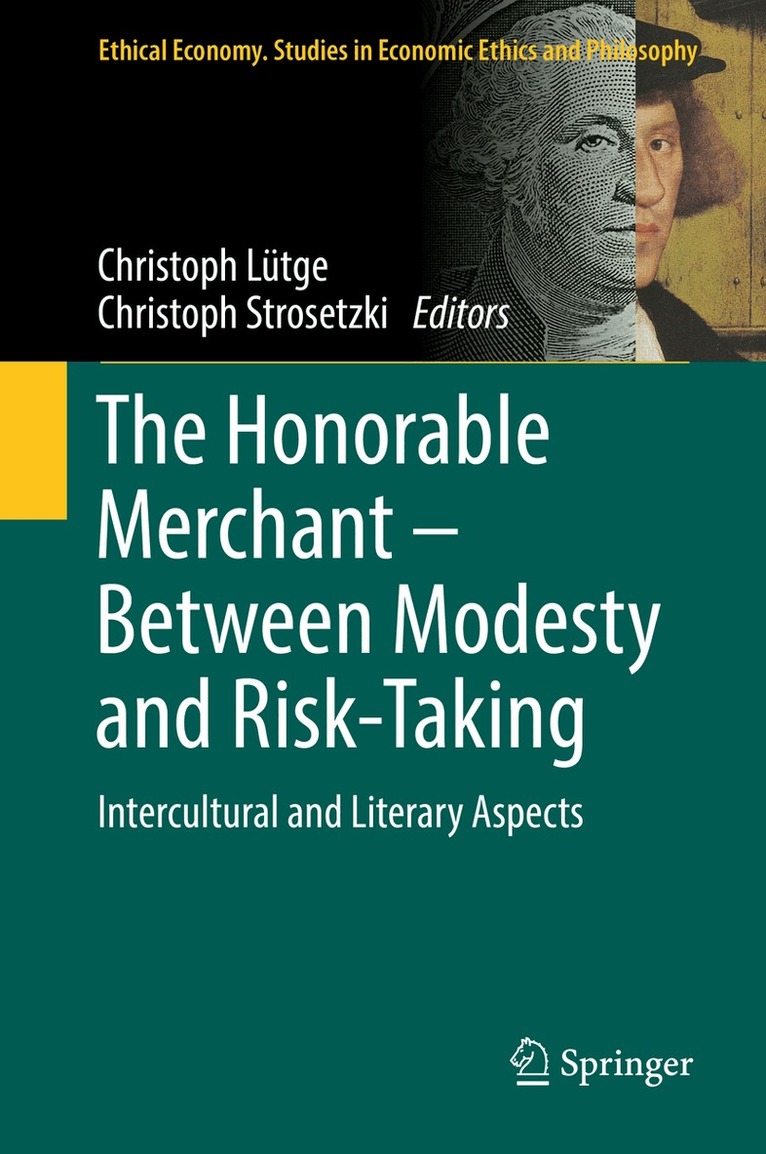
    Honorable Merchant – Between Modesty and Risk-Taking

    Intercultural and Literary Aspects

    AvChristoph Lütge,Christoph Strosetzki

    Inbunden, Engelska, 2019

    Del 56 i serien Ethical Economy

    1 086 kr

    Beställningsvara. Skickas inom 10-15 vardagar. Fri frakt över 249 kr.

    Beskrivning

    This volume explores the concept of the honest merchant, taking a broad perspective and covering a wide range of aspects. It looks at the different types of “honest merchant” conceptions originating from different cultures and literary traditions. The book covers Japanese, Islamic, Scandinavian, Russian, German, Spanish, as well as other aspects, and studies different disciplinary backgrounds of the honest merchant, such as philosophical, economic, neuroethical, sociological and literary ones.The concept of the honest merchant has a long tradition in business ethics. In the Hanseatic League and in medieval Italy, the ideal of the honest businessman was taught since the late Middle Ages. It originated during a time when travelling merchants were often regarded with a sceptical eye. The honest merchants of their time however held clear principles in their business and took responsibility for their community. In later times, the religious notions of the concept lost their pivotal place to reason and morality. This book goes beyond the tradition of discussing business ethics in association with concepts from the Hanseatic League and medieval Italy, and puts the central concept of business ethics in a much greater perspective.

    Produktinformation

    • Utgivningsdatum:2019-01-22
    • Mått:155 x 235 x 17 mm
    • Vikt:483 g
    • Format:Inbunden
    • Språk:Engelska
    • Serie:Ethical Economy
    • Antal sidor:198
    • Förlag:Springer Nature Switzerland AG
    • ISBN:9783030043506

    Utforska kategorier

    • Kulturvetenskap inom Samhälle och politik
    • Affärsetik inom Ekonomi och Ledarskap
    • Ekonomisk historia inom Ekonomi och Ledarskap

    Mer om författaren

    Christoph Luetge holds the Peter Löscher Chair of Business Ethics at Technische Universität München. He has written and edited a number of books including Order Ethics or Moral Surplus: What Holds a Society Together? (Lexington, 2015), Experimental Ethics (co-editor, Palgrave, 2014), Handbook of the Philosophical Foundations of Business Ethics (editor, Springer, 2013). He has published numerous articles on various aspects of business ethics, general ethics, political philosophy and philosophy of economics. He has a particular interest both in experimental studies as well as in the role of competition for ethics. He founded the Munich Lecture in Business Ethics series and serves as a member of the Ethics Advisory Board of the European Medical Information Framework and of the Advisory Council of the Bavarian School of Public Policy.

    Innehållsförteckning

    • Introduction.- 1 The Image of the Merchant Contemplated Across Times.- Chapter 1 The Merchant from Patristics to the Honnête Homme in the Writings of Savary; Christoph Strosetzki.- Chapter 2 The Honorable Merchant and the Corporate Social Responsibility Movement; Christoph Lütge.- Chapter 3 The Legend of excellent Businessman. A neuroethical perspective; Adela Cortina.- Chapter 4 The honest Businessperson: Cosmopolitan Theory and Cultural Praxis (The example of Denmark and Scandinavia); Jacob Dahl Rendtorff.- Chapter 5 Voluntary Business Regulation for Sustainability: Intends, Norms and Motivation of Building Public Trust of Corporate Managers; László Fekete.- 2 The Image of the Merchant in Europe from Late Middle Ages until Early Modern Times.- Chapter 6 The Honest Merchant before Adam Smith: The Genesis and Rise of a Literary Prototype in Britain; Laurenz Volkmann.- 3 The Image of the Merchant in Europe from Early Modern Times until 19th century.- Chapter 7 The long Journey from “Deceiver and Conman” to “Honorable Merchant”. The Image of the Merchant in Spanish Literature and its Context from the 16th to the end of the 18th century; Manfred Tietz.- Chapter 8 The Figures of the Honorable Merchant and the philanthropic Entrepreneur-Paternalist in sentimental Comedies of the 18th century in Spain; Beatrice Schuchardt.- Chapter 9 The homo oeconomicus, merchant ethos, and liberalism in Spain under enlightened absolutism; Jan-Henrik Witthaus.- Chapter 10 “A travelling Salesman from Hades”. On the Critique of the acquisitive mindset in Nikolai W. Gogol’s novel Dead Souls (1842); Christian von Tschilschke.- 4 The Image of the Merchant in Non-European Contexts.- Chapter 11 The Ethics of the Merchant in the Islamic Faith: From Ibn Khaldoun to Islamic Finance; Dominique de Courcelles.- Chapter 12 The most successful and moralistic Merchant at the Dawn of Japanese Capitalism. Shibusawa and hisConfucianism; Itaru Shimazu.