• Fri frakt över 249 kr
  • •
  • Snabba leveranser
  • •
  • Billiga böcker
Kundservice

Du är på sajten för privatpersoner.

Företag, bibliotek eller offentlig verksamhet?

Du handlar på classic.bokus.com, där alla dina funktioner finns intakta.
Till classic.bokus.com
Bokus logotyp. Gå till startsidan.
  • Erbjudanden
  • Student
  • Topplistor
  • Barn & ungdom
  • Bokus Play
  • E-böcker
  • Ljudböcker
  • Pocketböcker
  • Spel och pussel

Pocketfynda! Hundratals böcker för 49 kr/st →

Sidfot

Mina sidor

    Hjälp

    • Kundservice
    • Vanliga frågor och svar
    • Frakt och leverans
    • Retur vid ångerrätt
    • Reklamera vara
    • Betalning
    • Köpvillkor
    • Allmänna villkor
    • Information om webbplatsens tillgänglighet

    Om Bokus

    • Om oss
    • Pressrum
    • För studenter
    • För företag
    • För bibliotek och offentlig verksamhet
    • För leverantörer
    • Hållbarhet

    Populärt

    • Aktuella erbjudanden
    • Presentkort
    • Studentlitteratur
    • Nya böcker
    • Topplistor
    • Signerade böcker
    • Engelska böcker

    Inspiration

    • Boktips
    • BookTok
    • Barnbokskaraktärer
    • Populära författare
    Logotyp för Bokus
    Följ oss på Facebook (extern länk)Följ oss på Instagram (extern länk)Följ oss på YouTube (extern länk)Följ oss på TikTok (extern länk)
    bokus @ CookiesAnpassa cookiesIntegritetspolicyKöpvillkor
    Till Citymail hemsida (extern länk)Till Budbee hemsida (extern länk)Till Postnord hemsida (extern länk)Till Schenker hemsida (extern länk)Till Early Bird hemsida (extern länk)Till Walleys hemsida (extern länk)
    1. Psykologi och pedagogik
    2. Pedagogik
    3. Pedagogisk psykologi

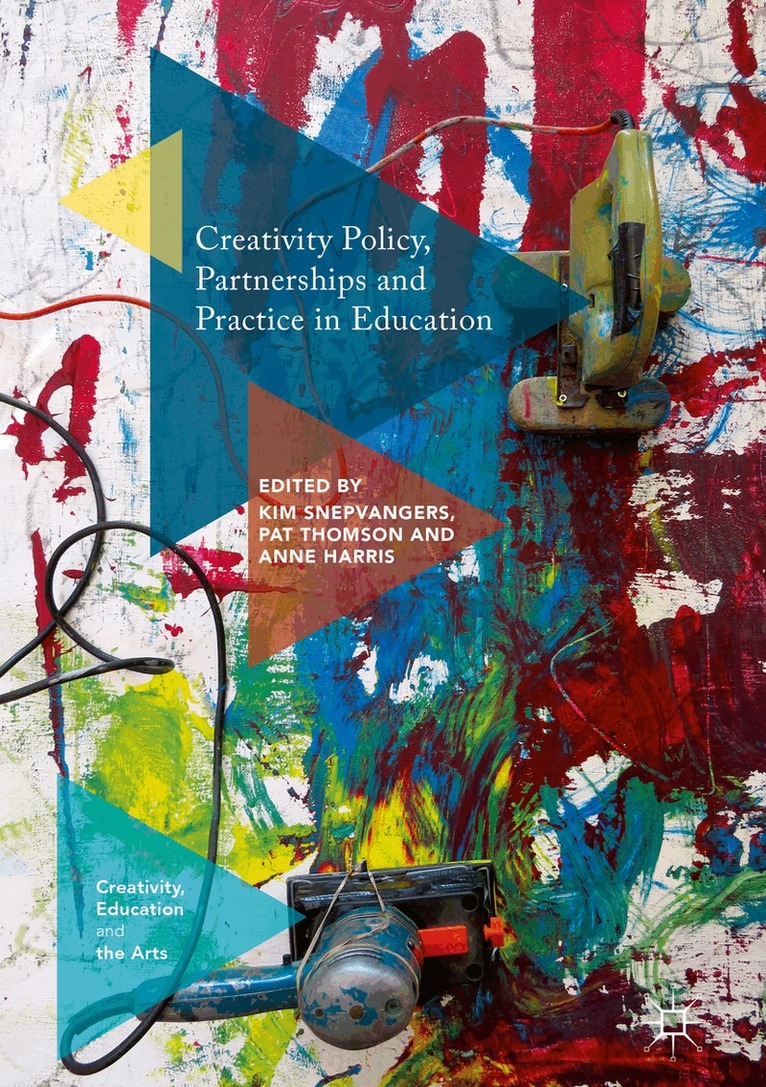
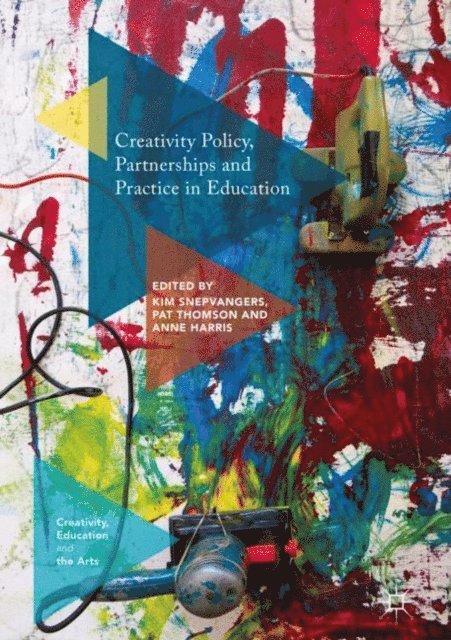
    Creativity Policy, Partnerships and Practice in Education

    AvKim Snepvangers,Pat Thomson

    Häftad, Engelska, 2019

    Del i serien Creativity, Education and the Arts

    1 220 kr

    Beställningsvara. Skickas inom 10-15 vardagar. Fri frakt över 249 kr.

    Beskrivning

    This book examines the gaps in creativity education across the education lifespan and the resulting implications for creative education and economic policy. Building on cutting-edge international research, the editors and contributors explore innovations in interdisciplinary creativities, including STEM agendas and definitions, science and creativity and organisational creativity amongst other subjects. Central to the volume is the idea that good creative educational practice and policy advancement needs to reimagine individual contribution and possibilities, whilst resisting standardization: it is inherently risky, not risk-averse. Prioritising creative partnerships, zones of contact, practice encounters and creative ecologies signal new modes of participatory engagement. Unfortunately, while primary schools continue to construct environments conducive to this kind of ‘slow education’, secondary schools and education policy persistently do not. This book argues, from diverse viewpoints and methodological perspectives, that 21st-century creativity education must find a way to advance in a more integrated and less siloed manner in order to respond to pedagogical innovation, economic imperatives and creative possibilities, and adequately prepare students for creative practice, workplaces and publics. This innovative volume will appeal to students and scholars of creative practice as well as policy makers and practitioners.

    Produktinformation

    • Utgivningsdatum:2019-01-05
    • Mått:148 x 210 x 22 mm
    • Vikt:506 g
    • Format:Häftad
    • Språk:Engelska
    • Serie:Creativity, Education and the Arts
    • Antal sidor:365
    • Förlag:Springer Nature Switzerland AG
    • ISBN:9783030072377

    Utforska kategorier

    • Pedagogisk psykologi inom Psykologi och pedagogik
    • Konstböcker inom Kultur
    • Utbildningsstrategier och utbildningspolitik inom Psykologi och pedagogik

    Mer om författaren

    Kim Snepvangers is Director: Professional Experience and Engagement Projects and a UNSW Teaching Fellow at UNSW Sydney: Art & Design, Australia. Her research interweaves creative and professional industry contexts and engages visualisation with creative ecologies, critically reflective frameworks and embodied pedagogies.  Pat Thomson is Convenor of the Centre for Research in Arts, Creativity and Literacy (CRACL) at the University of Nottingham, UK. She is known for her interdisciplinary engagement with questions of creative and socially just learning and change. Anne Harris is Associate Professor and Vice Chancellor's Principal Research Fellow at RMIT University, Australia. She researches in the areas of creativity, culture, diversity and digital media.

    Innehållsförteckning

    • Chapter 1. Evolving ecologies: Creative policy, partnerships and practice in education; Anne Harris, Pat Thomson and Kim Snepvangers.- SECTION I. POLICY.- Chapter 2. What did Creative Partnerships achieve? A review of the Creative Partnerships (CP) research archive; Patricia Thomson, Rebecca Coles and Maddy Hallewell.- Chapter 3. Transforming creative classroom contradictions through activity theory analysis; Victoria Kinsella.- Chapter 4. Creative Agency / creative ecologies; Anne M. Harris.- Chapter 5. Value-adding in higher education: Complementary contexts for learning creativities; Jonathan Purdy, Vinesh Chandra and Kelli McGraw.- SECTION II. PARTNERSHIPS.- Chapter 6. Creative partnerships: Exploring encounters in the contact zone; Donna Mathewson Mitchell.- Chapter 7. Creative industry encounters: Digital ecologies in art, design and media; Kim Snepvangers.- Chapter 8. Organisational change for creativity in education; Leon de Bruin.- Chapter 9. Creative ecologies in education: teaching relationships within sustained school-based artist-in-residence projects; Christine Hatton and Mary Mooney.- SECTION III. PRACTICE.- Chapter 10. The antecedents and outcomes of creative cognition; Sarah Asquith, Xu Wang and Anna Abraham.- Chapter 11. Assessing Creativity: Four Critical Issues; Rachel Jacobs.- Chapter 12. Tearing it down: Using problematisation to encourage artistic creativity; Shelley Hannigan and Katherine Barrand.- Chapter 13. From Wise Humanising Creativity to (posthumanising) creativity; Kerry Chappell.- Chapter 14. An ecology of care: Relationships and responsibility through the constitutive and creative acts of oral history theatre making in local communities shouldering global crises; Kathleen Gallagher, Nancy Cardwell and Dirk Rodricks.- Chapter 15. Flexibility, constraints and creativity - cultivating creativity in teacher education; Susan Davis.- Chapter 16. Propositions for policy, partnership and practice in educational creative futures; Kim Snepvangers, Anne Harris and Pat Thomson.