• Fri frakt över 249 kr
  • •
  • Snabba leveranser
  • •
  • Billiga böcker
Kundservice

Du är på sajten för privatpersoner.

Företag, bibliotek eller offentlig verksamhet?

Du handlar på classic.bokus.com, där alla dina funktioner finns intakta.
Till classic.bokus.com
Bokus logotyp. Gå till startsidan.
  • Erbjudanden
  • Student
  • Topplistor
  • Barn & ungdom
  • Bokus Play
  • E-böcker
  • Ljudböcker
  • Pocketböcker
  • Spel och pussel

Pocketfynda! Hundratals böcker för 49 kr/st →

Sidfot

Mina sidor

    Hjälp

    • Kundservice
    • Vanliga frågor och svar
    • Frakt och leverans
    • Retur vid ångerrätt
    • Reklamera vara
    • Betalning
    • Köpvillkor
    • Allmänna villkor
    • Information om webbplatsens tillgänglighet

    Om Bokus

    • Om oss
    • Pressrum
    • För studenter
    • För företag
    • För bibliotek och offentlig verksamhet
    • För leverantörer
    • Hållbarhet

    Populärt

    • Aktuella erbjudanden
    • Presentkort
    • Studentlitteratur
    • Nya böcker
    • Topplistor
    • Signerade böcker
    • Engelska böcker

    Inspiration

    • Boktips
    • BookTok
    • Barnbokskaraktärer
    • Populära författare
    Logotyp för Bokus
    Följ oss på Facebook (extern länk)Följ oss på Instagram (extern länk)Följ oss på YouTube (extern länk)Följ oss på TikTok (extern länk)
    bokus @ CookiesAnpassa cookiesIntegritetspolicyKöpvillkor
    Till Citymail hemsida (extern länk)Till Budbee hemsida (extern länk)Till Postnord hemsida (extern länk)Till Schenker hemsida (extern länk)Till Early Bird hemsida (extern länk)Till Walleys hemsida (extern länk)
    1. Psykologi och pedagogik
    2. Pedagogik
    3. Pedagogisk psykologi

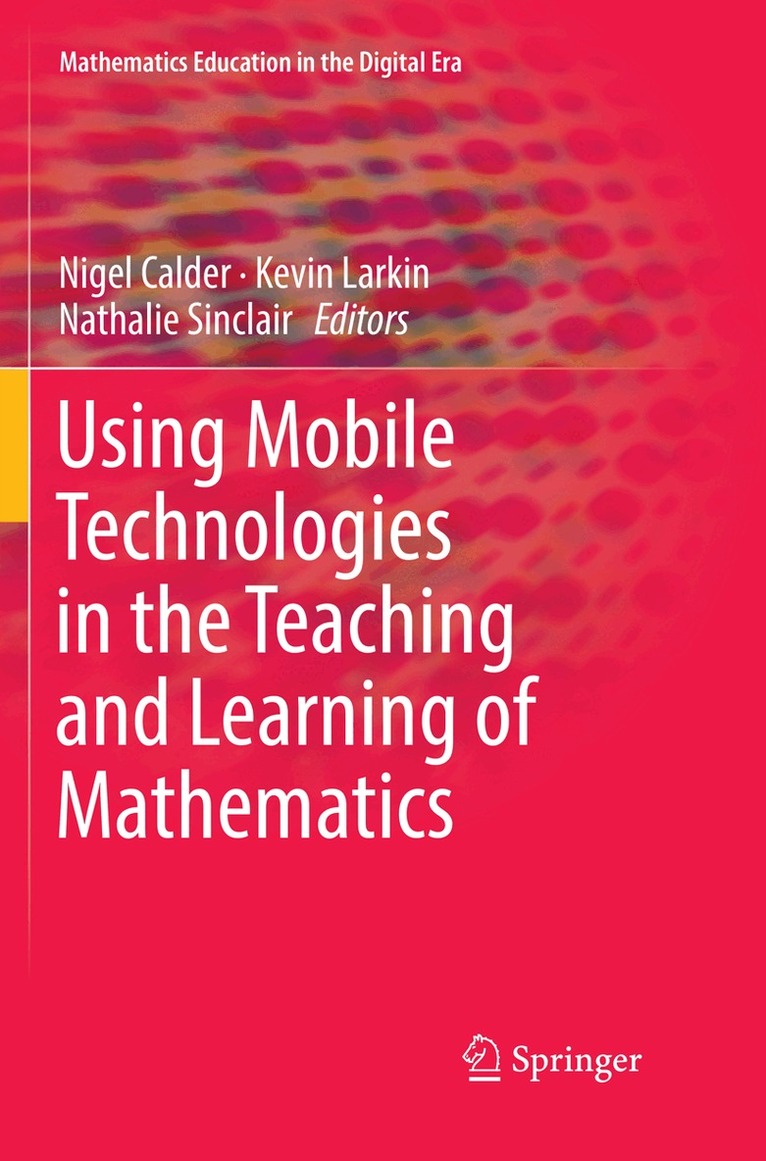
    Using Mobile Technologies in the Teaching and Learning of Mathematics

    AvNigel Calder,Kevin Larkin

    Häftad, Engelska, 2019

    Del 12 i serien Mathematics Education in the Digital Era

    1 613 kr

    Beställningsvara. Skickas inom 10-15 vardagar. Fri frakt över 249 kr.

    Beskrivning

    Mobile technologies influence the way that we interact with the world, the way that we live. We use them for communication, entertainment, information and research. In education settings, there has been substantial investment in mobile devices, often without a concomitant investment in developing pedagogy and practices. With mobile technologies evolving rapidly, and the number of educational apps growing, there is a need for research into how they facilitate mathematics learning. Such research is of particular importance regarding how such devices may be used to open up new ways of envisaging mathematics and mathematics education, and to help develop conceptual rather than procedural or declarative knowledge. This volume draws upon international research and reports on a range of research projects that have incorporated mobile technologies for mathematics education. It presents research on the use of mobile technologies, such as iPads, iPods, iPhones, Androids,and Tablets, across a diverse range of cultures, year levels and contexts. It examines the ways in which mobile technologies, including apps, might influence students’ engagement, cognition, collaboration and attitudes, through the reshaping of the learning experience. In addition, the book presents appropriate ways to integrate mobile technologies into teaching and learning programmes. It is a significant reference book for those involved with teaching mathematics or using mobile technologies in education, while also offering insights and examples that are applicable to the use of digital technologies in education generally.

    Produktinformation

    • Utgivningsdatum:2019-01-19
    • Mått:155 x 235 x 19 mm
    • Vikt:505 g
    • Format:Häftad
    • Språk:Engelska
    • Serie:Mathematics Education in the Digital Era
    • Antal sidor:323
    • Förlag:Springer Nature Switzerland AG
    • ISBN:9783030079536

    Utforska kategorier

    • Pedagogisk psykologi inom Psykologi och pedagogik
    • Matematik inom Naturvetenskap och teknik
    • Material och digital teknik i undervisningen inom Psykologi och pedagogik

    Innehållsförteckning

    • 01. Introduction.- 02. Mobile Technologies: How might using mobile technologies reshape the learning and teaching of mathematics? Nigel Calder, Kevin Larson and Nathalie Sinclair.- Section One: Looking across the terrain.- 03. Mathematics apps - stormy with the weather clearing: Using cluster analysis to enhance app use in mathematics classrooms. Kevin Larkin and Todd Milford.-  04. How might apps reshape the mathematical learning experience? Nigel Calder and Carol Murphy.- 05. Mobile technologies in the primary mathematics classroom: Engaging or not? Catherine Attard.- Section Two: Traversing the teaching and learning landscape.- 06. When robot A.L.E.X. trains teachers how to teach mathematics. Andreas Kyriakides and Maria Meletiou-Mavrotheris.- 07. Supporting teachers’ orchestration of mobile learning activities. Håkan Sollervall, Didac Gil de la Iglesia and Janosch Zbick.- 08. Collaborative engagement through mobile technology in mathematics learning. Mina Sedaghatjou and Sheree Rodney.- 09. Augmenting mathematics with mobile technology. Christian Bokhove, Alison Clark-Wilson and Marios Pittalis.- Section Three: Navigating content: Focussing on particular concepts.- 10. Developing mastery of time concepts by integrating lessons and apps. Timothy Pelton, Todd Milford and Lesley Francis Pelton.- 11. Heatmap and hierarchical clustering analysis to highlight changes in young children’s developmental progressions using virtual manipulative mathematics apps. Christina W. Lommatsch, Stephen Tucker, Patricia Moyer-Packenham and Jürgen Symanzik.- 12. A better story: An embodied-design argument for generic manipulatives. Dana Rosen, Alik Palatnik, and Dor Abrahamson.- 13. Fingers-on geometry: The emergence of symmetry in a primary school classroom with multi-touch dynamic geometry. Sean Chorney and Nathalie Sinclair.- 14. Touching numbers and feeling quantities: Methodological dimensions of working with TouchCounts. Francesca Ferrara and Ketty Savioli.- 15. Approaching secondary school geometry through the logic of inquiry within technological environments. Carlotta Soldano and Ferdinando Arzarello.-  Section Four: Exploring new forms of communication to make mathematical learning visible.- 16. Mathematics screencasts for teaching and learning. Linda Galligan and Carola Hobohm.- 17. The use of mobile technologies in the primary school mathematics classroom- developing ‘create-alouds’. Anne Prescott and Damian Maher.- 18. Using Show and Tell apps to engage students in problem solving in the mathematics classroom. Naomi Ingram, Keryn Pratt, and Sandra Williamson-Leadley.