• Fri frakt över 249 kr
  • •
  • Snabba leveranser
  • •
  • Billiga böcker
Kundservice

Du är på sajten för privatpersoner.

Företag, bibliotek eller offentlig verksamhet?

Du handlar på classic.bokus.com, där alla dina funktioner finns intakta.
Till classic.bokus.com
Bokus logotyp. Gå till startsidan.
  • Erbjudanden
  • Nyheter
  • Student
  • Topplistor
  • Barn & ungdom
  • Bokus Play
  • E-böcker
  • Pocketböcker
  • Spel & pussel

10% rabatt på allt med kod NYSTART10 →

Sidfot

Mina sidor

    Hjälp

    • Kundservice
    • Vanliga frågor och svar
    • Frakt och leverans
    • Retur vid ångerrätt
    • Reklamera vara
    • Betalning
    • Köpvillkor
    • Allmänna villkor
    • Information om webbplatsens tillgänglighet

    Om Bokus

    • Om oss
    • Pressrum
    • För studenter
    • För företag
    • För bibliotek och offentlig verksamhet
    • För leverantörer
    • Hållbarhet

    Populärt

    • Aktuella erbjudanden
    • Presentkort
    • Studentlitteratur
    • Nya böcker
    • Topplistor
    • Signerade böcker
    • Engelska böcker

    Inspiration

    • Boktips
    • BookTok
    • Populära bokserier
    • Barnbokskaraktärer
    • Populära författare
    Logotyp för Bokus
    Följ oss på Facebook (extern länk)Följ oss på Instagram (extern länk)Följ oss på YouTube (extern länk)Följ oss på TikTok (extern länk)
    bokus @ CookiesAnpassa cookiesIntegritetspolicyKöpvillkor
    Till Citymail hemsida (extern länk)Till Budbee hemsida (extern länk)Till Postnord hemsida (extern länk)Till Schenker hemsida (extern länk)Till Early Bird hemsida (extern länk)Till Walleys hemsida (extern länk)
    1. Naturvetenskap och teknik
    2. Geovetenskap
    3. Miljövetenskap och miljöpolitik

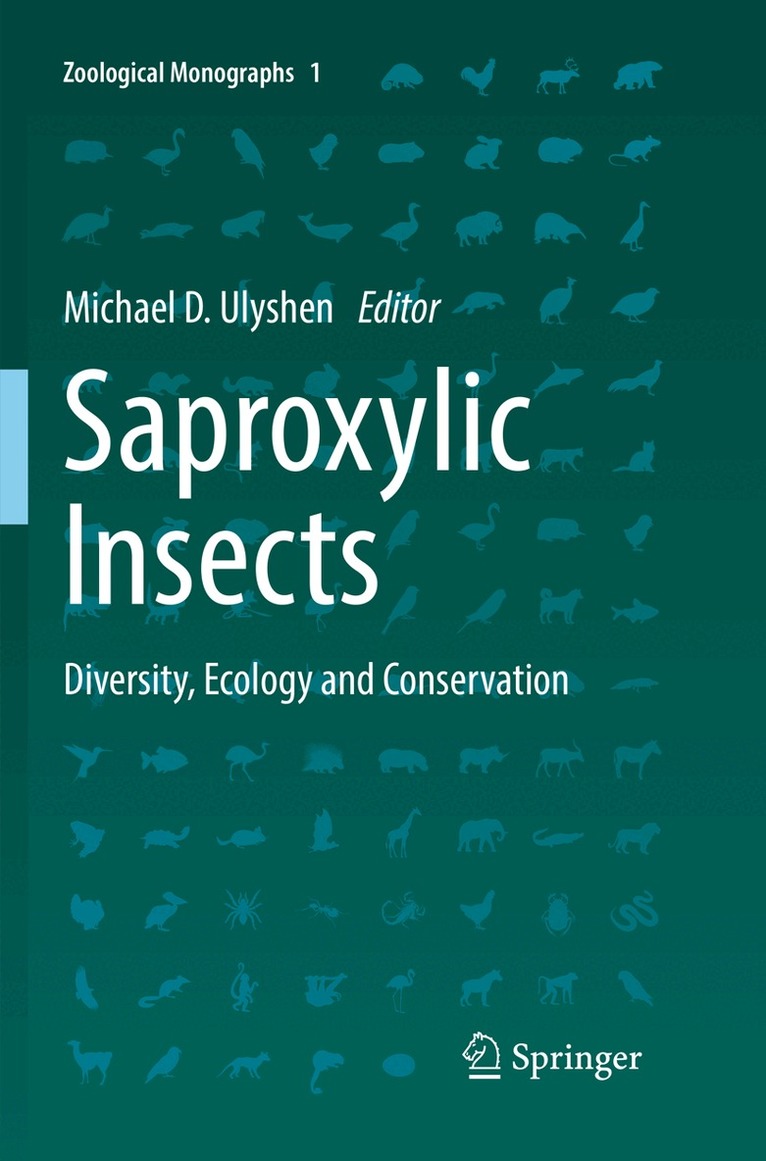
    Saproxylic Insects

    Diversity, Ecology and Conservation

    AvMichael D. Ulyshen

    Häftad, Engelska, 2019

    Del 1 i serien Zoological Monographs

    3 567 kr

    Beställningsvara. Skickas inom 10-15 vardagar. Fri frakt över 249 kr.

    Beskrivning

    This volume offers extensive information on insect life in dying and dead wood. Written and reviewed by leading experts from around the world, the twenty-five chapters included here provide the most global coverage possible and specifically address less-studied taxa and topics. An overarching goal of this work is to unite literature that has become fragmented along taxonomic and geographic lines. A particular effort was made to recognize the dominant roles that social insects (e.g., termites, ants and passalid beetles) play in saproxylic assemblages in many parts of the world without overlooking the non-social members of these communities.The book is divided into four parts:·       Part I “Diversity” includes chapters addressing the major orders of saproxylic insects (Coleoptera, Diptera, Hymenoptera, Hemiptera, Lepidoptera and Blattodea), broadly organized in decreasing order of estimated global saproxylic diversity. In addition to order-level treatments, some chapters in this part discuss groups of particular interest, including pollinators, hymenopteran parasitoids, ants, stag and passalid beetles, and wood-feeding termites.·       Part II “Ecology” discusses insect-fungal and insect-insect interactions, nutritional ecology, dispersal, seasonality, and vertical stratification.·       Part III “Conservation” focuses on the importance of primary forests for saproxylic insects, offers recommendations for conserving these organisms in managed forests, discusses the relationships between saproxylic insects and fire, and addresses the value of tree hollows and highly-decomposed wood for saproxylic insects. Utilization of non-native wood by saproxylic insects and the suitability of urban environments for these organisms are also covered.·       Lastly, Part IV “Methodological Advancements” highlights molecular tools for assessing saproxylic diversity. The book offers an accessible and insightful resource for natural historians of all kinds and will especially appeal to entomologists, ecologists, conservationists and foresters.

    Produktinformation

    • Utgivningsdatum:2019-01-30
    • Mått:155 x 235 x 49 mm
    • Vikt:1 358 g
    • Format:Häftad
    • Språk:Engelska
    • Serie:Zoological Monographs
    • Antal sidor:904
    • Förlag:Springer Nature Switzerland AG
    • ISBN:9783030093587

    Utforska kategorier

    • Miljövetenskap och miljöpolitik inom Naturvetenskap och teknik
    • Biovetenskap inom Naturvetenskap och teknik
    • Zoologi inom Naturvetenskap och teknik

    Mer om författaren

    Michael D. Ulyshen Research EntomologistUSDA Forest ServiceSouthern Research Station320 Green StreetAthens,  Georgia 30602, USAE-mail: mulyshen@fs.fed.usPhone: 706-559-4296

    Innehållsförteckning

    • An introduction to the diversity, ecology and conservation of saproxylic insects.- General overview of saproxylic Coleoptera.- Ecology and conservation of Passalidae.- Diversity and ecology of stag beetles (Lucanidae).- Saproxylic Diptera.- Ecology, diversity and conservation of saproxylic hymenopteran parasitoids.- Saproxylic bees and wasps.- Ants: Ecology and impacts in dead wood.- Diversity and ecology of saproxylic Hemiptera.- Diversity of saproxylic Lepidoptera.- Wood-feeding termites.- Insect-fungus interactions in dead wood systems.- Nutrient dynamics in decomposing dead wood in the context of wood eater requirements: The ecological stoichiometry of saproxylophagous insects.- Biotic interactions between saproxylic insect species.- Dispersal of saproxylic insects.- Seasonality and stratification: Neotropical saproxylic beetles respond to a heat and moisture continuum with conservatism and plasticity.- Importance of primary forests for the conservation of saproxylic insects.- The importance of dead-wood amount for saproxylic insects and how it interacts with dead-wood diversity and other habitat factors.- Conservation of saproxylic insect diversity under variable retention harvesting.- Saproxylic insects and fire.- Saproxylic insects in tree hollows.- It's the end of the wood as we know it: Insects in veteris (highly-decomposed) wood.- Utilization of non-native wood by saproxylic insects.- The role of urban environments for saproxylic insects.-  Molecular tools for assessing saproxylic insect diversity.