Inbunden, Engelska, 2019
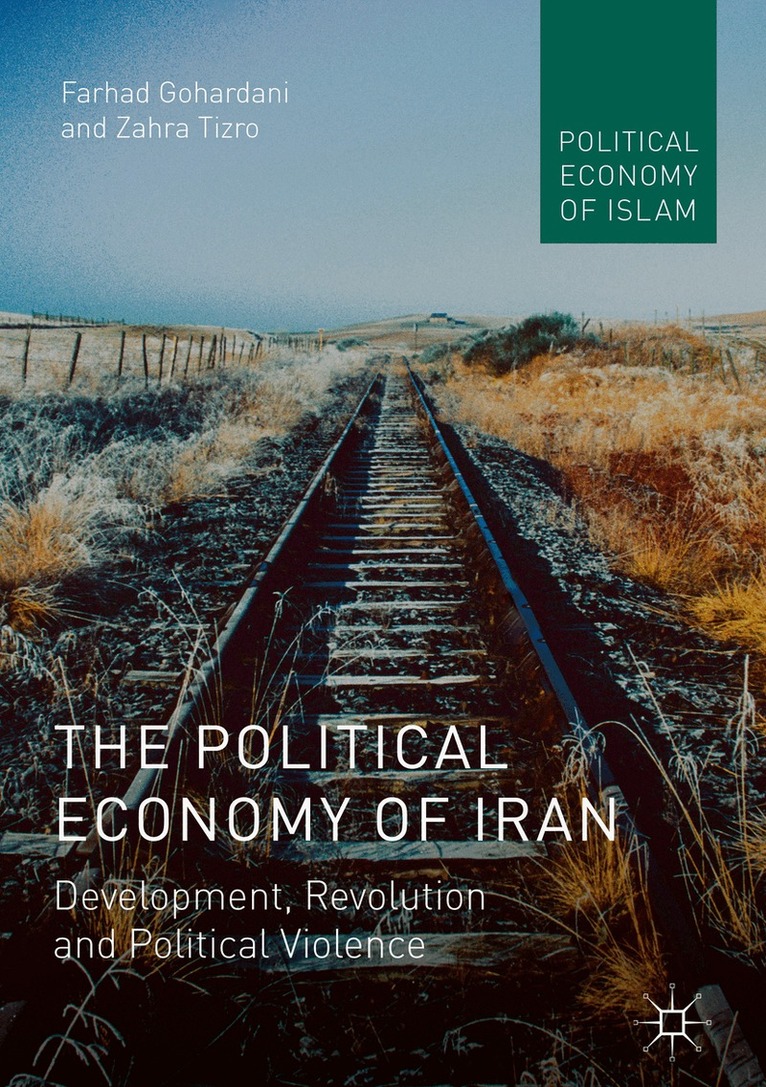
Political Economy of Iran
Av Farhad Gohardani, Zahra Tizro
986 kr
Beställningsvara. Skickas inom 10-15 vardagar. Fri frakt över 249 kr.
Beskrivning
This study entails a theoretical reading of the Iranian modern history and follows an interdisciplinary agenda at the intersection of philosophy, psychoanalysis, economics, and politics and intends to offer a novel framework for the analysis of socio-economic development in Iran in the modern era. A brief review of Iranian modern history from the Constitutional Revolution to the Oil Nationalization Movement, the 1979 Islamic Revolution, and the recent Reformist and Green Movements demonstrates that Iranian people travelled full circle. This historical experience of socio-economic development revolving around the bitter question of “Why are we backward?” and its manifestation in perpetual socio-political instability and violence is the subject matter of this study. Michel Foucault’s conceived relation between the production of truth and production of wealth captures the essence of hypothesis offered in this study. Foucault (1980: 93–94) maintains that “In the last analysis, we must produce truth as we must produce wealth; indeed we must produce truth in order to produce wealth in the first place.” Based on a hybrid methodology combining hermeneutics of understanding and hermeneutics of suspicion, this monograph proposes that the failure to produce wealth has had particular roots in the failure in the production of truth and trust. At the heart of the proposed theoretical model is the following formula: the Iranian subject’s confused preference structure culminates in the formation of unstable coalitions which in turn leads to institutional failure, creating a chaotic social order and a turbulent history as experienced by the Iranian nation in the modern era. As such, the society oscillates between the chaotic states of socio-political anarchy emanating from irreconcilable differences between and within social assemblages and their affiliated hybrid forms of regimes of truth in the springs of freedom and repressive states of order in the winters of discontent. Each time, after the experience of chaos, the order is restored based on the emergence of a final arbiter (Iranian leviathan) as the evolved coping strategy for achieving conflict resolution. This highly volatile truth cycle produces the experience of socio-economic backwardness and violence. The explanatory power of the theoretical framework offered in the study exploring the relation between the production of truth, trust, and wealth is demonstrated via providing historical examples from strong events of Iranian modern history. The significant policy implications of the model are explored. This monograph will appeal to researchers, scholars, graduate students, policy makers and anyone interested in the Middle Eastern politics, Iran, development studies and political economy.
Produktinformation
- Utgivningsdatum: 2019-03-18
- Mått: 148 x 210 x 25 mm
- Vikt: 544 g
- Format: Inbunden
- Språk: Engelska
- Serie: Political Economy of Islam
- Antal sidor: 343
- Förlag: Springer Nature Switzerland AG
- ISBN: 9783030106379
Utforska kategorier
Betyg & recensioner
0 recensioner
Inga recensioner tillgängliga.