• Fri frakt över 249 kr
  • •
  • Snabba leveranser
  • •
  • Billiga böcker
Kundservice

Du är på sajten för privatpersoner.

Företag, bibliotek eller offentlig verksamhet?

Du handlar på classic.bokus.com, där alla dina funktioner finns intakta.
Till classic.bokus.com
Bokus logotyp. Gå till startsidan.
  • Erbjudanden
  • Nyheter
  • Student
  • Topplistor
  • Barn & ungdom
  • Bokus Play
  • E-böcker
  • Pocketböcker
  • Spel & pussel

Må bättre, för mindre! Upp till 50% rabatt på hälsoböcker

Sidfot

Mina sidor

    Hjälp

    • Kundservice
    • Vanliga frågor och svar
    • Frakt och leverans
    • Retur vid ångerrätt
    • Reklamera vara
    • Betalning
    • Köpvillkor
    • Allmänna villkor
    • Information om webbplatsens tillgänglighet

    Om Bokus

    • Om oss
    • Pressrum
    • För studenter
    • För företag
    • För bibliotek och offentlig verksamhet
    • För leverantörer
    • Hållbarhet

    Populärt

    • Aktuella erbjudanden
    • Presentkort
    • Studentlitteratur
    • Nya böcker
    • Topplistor
    • Signerade böcker
    • Engelska böcker

    Inspiration

    • Boktips
    • BookTok
    • Populära bokserier
    • Barnbokskaraktärer
    • Populära författare
    Logotyp för Bokus
    Följ oss på Facebook (extern länk)Följ oss på Instagram (extern länk)Följ oss på YouTube (extern länk)Följ oss på TikTok (extern länk)
    bokus @ CookiesAnpassa cookiesIntegritetspolicyKöpvillkor
    Till Citymail hemsida (extern länk)Till Budbee hemsida (extern länk)Till Postnord hemsida (extern länk)Till Schenker hemsida (extern länk)Till Early Bird hemsida (extern länk)Till Walleys hemsida (extern länk)
    1. Naturvetenskap och teknik
    2. Matematik och naturvetenskap
    3. Biologi
    4. Biovetenskap

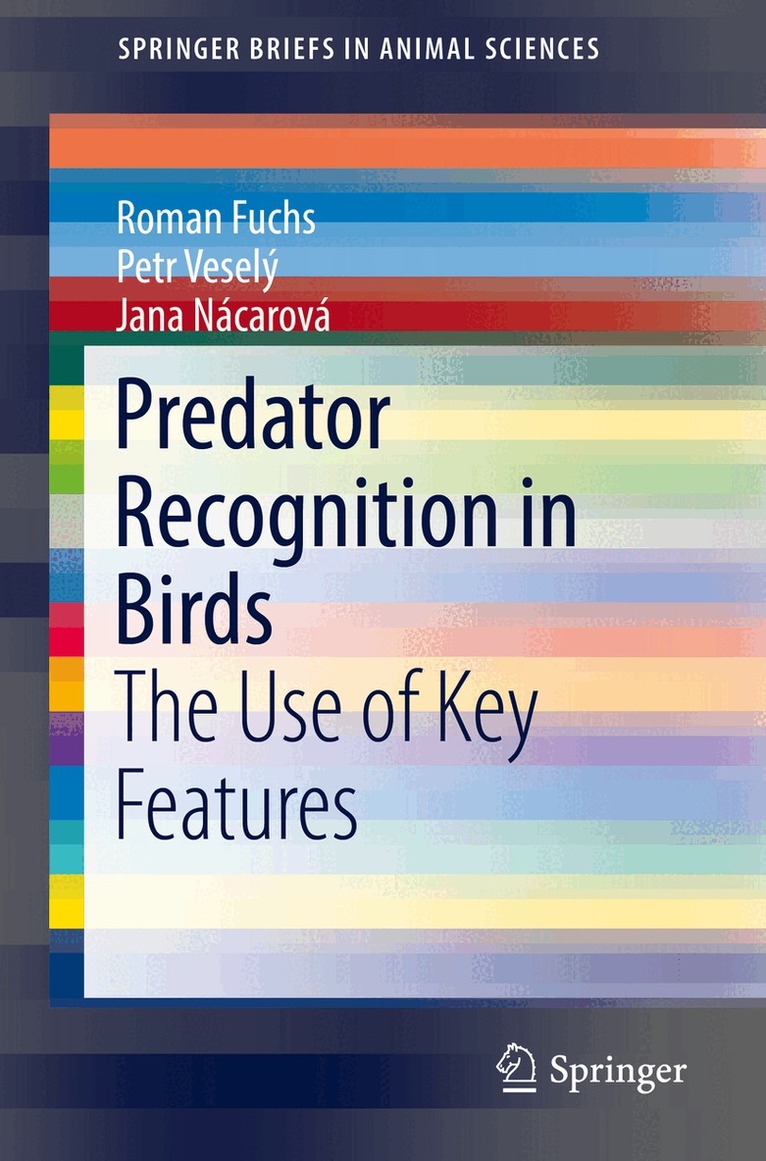
    Predator Recognition in Birds

    The Use of Key Features

    AvRoman Fuchs,Petr Veselý

    Häftad, Engelska, 2019

    Del i serien SpringerBriefs in Animal Sciences

    547 kr

    Beställningsvara. Skickas inom 10-15 vardagar. Fri frakt över 249 kr.

    Beskrivning

    This SpringerBrief answers the question on how birds recognize their predators using multidisciplinary approaches and outlines paths of the future research of predator recognition. A special focus is put on the role of key features to discriminate against predators and non-predators. The first part of the book provides a comprehensive review of the mechanisms of predator recognition based on classical ethological studies in untrained birds. The second part introduces a new view on the topic treating theories of cognitive ethology. This approach involves examination of conditioned domestic pigeons and highlights the actual abilities of birds to recognize and categorize.

    Produktinformation

    • Utgivningsdatum:2019-04-04
    • Mått:155 x 235 x 8 mm
    • Vikt:207 g
    • Format:Häftad
    • Språk:Engelska
    • Serie:SpringerBriefs in Animal Sciences
    • Antal sidor:117
    • Förlag:Springer Nature Switzerland AG
    • ISBN:9783030124021

    Utforska kategorier

    • Biovetenskap inom Naturvetenskap och teknik
    • Zoologi inom Naturvetenskap och teknik
    • Djurböcker inom Djur och Natur

    Mer om författaren

    Dr. Roman Fuchs Department of Zoology Faculty of Science University of South Bohemia Branišovská 1760 37005 České Budějovice Czech Republic Dr. Petr Veselý Department of ZoologyFaculty of Science University of South BohemiaBranišovská 1760 37005 České Budějovice Czech Republic Dr. Jana NácarováDepartment of ZoologyFaculty of Science University of South BohemiaBranišovská 1760 37005 České Budějovice Czech Republic

    Innehållsförteckning

    • 1 What do we know about predator recognition by untrained birds?.- 1.1 The study of predator recognition (How to make birds respond in etho-ecological experiments - to show that they recognized the predator – nest defense, feeder experiments, laboratory experiments…).- 1.2 Evidence for predator recognition ability (What predator categories birds recognize – predator vs. non-predator, aerial vs. terrestrial predators, individual predator species…).- 1.3 Tools used for predator recognition (What cues bird use for predator recognition – sign stimuli, coloration, size…).- 2 What can the recognition experiments with trained pigeons tell?.- 2.1 Category discrimination and concepts formation (How do birds form categories of predators – memorizing vs. generalization vs. conceptualization…).- 2.2 Object recognition (What cues birds use for predator recognition – particulate feature theory vs. recognition by components, local vs. global features…).- 2.3 Other cognitive processes (Are we able toreveal other cognitive processes in predator recognition by birds – amodal completion, priming…).