• Fri frakt över 249 kr
  • •
  • Snabba leveranser
  • •
  • Billiga böcker
Kundservice

Du är på sajten för privatpersoner.

Företag, bibliotek eller offentlig verksamhet?

Du handlar på classic.bokus.com, där alla dina funktioner finns intakta.
Till classic.bokus.com
Bokus logotyp. Gå till startsidan.
  • Erbjudanden
  • Nyheter
  • Student
  • Topplistor
  • Barn & ungdom
  • Bokus Play
  • E-böcker
  • Pocketböcker
  • Spel & pussel

10% rabatt på allt med kod NYSTART10 →

Sidfot

Mina sidor

    Hjälp

    • Kundservice
    • Vanliga frågor och svar
    • Frakt och leverans
    • Retur vid ångerrätt
    • Reklamera vara
    • Betalning
    • Köpvillkor
    • Allmänna villkor
    • Information om webbplatsens tillgänglighet

    Om Bokus

    • Om oss
    • Pressrum
    • För studenter
    • För företag
    • För bibliotek och offentlig verksamhet
    • För leverantörer
    • Hållbarhet

    Populärt

    • Aktuella erbjudanden
    • Presentkort
    • Studentlitteratur
    • Nya böcker
    • Topplistor
    • Signerade böcker
    • Engelska böcker

    Inspiration

    • Boktips
    • BookTok
    • Populära bokserier
    • Barnbokskaraktärer
    • Populära författare
    Logotyp för Bokus
    Följ oss på Facebook (extern länk)Följ oss på Instagram (extern länk)Följ oss på YouTube (extern länk)Följ oss på TikTok (extern länk)
    bokus @ CookiesAnpassa cookiesIntegritetspolicyKöpvillkor
    Till Citymail hemsida (extern länk)Till Budbee hemsida (extern länk)Till Postnord hemsida (extern länk)Till Schenker hemsida (extern länk)Till Early Bird hemsida (extern länk)Till Walleys hemsida (extern länk)
    1. Data och IT
    2. Människa – datorinteraktion

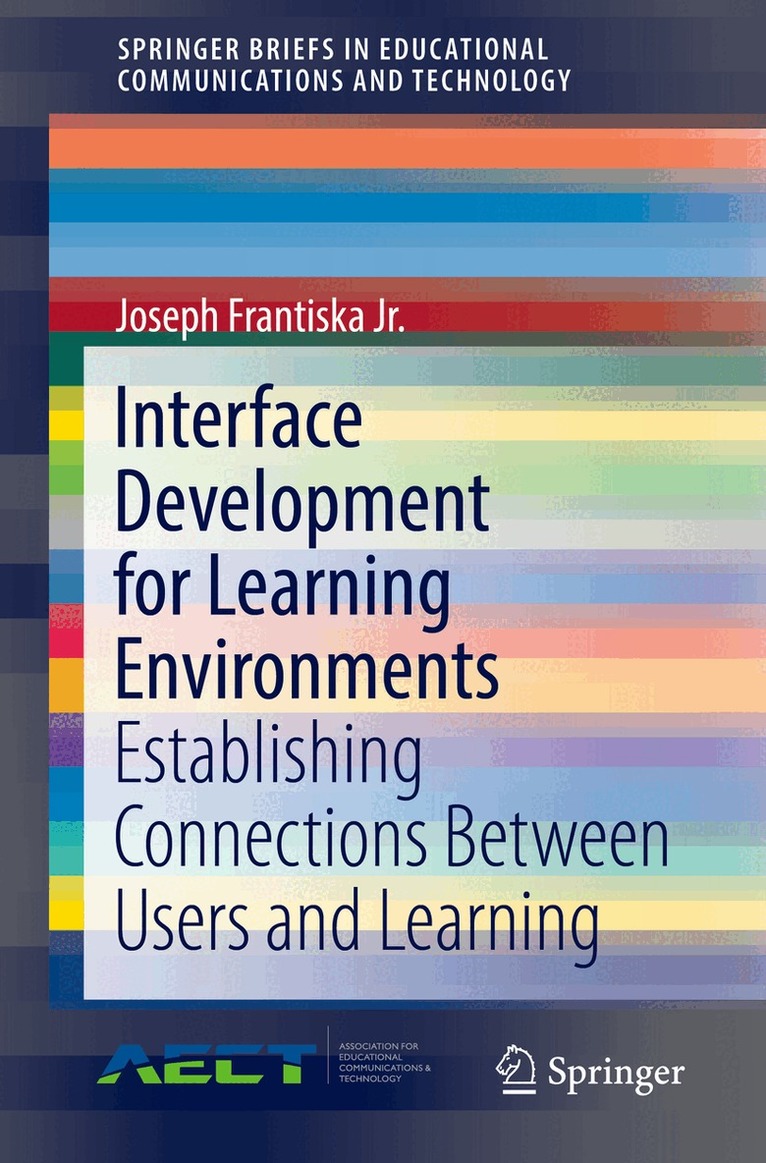
    Interface Development for Learning Environments

    Establishing Connections Between Users and Learning

    AvJoseph Frantiska Jr.

    Häftad, Engelska, 2019

    Del i serien SpringerBriefs in Educational Communications and Technology

    530 kr

    Beställningsvara. Skickas inom 10-15 vardagar. Fri frakt över 249 kr.

    Fler format och utgåvor

    E-bok

    692 kr

    Beskrivning

    This brief will examine and explore some tools and techniques that can be used to develop interfaces for learning environments. Interface design has been a topic in software engineering for many years. The advent of graphical user interfaces has created many remedies and challenges for the software engineer. In recent years with an increased emphasis in educational technology, instructional designers are also included in this arena. The interface can be a driver in terms of a learning environment’s ability to engage a student. It can also provide a point of information exchange and therefore learning between the student and the environment’s software. Thus, the issue of an interface is vital to the success of a learning environment. This brief will produce a variety of interfaces for various environments to allow the designer to contrast and compare them based upon the required purpose. The designer will have a toolkit filled with tools and techniques which will allow for interfacesthat will engage the student and facilitate their learning. The primary audiences are K-12 and post-secondary educators who desire to create digital media based educational materials.

    Produktinformation

    • Utgivningsdatum:2019-04-09
    • Mått:155 x 235 x 7 mm
    • Vikt:172 g
    • Format:Häftad
    • Språk:Engelska
    • Serie:SpringerBriefs in Educational Communications and Technology
    • Antal sidor:89
    • Förlag:Springer Nature Switzerland AG
    • ISBN:9783030144814

    Utforska kategorier

    • Människa – datorinteraktion inom Data och IT
    • Material och digital teknik i undervisningen inom Psykologi och pedagogik
    • Pedagogisk metodik inom Psykologi och pedagogik

    Mer om författaren

    Joseph J. Frantiska Jr. is a contributing faculty member at Walden University. He has undergraduate degrees in mathematics, business, software engineering and artificial intelligence along with graduate degrees in computer science and business administration. He possesses a doctorate in education from the University of Massachusetts at Amherst. Prior to entering the field of instructional technology, he spent over 25 years in industry as a systems and software engineer with experience in all aspects of the software and system development lifecycles generating more than 20 technical publications. He has taught at the college level for over twenty five years in both educational technology and computer science in both online and face-to-face environments.

    Innehållsförteckning

    • Background and Significance.- User Interface Design.- Hypertext.- Animation.- Assessment.- Understand the Audience.- Define the Inputs.- Define what processing occurs.- Define the outputs.- Cognitive Underpinnings.- Chunking Implications for User Interface Design.- Dual Coding.- Dissonance Theory.- Learning Taxonomies.- Cognitive learning taxonomy.- Affective learning taxonomy.- Psychomotor learning taxonomy.- Combining taxonomies.- Presentation Sequencing.- Elaboration Theory.- Learning Hierarchies.- Prototyping.- Storyboarding.- Navigation Patterns.- Random Design.- Structured Designs.- Selecting an Appropriate Design.- Multimedia: It’s Implementation and Usage.- Images.- Image file compression.- Lossless Compression.- Lossy Compression.- Raster formats.- Interlacing.- GIF.- Design issues with GIFs.- JPEG.- Design Issues with JPEGs.- TIFF.- RAW.- PNG.- BMP.- PPM, PGM, PBM, PNM.- Vector formats.- CGM.- SVG.- Motion Pictures / Animation.- Sound Files.- Uncompressed Format.- Compressed Formats.- Lossy Compression.- Lossless Compression.- Text and Message Design.- Their Combination.- Modality Principle.- Redundancy principle.- Implications for Multimedia Design Limits.- The Case for Adding On-Screen Text to Narrated Animations – The learning preference principle.- The Case Against Adding On-Screen Text to Narrated Animations.- Other Principles.- Navigation Patterns.- Random Design.- Structured Designs.- Conclusion.