• Fri frakt över 249 kr
  • •
  • Snabba leveranser
  • •
  • Billiga böcker
Kundservice

Du är på sajten för privatpersoner.

Företag, bibliotek eller offentlig verksamhet?

Du handlar på classic.bokus.com, där alla dina funktioner finns intakta.
Till classic.bokus.com
Bokus logotyp. Gå till startsidan.
  • Erbjudanden
  • Nyheter
  • Student
  • Topplistor
  • Barn & ungdom
  • Bokus Play
  • E-böcker
  • Pocketböcker
  • Spel & pussel

10% rabatt på allt med kod: NYSTART10 →

Sidfot

Mina sidor

    Hjälp

    • Kundservice
    • Vanliga frågor och svar
    • Frakt och leverans
    • Retur vid ångerrätt
    • Reklamera vara
    • Betalning
    • Köpvillkor
    • Allmänna villkor
    • Information om webbplatsens tillgänglighet

    Om Bokus

    • Om oss
    • Pressrum
    • För studenter
    • För företag
    • För bibliotek och offentlig verksamhet
    • För leverantörer
    • Hållbarhet

    Populärt

    • Aktuella erbjudanden
    • Presentkort
    • Studentlitteratur
    • Nya böcker
    • Topplistor
    • Signerade böcker
    • Engelska böcker

    Inspiration

    • Boktips
    • BookTok
    • Populära bokserier
    • Barnbokskaraktärer
    • Populära författare
    Logotyp för Bokus
    Följ oss på Facebook (extern länk)Följ oss på Instagram (extern länk)Följ oss på YouTube (extern länk)Följ oss på TikTok (extern länk)
    bokus @ CookiesAnpassa cookiesIntegritetspolicyKöpvillkor
    Till Citymail hemsida (extern länk)Till Budbee hemsida (extern länk)Till Postnord hemsida (extern länk)Till Schenker hemsida (extern länk)Till Early Bird hemsida (extern länk)Till Walleys hemsida (extern länk)
    1. Psykologi och pedagogik
    2. Pedagogik
    3. Pedagogisk psykologi

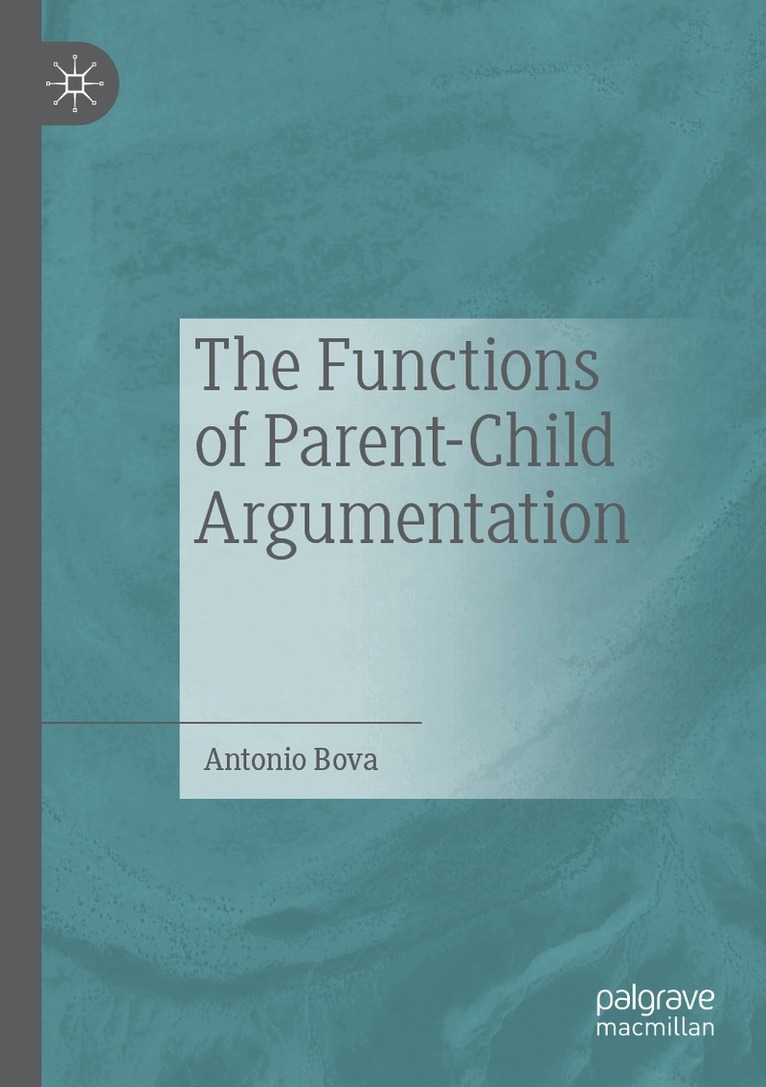
    Functions of Parent-Child Argumentation

    AvAntonio Bova

    Häftad, Engelska, 2020

    531 kr

    Beställningsvara. Skickas inom 10-15 vardagar. Fri frakt över 249 kr.

    Fler format och utgåvor

    Inbunden

    531 kr

    E-bok

    690 kr

    Beskrivning

    This book provides a detailed examination of argumentative interactions in families with young children during mealtimes. It explores both the restrictions and the opportunities family mealtimes present and the types of issues addressed through argumentative discussions. Antonio Bova puts forward an in depth analysis of how both parents and children contribute to the inception and development of an argumentative discussion, and the categories of argument adopted most often by the two groups. Drawing upon a wealth of qualitative data from the recorded mealtime conversations of Italian and Swiss-Italian middle-class families, the author examines the crucial importance of argumentative interactions between parents and children during mealtimes. This book builds on recent advances in the study of the psychology of social interaction and sheds new light on the importance of argumentation at all stages of life.

    Produktinformation

    • Utgivningsdatum:2020-08-14
    • Mått:148 x 210 x 10 mm
    • Vikt:221 g
    • Format:Häftad
    • Språk:Engelska
    • Antal sidor:147
    • Förlag:Springer Nature Switzerland AG
    • ISBN:9783030204594

    Utforska kategorier

    • Pedagogisk psykologi inom Psykologi och pedagogik
    • Psykologi: jaget, identitet och personlighet inom Psykologi och pedagogik
    • Barnpsykologi och utvecklingspsykologi inom Psykologi och pedagogik

    Mer om författaren

    Antonio Bova is Assistant Professor of Social Psychology of Communication at Università Cattolica del Sacro Cuore, Italy. His research interests revolve around the psychological concern for social interactions at different levels, and the study of argumentation in contexts characterized by a substantial prevalence of interpersonal interactions. He is co-editor of the book Interpersonal Argumentation in Educational and Professional Contexts together with Francesco Arcidiacono.

    Innehållsförteckning

    • Chapter 1. Introduction.- Chapter 2. A qualitative methodology for studying parent-child argumentation.- Chapter 3. The initial phase of the argumentative discussions between parents and children.- Chapter 4. Prevailing arguments and types of conclusions of parent-child argumentation.- Chapter 5. Conclusions.