• Fri frakt över 249 kr
  • •
  • Snabba leveranser
  • •
  • Billiga böcker
Kundservice

Du är på sajten för privatpersoner.

Företag, bibliotek eller offentlig verksamhet?

Du handlar på classic.bokus.com, där alla dina funktioner finns intakta.
Till classic.bokus.com
Bokus logotyp. Gå till startsidan.
  • Erbjudanden
  • Nyheter
  • Student
  • Topplistor
  • Barn & ungdom
  • Bokus Play
  • E-böcker
  • Pocketböcker
  • Spel & pussel

10% rabatt på allt med kod NYSTART10 →

Sidfot

Mina sidor

    Hjälp

    • Kundservice
    • Vanliga frågor och svar
    • Frakt och leverans
    • Retur vid ångerrätt
    • Reklamera vara
    • Betalning
    • Köpvillkor
    • Allmänna villkor
    • Information om webbplatsens tillgänglighet

    Om Bokus

    • Om oss
    • Pressrum
    • För studenter
    • För företag
    • För bibliotek och offentlig verksamhet
    • För leverantörer
    • Hållbarhet

    Populärt

    • Aktuella erbjudanden
    • Presentkort
    • Studentlitteratur
    • Nya böcker
    • Topplistor
    • Signerade böcker
    • Engelska böcker

    Inspiration

    • Boktips
    • BookTok
    • Populära bokserier
    • Barnbokskaraktärer
    • Populära författare
    Logotyp för Bokus
    Följ oss på Facebook (extern länk)Följ oss på Instagram (extern länk)Följ oss på YouTube (extern länk)Följ oss på TikTok (extern länk)
    bokus @ CookiesAnpassa cookiesIntegritetspolicyKöpvillkor
    Till Citymail hemsida (extern länk)Till Budbee hemsida (extern länk)Till Postnord hemsida (extern länk)Till Schenker hemsida (extern länk)Till Early Bird hemsida (extern länk)Till Walleys hemsida (extern länk)
    1. Djur och Natur
    2. Naturböcker
    3. Växtböcker

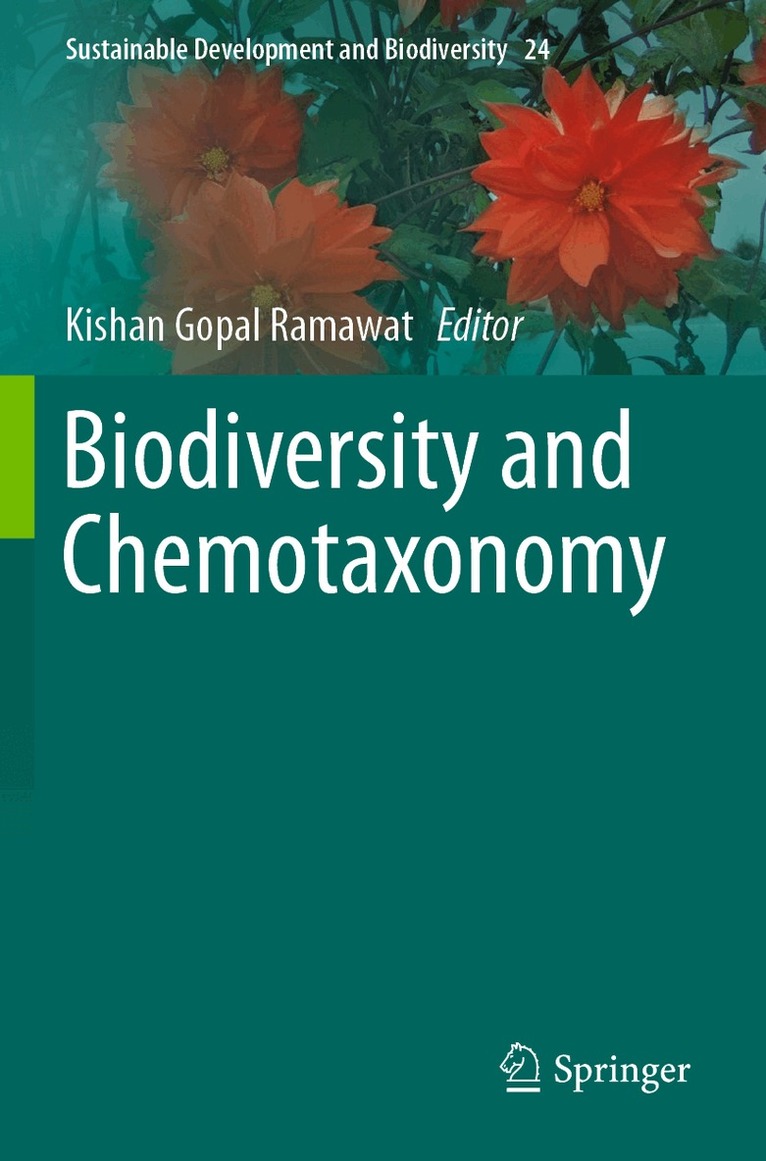
    Biodiversity and Chemotaxonomy

    AvKishan Gopal Ramawat

    Häftad, Engelska, 2020

    Del 24 i serien Sustainable Development and Biodiversity

    1 625 kr

    Beställningsvara. Skickas inom 10-15 vardagar. Fri frakt över 249 kr.

    Beskrivning

    Plant classifications are based on morphological characters and it is difficult, particularly in small plants and grasses, to identify these below generic level on the basis of these characters using a dissecting microscope. Plant species have intra- and inter-specific variation in secondary metabolites which can be utilized as marker compounds for identification and classification of plants. Secondary metabolites are produced as a result of primary metabolism and the production of these compounds not only involves several genes but also it is an energy dependent process. Hence these products cannot be considered as insignificant for the plant and the environment. Modern tools of molecular biology and secondary metabolites present in them can definitively decide about classification of plants. Absence of correct identification of plant is associated to many problems of resource utilization.  Due to wide availability of these tools, interest has revived in systematics and correct classification of plants based on these parameters for their sustainable utilization and resource management.The purpose of this book is to assess the potential of phytochemical and molecular tools in the systematic and classification of plants. The topics covered include species concept, barcoding and phylogenetic analysis, chemotaxonomy use of polyketides, carotenes, cuticular wax, volatile oils, biodiversity of corals, metazoans, Ruta and Echinocereus.It provides comprehensive and broad subject-based reviews, useful for students, teachers, researchers, and all others interested in the field. The field has been kept wide and general to accommodate the wide-ranging topics. This book will be useful to agriculturists, chemists, botanists, industrialists, and those involved in planning of crop plants.

    Produktinformation

    • Utgivningsdatum:2020-11-20
    • Mått:155 x 235 x 17 mm
    • Vikt:575 g
    • Format:Häftad
    • Språk:Engelska
    • Serie:Sustainable Development and Biodiversity
    • Antal sidor:318
    • Förlag:Springer Nature Switzerland AG
    • ISBN:9783030307486

    Utforska kategorier

    • Växtböcker inom Djur och Natur
    • Botanik inom Naturvetenskap och teknik
    • Miljövetenskap och miljöpolitik inom Naturvetenskap och teknik

    Innehållsförteckning

    • 1. Introduction.- Part I: Biodiversity.- 2. Generation of Data on Reproductive Ecology is Important for Effective Conservation of Our Plant Diversity.- 3. Molecular Approaches to Explore Coastal Benthic Metazoan Diversity - Success and Constraints.- 4. Soft Corals Biodiversity in the Egyptian Red Sea.- 5. Assessment of Grasslands in Indian Desert - a Holistic Approach.- Part II: Chemotaxonomic Markers.- 6. Chemotaxonomy Significance of Alkaloids in Plants.- 7. Iridoids as Chemotaxonomic Marker.- 8. Chemosystematic Significance of Flavonoids.- 9. Isoquinoline Alkaloids as Chemotaxonomic Markers.- 10. Saponin Diversity in Plants.- 11. Chemotaxonomy and Chemodiversity of Fungal Polyketides.- 12. Chemotaxonomic Profiling for High-Value Caretonoids in Microalgae.- 13. Fungi.- Part III: Diversity and Phylogeny.- 14. Plant Barcoding and Phylogenetic Analysis: Advances, Challenges and Future Trends.- 15. Molecular Techniques to Assess Plant Diversity.- 16. Diversity of the Genus Ocimum.- 17. Phylogeny in Echinocereus (Cactaceae): Taxonomic Implications.- 18. Genetic Variation in Brassica and Allied Genera.- Part IV: Case Studies in Chemotaxonomy.- 19. Chemotaxonomic Survey on the Genus Sedum L. (Crassulaceae) Based on Distribution and Variability of the Epicuticular Wax Constituents.- 20. Chemotaxonomic Study of Volatile Oils from Rhizomes of Zingiber species (Zingigeraceae).- 21. Chemical Variability in Essential Oils from Ruta Species and its Taxonomic and Ecological Significance.- 22. Conclusions.