• Fri frakt över 249 kr
  • •
  • Snabba leveranser
  • •
  • Billiga böcker
Kundservice

Du är på sajten för privatpersoner.

Företag, bibliotek eller offentlig verksamhet?

Du handlar på classic.bokus.com, där alla dina funktioner finns intakta.
Till classic.bokus.com
Bokus logotyp. Gå till startsidan.
  • Erbjudanden
  • Student
  • Topplistor
  • Barn & ungdom
  • Bokus Play
  • E-böcker
  • Ljudböcker
  • Pocketböcker
  • Spel och pussel

Pocketfynda! Hundratals böcker för 49 kr/st →

Sidfot

Mina sidor

    Hjälp

    • Kundservice
    • Vanliga frågor och svar
    • Frakt och leverans
    • Retur vid ångerrätt
    • Reklamera vara
    • Betalning
    • Köpvillkor
    • Allmänna villkor
    • Information om webbplatsens tillgänglighet

    Om Bokus

    • Om oss
    • Pressrum
    • För studenter
    • För företag
    • För bibliotek och offentlig verksamhet
    • För leverantörer
    • Hållbarhet

    Populärt

    • Aktuella erbjudanden
    • Presentkort
    • Studentlitteratur
    • Nya böcker
    • Topplistor
    • Signerade böcker
    • Engelska böcker

    Inspiration

    • Boktips
    • BookTok
    • Barnbokskaraktärer
    • Populära författare
    Logotyp för Bokus
    Följ oss på Facebook (extern länk)Följ oss på Instagram (extern länk)Följ oss på YouTube (extern länk)Följ oss på TikTok (extern länk)
    bokus @ CookiesAnpassa cookiesIntegritetspolicyKöpvillkor
    Till Citymail hemsida (extern länk)Till Budbee hemsida (extern länk)Till Postnord hemsida (extern länk)Till Schenker hemsida (extern länk)Till Early Bird hemsida (extern länk)Till Walleys hemsida (extern länk)
    1. Naturvetenskap och teknik
    2. Teknik och industri
    3. Energiteknik

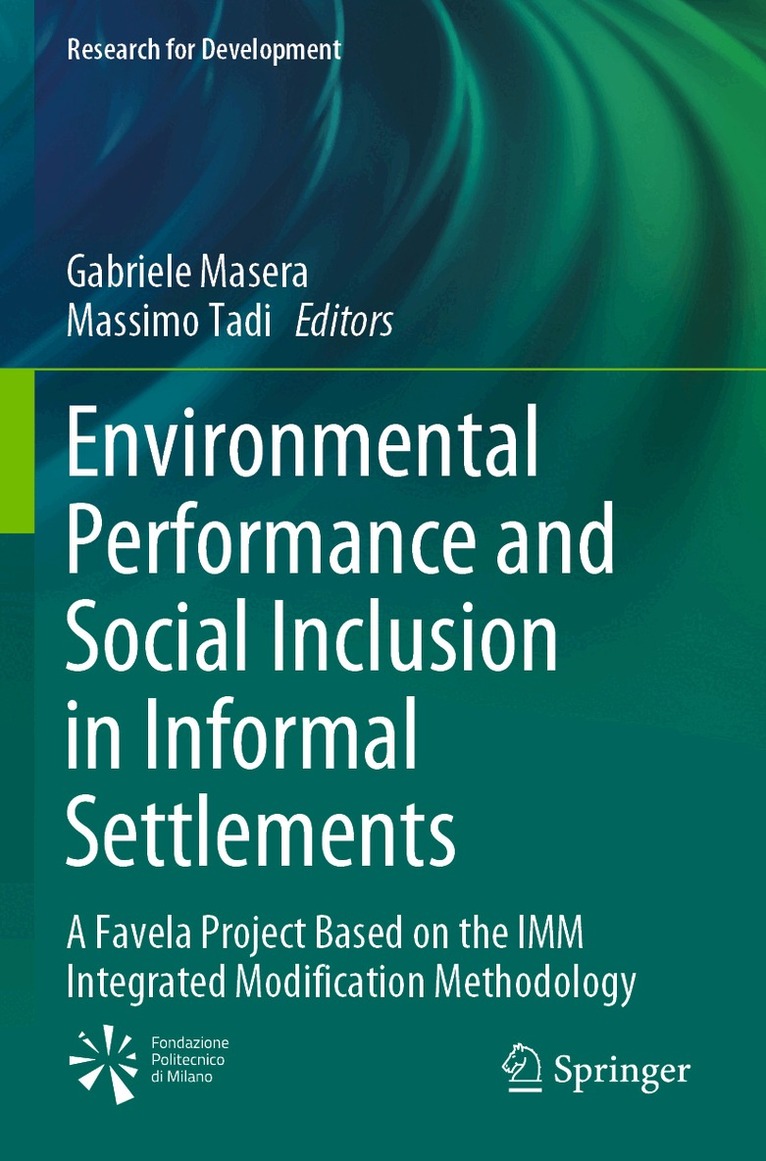
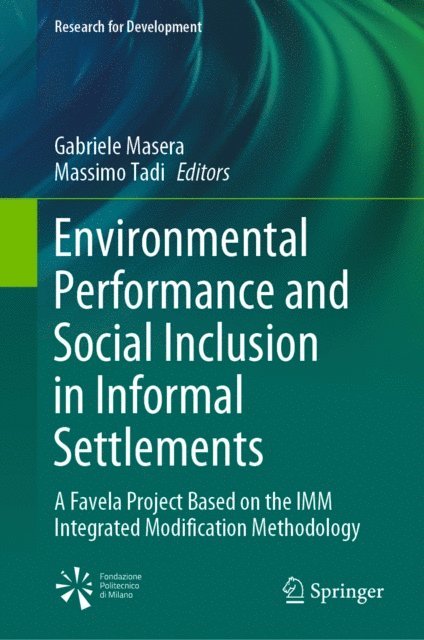
    Environmental Performance and Social Inclusion in Informal Settlements

    A Favela Project Based on the IMM Integrated Modification Methodology

    AvGabriele Masera,Massimo Tadi

    Inbunden, Engelska, 2020

    Del i serien Research for Development

    1 078 kr

    Beställningsvara. Skickas inom 10-15 vardagar. Fri frakt över 249 kr.
    Beskrivning

    This book discusses the potential of a systemic and multidisciplinary design approach to improve urban quality, health, livability, and inclusiveness for people living in informal settlements. In most instances, attempts to address informal settlements lack an adequate assessment of their impact on the wider built environment and implementation of the UN’s Sustainable Development Goals. The Integrated Modification Methodology (IMM), introduced here, offers a systematic, multidisciplinary design tool encompassing several of the aspects that define the environmental performance of urban systems. The book also demonstrates the application of the methodology to an informal settlement, proving its potential to guide systemicurban transformations, also in urban areas lacking formal planning. The case study investigated is in the Rocinha favela in Rio de Janeiro, which ischaracterized by poor water quality, lack of drainage and sanitation systems, and very few green spaces. Based on a rigorous methodology, the process described here can also be applied in similar contexts around the world.

    Produktinformation

    • Utgivningsdatum:2020-05-19
    • Mått:155 x 235 x 19 mm
    • Vikt:593 g
    • Format:Inbunden
    • Språk:Engelska
    • Serie:Research for Development
    • Antal sidor:236
    • Förlag:Springer Nature Switzerland AG
    • ISBN:9783030443511

    Utforska kategorier

    • Energiteknik inom Naturvetenskap och teknik
    • Miljövetenskap och miljöpolitik inom Naturvetenskap och teknik
    • Regional planering inom Naturvetenskap och teknik

    Mer om författaren

    Gabriele Masera, M.Eng., Ph.D., is Full Professor at the ABC Department (Architecture, Built Environment and Construction Engineering), Politecnico di Milano, Milan, Italy,in the field of innovative construction technologies for sustainability and nearly zero-energy buildings.Dr. Masera has taught at thePolitecnico di Milano since 2002 and has supervised more than 150 Master’s theses and PhD dissertations there. Besides teaching, he researches widely on these topics, taking part also in some national strategic projects and three European projects: about the use of Phase Change Materials in buildings, about the definition of sustainable building innovations in 2030 and about energy retrofitting of residential buildings. He has been a Visiting Professor at theUniversidad Politécnica de Madrid and Keio University in Tokyo. He has been a member of the scientific committees for several international conferences and has published widely on international journals. He currently serves as Deputy Dean of the School of Architecture Urban Planning Construction Engineering of Politecnico di Milano.Massimo Tadi, B.Sc. Arch., M.Sc. Arch., is an Associate Professor at the ABC Department (Architecture, Built Environment, and Construction Engineering) and Director of the IMM Design Lab at thePolitecnico di Milano, Milan, Italy. His main areas of expertise aresustainable architecture and urban design, with a specific focus on techniques and strategies for the transformation of complex urban contexts to promote energy efficiency, and on environmentally oriented urban development. His research and design work emphasizes the relationships between urban morphology and energy consumption, and between contemporary mobility infrastructure, urban development, and architecture. He has been a Lecturer and invited speaker at many universities around the world and a Visiting Professor at theUniversidade Federal do Rio de Janeiro, Brazil. He has won many prizes and design awards, and many of his projects have been published in international architectural magazines. He currently serves as a peer-reviewer for several publications.

    Innehållsförteckning

    • 1. The Rocinha favela and past slum upgrading programmes in Rio de Janeiro / Brazil; shortcomings of past experiences and limitations of fragmented transformation actions.- 2. The Integrated Modification Methodology (how it works + past examples of its application to formal contexts + comparison with other methodologies/tools used for similar purposes).- 3. Analysis of the existing situation (IMM Diagnostic phase).- 4. Urban metabolism and identification of intervention areas (IMM Assumption phase).- 5. Projects: energy.- 6. Projects: ecosystem.- services.- 7. Projects: waste.- 8. Projects: wastewater treatment.- 9. Projects: food.- 10.  Projects: mobility.- 11.  Analysis of system-wide improvements (IMM Retrofit phase).- 12.  Conclusions.