• Fri frakt över 249 kr
  • •
  • Snabba leveranser
  • •
  • Billiga böcker
Kundservice

Du är på sajten för privatpersoner.

Företag, bibliotek eller offentlig verksamhet?

Du handlar på classic.bokus.com, där alla dina funktioner finns intakta.
Till classic.bokus.com
Bokus logotyp. Gå till startsidan.
  • Erbjudanden
  • Nyheter
  • Student
  • Topplistor
  • Barn & ungdom
  • Bokus Play
  • E-böcker
  • Pocketböcker
  • Spel & pussel

10% rabatt på allt med kod: NYSTART10 →

Sidfot

Mina sidor

    Hjälp

    • Kundservice
    • Vanliga frågor och svar
    • Frakt och leverans
    • Retur vid ångerrätt
    • Reklamera vara
    • Betalning
    • Köpvillkor
    • Allmänna villkor
    • Information om webbplatsens tillgänglighet

    Om Bokus

    • Om oss
    • Pressrum
    • För studenter
    • För företag
    • För bibliotek och offentlig verksamhet
    • För leverantörer
    • Hållbarhet

    Populärt

    • Aktuella erbjudanden
    • Presentkort
    • Studentlitteratur
    • Nya böcker
    • Topplistor
    • Signerade böcker
    • Engelska böcker

    Inspiration

    • Boktips
    • BookTok
    • Populära bokserier
    • Barnbokskaraktärer
    • Populära författare
    Logotyp för Bokus
    Följ oss på Facebook (extern länk)Följ oss på Instagram (extern länk)Följ oss på YouTube (extern länk)Följ oss på TikTok (extern länk)
    bokus @ CookiesAnpassa cookiesIntegritetspolicyKöpvillkor
    Till Citymail hemsida (extern länk)Till Budbee hemsida (extern länk)Till Postnord hemsida (extern länk)Till Schenker hemsida (extern länk)Till Early Bird hemsida (extern länk)Till Walleys hemsida (extern länk)
    1. Samhälle och politik
    2. Sociologi och antropologi
    3. Sociologi

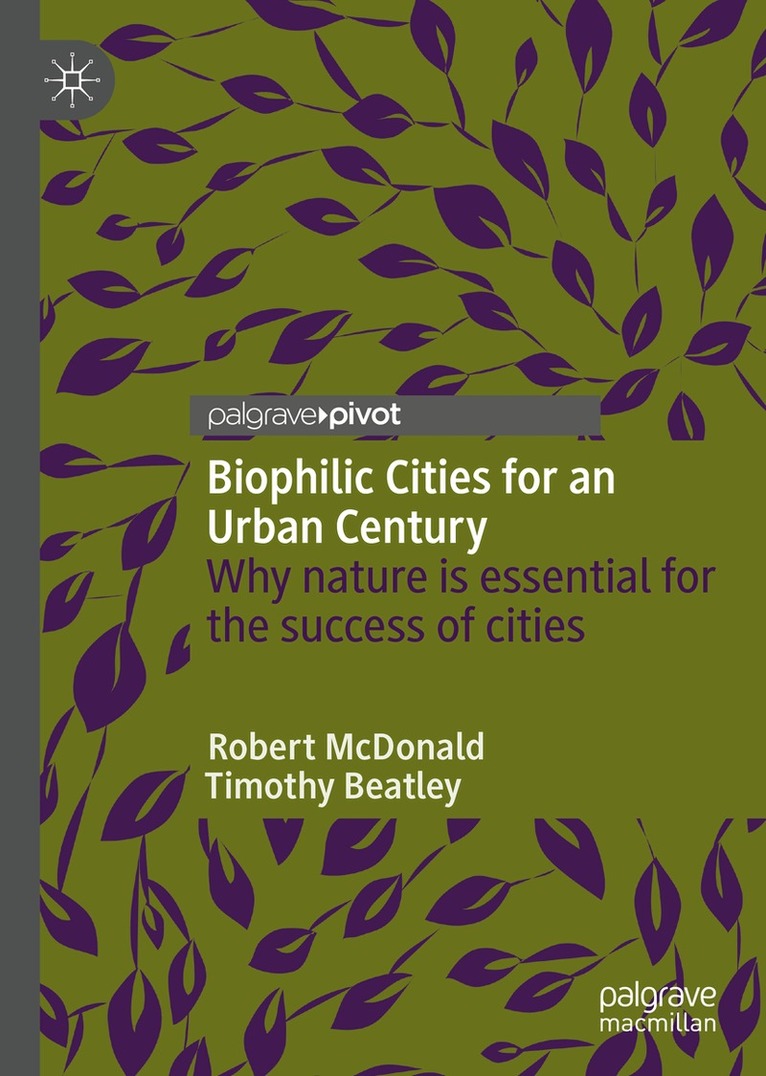
    Biophilic Cities for an Urban Century

    Why nature is essential for the success of cities

    AvRobert McDonald,Timothy Beatley

    Inbunden, Engelska, 2020

    708 kr

    Beställningsvara. Skickas inom 10-15 vardagar. Fri frakt över 249 kr.

    Fler format och utgåvor

    Häftad

    708 kr

    Beskrivning

    ​This book argues that, paradoxically, at their moment of triumph and fastest growth, cities need nature more than ever. Only if our urban world is full of biophilic cities will the coming urban century truly succeed. Cities are quintessentially human, the perfect forum for interaction, and we are entering what could justly be called the urban century, the fastest period of urban growth in human history. Yet a growing body of scientific literature shows that the constant interaction, the hyper-connectedness, of cities leads to an urban psychological penalty. Nature in cities can be solution to this dilemma, allowing us to have all the benefits of our urban, connected world yet also have that urban home be a place where humanity can thrive. This book presents best practices and case studies from biophilic design, showing how cities around the world are beginning to incorporate nature into their urban fabric. It will be a valuable resource for scholars and professionals working in the area of sustainable cities.

    Produktinformation

    • Utgivningsdatum:2020-09-26
    • Mått:148 x 210 x 13 mm
    • Vikt:298 g
    • Format:Inbunden
    • Språk:Engelska
    • Antal sidor:124
    • Förlag:Springer Nature Switzerland AG
    • ISBN:9783030516642

    Utforska kategorier

    • Sociologi inom Samhälle och politik
    • Sociala grupper och identitet inom Samhälle och politik
    • Geografi inom Naturvetenskap och teknik

    Mer om författaren

    Robert McDonald is Lead Scientist at The Nature Conservancy, based in Washington, DC, USA.  He researches the relationship between cities and nature.Timothy Beatley is the Teresa Heinz Professor of Sustainable Communities, in the School of the Architecture at the University of Virginia, USA, where he has taught for the last thirty years. He also directs the Biophilic Cities Network.

    Innehållsförteckning

    • 1. The urban century.- 2. Cities as quintessentially human.- 3. Cities as inhumane: the urban health penalty.- 4. Nature as a solution.- 5. Biophilic cities: Vision and emerging principles.- 6. Innovative biophilic design and planning: From rooftop to neighborhood to city.- 7. The choice.