• Fri frakt över 249 kr
  • •
  • Snabba leveranser
  • •
  • Billiga böcker
Kundservice

Du är på sajten för privatpersoner.

Företag, bibliotek eller offentlig verksamhet?

Du handlar på classic.bokus.com, där alla dina funktioner finns intakta.
Till classic.bokus.com
Bokus logotyp. Gå till startsidan.
  • Erbjudanden
  • Nyheter
  • Student
  • Topplistor
  • Barn & ungdom
  • Bokus Play
  • E-böcker
  • Pocketböcker
  • Spel & pussel

10% rabatt på allt med kod NYSTART10 →

Sidfot

Mina sidor

    Hjälp

    • Kundservice
    • Vanliga frågor och svar
    • Frakt och leverans
    • Retur vid ångerrätt
    • Reklamera vara
    • Betalning
    • Köpvillkor
    • Allmänna villkor
    • Information om webbplatsens tillgänglighet

    Om Bokus

    • Om oss
    • Pressrum
    • För studenter
    • För företag
    • För bibliotek och offentlig verksamhet
    • För leverantörer
    • Hållbarhet

    Populärt

    • Aktuella erbjudanden
    • Presentkort
    • Studentlitteratur
    • Nya böcker
    • Topplistor
    • Signerade böcker
    • Engelska böcker

    Inspiration

    • Boktips
    • BookTok
    • Populära bokserier
    • Barnbokskaraktärer
    • Populära författare
    Logotyp för Bokus
    Följ oss på Facebook (extern länk)Följ oss på Instagram (extern länk)Följ oss på YouTube (extern länk)Följ oss på TikTok (extern länk)
    bokus @ CookiesAnpassa cookiesIntegritetspolicyKöpvillkor
    Till Citymail hemsida (extern länk)Till Budbee hemsida (extern länk)Till Postnord hemsida (extern länk)Till Schenker hemsida (extern länk)Till Early Bird hemsida (extern länk)Till Walleys hemsida (extern länk)
    1. Samhälle och politik
    2. Samhälle och kultur
    3. Kultur och medier
    4. Referensverk och tvärvetenskap

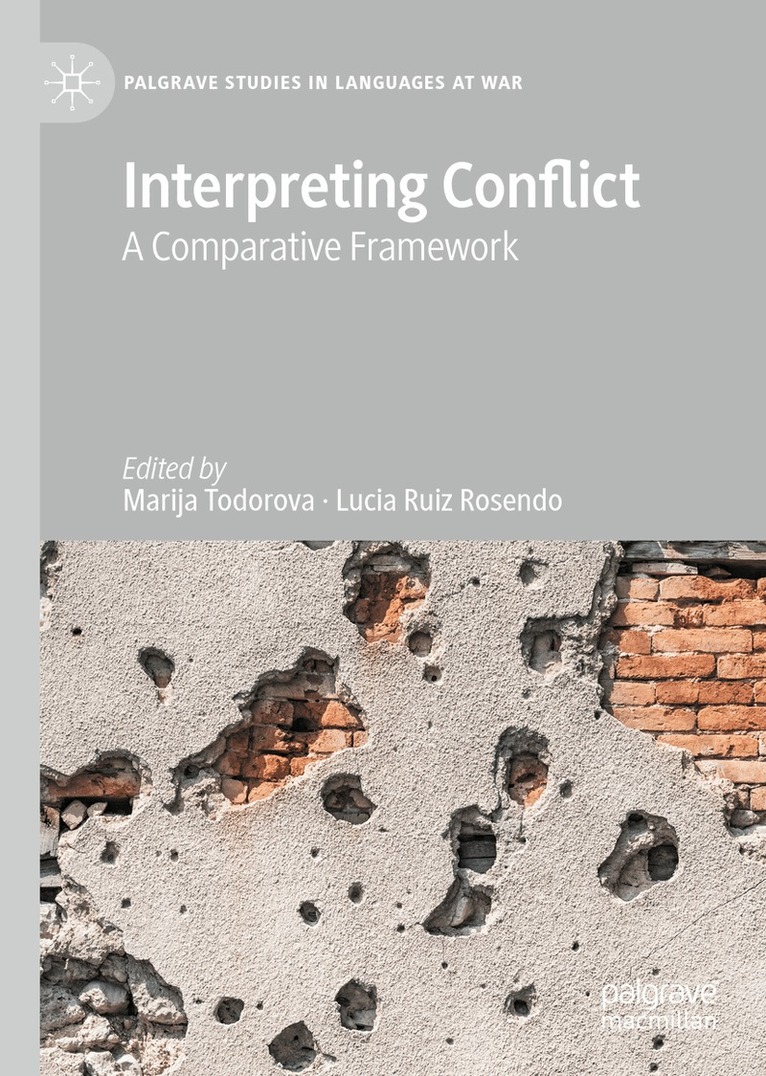
    Interpreting Conflict

    A Comparative Framework

    AvMarija Todorova,Lucía Ruiz Rosendo

    Inbunden, Engelska, 2021

    Del i serien Palgrave Studies in Languages at War

    1 493 kr

    Beställningsvara. Skickas inom 10-15 vardagar. Fri frakt över 249 kr.

    Beskrivning

    This edited book examines the role of interpreting in conflict situations, bringing together studies from different international and intercultural contexts, with contributions from military personnel, humanitarian interpreters and activists as well as academics. The authors use case studies to compare relevant notions of interpreting in conflict-related scenarios such as: the positionality of the interpreter, the ethical, emotional and security implications of their work, the specific training needed to carry out work for military and humanitarian organizations, and the relations of power created between the different stakeholders. The book will be of interest to students and scholars of translation and interpreting, conflict and peace studies, as well as conflict resolution and management.

    Produktinformation

    • Utgivningsdatum:2021-05-12
    • Mått:148 x 210 x 23 mm
    • Vikt:553 g
    • Format:Inbunden
    • Språk:Engelska
    • Serie:Palgrave Studies in Languages at War
    • Antal sidor:320
    • Förlag:Springer Nature Switzerland AG
    • ISBN:9783030669089

    Utforska kategorier

    • Referensverk och tvärvetenskap inom Samhälle och politik
    • Folkrätt inom Juridik
    • Språk: referensverk och allmänt inom Språk och ordböcker

    Mer om författaren

    Marija Todorova is a Visiting Scholar of the RCPCE at The Hong Kong Polytechnic University and Adjunct Assistant Professor at the University American College Skopje, North Macedonia. She is Editor of New Voices in Translation Studies, and a member of the Executive Council of the International Association for Translation and Intercultural Studies.Lucía Ruiz Rosendo is Assistant Professor at the University of Geneva, Switzerland. She has published in a number of journals, including The Interpreter and Translator Trainer, Armed Forces & Society and Translation Spaces, and also co-edited the special issue 'Interpreting in Conflict Situations and in Conflict Zones Throughout History’ for Linguistica Antverpiensia in 2016.

    Recensioner i media

    "Given the constant crises the modern world is facing through globally impactful events … and the new often unofficial, fragmented and ‘urgent’ settings in which interpreting is practiced, Interpreting Conflict: A comparative framework constitutes a welcome and timely addition to the state-of-the-art in conflict, crisis, humanitarian and post-humanitarian interpreting. The book provides valuable insights not just for Translation and Interpreting scholars, but also scholars in Trauma Studies, Memory Studies, as well as Humanitarian Logistics, Refugee Studies and Crisis Management Studies." (Kelly Pasmatzi, New Voices in Translation Studies, Issue 27, 2022)“The case studies contained in this edited volume constitute an excellent compilation for practitioners – not just interpreters and their trainers, but military and humanitarian personnel too, as well as for researchers. Different types of sources, sometimes built by the authors themselves,make up the raw material of most of the research in this volume, always complemented by an arsenal of specialized bibliography.” (Jesús Baigorri-Jalón, Translation Matters, Vol. 4 (1), 2022)

    Innehållsförteckning

    • Part I. Introduction.- 1. Moving Boundaries in Interpreting in Conflict Zones.- Part II. Interpreting for the Military.- 2. Dual Citizen Interpreters: Consequences of AssignedLoyalties in the Aftermath of War.- 3. To Be or Not to Be Loyal: Loyalty of Military InterpretersServing the Japanese Army in the Second Sino-JapaneseWar (1931–1945).- 4 Interpreting the Korean Conflict (1945–1953).- 5 Local Interpreters Versus Military Personnel: Perceptionsand Expectations Regarding the Local Interpreter’s Roleand Agency Within the Afghan Conflict.- 6. Negotiating Ideologies in Conflict Zones: The Case of theInterpreter in Lebanon.- 7 The Spanish “Military Interpreter”: A PracticalApplication in International Operations Arising fromArmed Conflicts.- 8 Narrative Representations of the Interpreter in Wartime.- 9 After the Towers Fell: The Fate of Two Arabic Linguists.- Part III Humanitarian Interpreting.- 10Psychological Aspects of Interpreting Violence: ANarrative from the Israeli-PalestinianConflict.- 11 United Nations Interpreters in the Arab Spring.- 12 Interpreter-Mediated Encounters in ComplexHumanitarian Settings: Language and Cultural Mediationat Emergency ONG Onlus.- 13 Andalusia, the Principal Gateway to Europe for Migrantsand Refugees Arriving by Sea: Access to the Right toInterpreting Services in Reception Entities forInternational Asylum Seekers.- 14 Interpreting for Refugees in Hong Kong.- 15 Latin American Interpreters Working in a Safe Country:Specific Training and Emotional Implications.- Part IV Conclusion.- 16 Pressing Issues and Future Directions for Interpreting inConflict Zones.