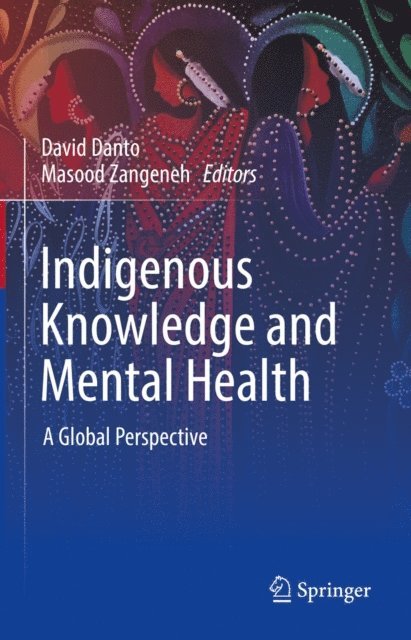
Indigenous Knowledge and Mental Health
A Global Perspective
1 476 kr
Beställningsvara. Skickas inom 10-15 vardagar. Fri frakt över 249 kr.
Du är på sajten för privatpersoner.
1 476 kr
Beställningsvara. Skickas inom 10-15 vardagar. Fri frakt över 249 kr.
Dr. David Danto is a clinical psychologist and Head of Psychology at the University of Guelph-Humber. He serves on the Board of Directors of the Canadian Psychological Association (CPA), is Board Liaison to the CPA Committee on Ethics, past Chair of the CPA Indigenous Peoples section and is a past trustee for the Psychology Foundation of Canada (PFC). In 2017 he chaired the CPA and PFC Task Force on Responding to the Truth and Reconciliation Commission Report, and he currently Chairs the CPA Standing Committee on Reconciliation. Dr. Danto has worked in psychiatric hospitals, university counselling centers, private practice, and correctional facilities in Canada and the United States. In partnership with Indigenous Knowledge Keepers, Dr. Danto developed a field course on Indigenous Mental Health, which he has delivered in Mushkegowuk territory along the James and Hudson Bay coast for the last nine years. Dr. Danto researches resilience and mental health within Indigenous communities, with particular focus on the role of the land in healing the impacts of colonialism and intergenerational trauma. Dr. Masood Zangeneh is Professor in the Faculty of Liberal Arts & Sciences and Innovative Learning, Humber College Institute of Technology and Advanced Learning. He is the founding editor of International Journal of Mental Health and Addiction, and is a consultant to numerous scientific journals and universities for interdisciplinary, multi-cultural research and development addressing mental health, addiction and resilience among marginalized populations. In 2019 he co-edited Culture, Diversity and Mental Health - Enhancing Clinical Practice (Springer).
This text represents a wholly refreshing, important, challenging, and creative contribution to the literature addressing the impacts of colonization on the wellbeing of Indigenous Peoples and the role of Indigenous knowledge(s) in healing and wellbeing. If this collection’s breadth of representation loads the bases, the scholarly depth of these contributions hits the ball out of the park. The global voices we hear are of Indigenous Peoples themselves, and of health workers, activists, and allies embedded within those communities by the suffering of a passion, and a commitment of understanding unafraid to be taught. As such, the book claims the all-important promise of its title, of Indigenous knowledge(s) by which our predominantly Western and positivistic understanding of mental health, inclusive of its praxis implications, can and must be challenged, refigured, adapted, and sometimes even abandoned. A radical teaching, this. This text moves us away from abstractions and platitudes to show us just how, just what, it might mean in practice to be “sensitive” to the other, to be “responsive”, and to be open to creative invention and respectful collaboration. We learn about innovative therapies, interventions, and research methodologies: land-based interventions, anti-oppressive therapy, body work, using dance and rituals in therapy, conducting clinical ethnographic, auto-ethnographic, or performance ethnographic research, analyzing songs and folk tales, and what it means to be allies and companions in research and therapy. We learn of a therapy and research of the heart, of a therapy and research for, from, and of the other. In the end, this book does everything it sets itself to, and exceptionally so. Now it is our turn. Having spoken so eloquently and powerfully, the test of our listening is in our response, which is also to say our responsibility.Leswin Laubscher, Ph.D.Duquesne University
Alean Al-Krenawi, Masood Zangeneh
2 619 kr
Masood Zangeneh, Alean Al-Krenawi
Inbunden, 2019
2 041 kr
Masood Zangeneh, Nikolay Bokhan, Georgy Selivanov
Inbunden, 2026
1 795 kr
Karin Spenser, Masood Zangeneh, Dean Fido
2 781 kr
Du är på sajten för privatpersoner.
1 476 kr
Beställningsvara. Skickas inom 10-15 vardagar. Fri frakt över 249 kr.
Dr. David Danto is a clinical psychologist and Head of Psychology at the University of Guelph-Humber. He serves on the Board of Directors of the Canadian Psychological Association (CPA), is Board Liaison to the CPA Committee on Ethics, past Chair of the CPA Indigenous Peoples section and is a past trustee for the Psychology Foundation of Canada (PFC). In 2017 he chaired the CPA and PFC Task Force on Responding to the Truth and Reconciliation Commission Report, and he currently Chairs the CPA Standing Committee on Reconciliation. Dr. Danto has worked in psychiatric hospitals, university counselling centers, private practice, and correctional facilities in Canada and the United States. In partnership with Indigenous Knowledge Keepers, Dr. Danto developed a field course on Indigenous Mental Health, which he has delivered in Mushkegowuk territory along the James and Hudson Bay coast for the last nine years. Dr. Danto researches resilience and mental health within Indigenous communities, with particular focus on the role of the land in healing the impacts of colonialism and intergenerational trauma. Dr. Masood Zangeneh is Professor in the Faculty of Liberal Arts & Sciences and Innovative Learning, Humber College Institute of Technology and Advanced Learning. He is the founding editor of International Journal of Mental Health and Addiction, and is a consultant to numerous scientific journals and universities for interdisciplinary, multi-cultural research and development addressing mental health, addiction and resilience among marginalized populations. In 2019 he co-edited Culture, Diversity and Mental Health - Enhancing Clinical Practice (Springer).
This text represents a wholly refreshing, important, challenging, and creative contribution to the literature addressing the impacts of colonization on the wellbeing of Indigenous Peoples and the role of Indigenous knowledge(s) in healing and wellbeing. If this collection’s breadth of representation loads the bases, the scholarly depth of these contributions hits the ball out of the park. The global voices we hear are of Indigenous Peoples themselves, and of health workers, activists, and allies embedded within those communities by the suffering of a passion, and a commitment of understanding unafraid to be taught. As such, the book claims the all-important promise of its title, of Indigenous knowledge(s) by which our predominantly Western and positivistic understanding of mental health, inclusive of its praxis implications, can and must be challenged, refigured, adapted, and sometimes even abandoned. A radical teaching, this. This text moves us away from abstractions and platitudes to show us just how, just what, it might mean in practice to be “sensitive” to the other, to be “responsive”, and to be open to creative invention and respectful collaboration. We learn about innovative therapies, interventions, and research methodologies: land-based interventions, anti-oppressive therapy, body work, using dance and rituals in therapy, conducting clinical ethnographic, auto-ethnographic, or performance ethnographic research, analyzing songs and folk tales, and what it means to be allies and companions in research and therapy. We learn of a therapy and research of the heart, of a therapy and research for, from, and of the other. In the end, this book does everything it sets itself to, and exceptionally so. Now it is our turn. Having spoken so eloquently and powerfully, the test of our listening is in our response, which is also to say our responsibility.Leswin Laubscher, Ph.D.Duquesne University
Alean Al-Krenawi, Masood Zangeneh
2 619 kr
Masood Zangeneh, Alean Al-Krenawi
Inbunden, 2019
2 041 kr
Masood Zangeneh, Nikolay Bokhan, Georgy Selivanov
Inbunden, 2026
1 795 kr
Karin Spenser, Masood Zangeneh, Dean Fido
2 781 kr