• Fri frakt över 249 kr
  • •
  • Snabba leveranser
  • •
  • Billiga böcker
Kundservice

Du är på sajten för privatpersoner.

Företag, bibliotek eller offentlig verksamhet?

Du handlar på classic.bokus.com, där alla dina funktioner finns intakta.
Till classic.bokus.com
Bokus logotyp. Gå till startsidan.
  • Erbjudanden
  • Nyheter
  • Student
  • Topplistor
  • Barn & ungdom
  • Bokus Play
  • E-böcker
  • Pocketböcker
  • Spel & pussel

10% rabatt på allt med kod NYSTART10 →

Sidfot

Mina sidor

    Hjälp

    • Kundservice
    • Vanliga frågor och svar
    • Frakt och leverans
    • Retur vid ångerrätt
    • Reklamera vara
    • Betalning
    • Köpvillkor
    • Allmänna villkor
    • Information om webbplatsens tillgänglighet

    Om Bokus

    • Om oss
    • Pressrum
    • För studenter
    • För företag
    • För bibliotek och offentlig verksamhet
    • För leverantörer
    • Hållbarhet

    Populärt

    • Aktuella erbjudanden
    • Presentkort
    • Studentlitteratur
    • Nya böcker
    • Topplistor
    • Signerade böcker
    • Engelska böcker

    Inspiration

    • Boktips
    • BookTok
    • Populära bokserier
    • Barnbokskaraktärer
    • Populära författare
    Logotyp för Bokus
    Följ oss på Facebook (extern länk)Följ oss på Instagram (extern länk)Följ oss på YouTube (extern länk)Följ oss på TikTok (extern länk)
    bokus @ CookiesAnpassa cookiesIntegritetspolicyKöpvillkor
    Till Citymail hemsida (extern länk)Till Budbee hemsida (extern länk)Till Postnord hemsida (extern länk)Till Schenker hemsida (extern länk)Till Early Bird hemsida (extern länk)Till Walleys hemsida (extern länk)
    1. Naturvetenskap och teknik
    2. Geovetenskap
    3. Miljövetenskap och miljöpolitik

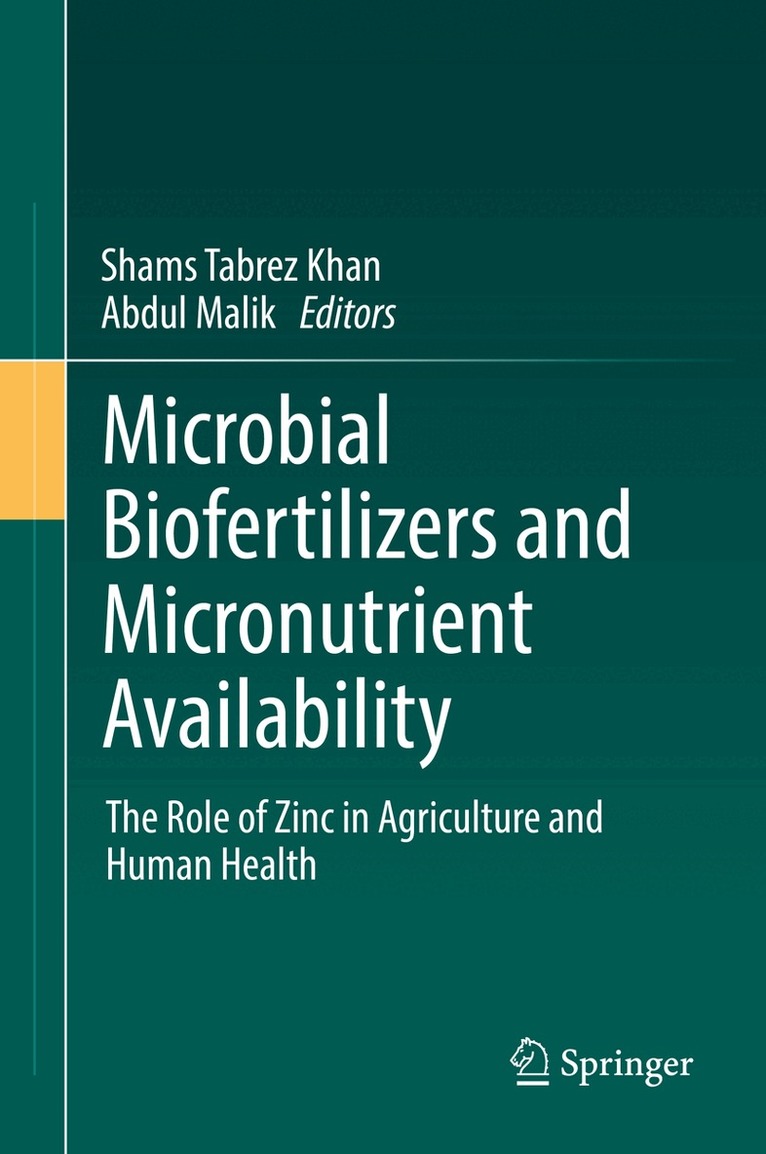
    Microbial Biofertilizers and Micronutrient Availability

    The Role of Zinc in Agriculture and Human Health

    AvShams Tabrez, Khan,Abdul Malik

    Inbunden, Engelska, 2021

    1 450 kr

    Beställningsvara. Skickas inom 10-15 vardagar. Fri frakt över 249 kr.

    Beskrivning

    This volume addresses  various issues related to micronutrient deficiency, especially zinc, and discusses the possible approaches for combating mineral deficiency among humans and plants. The book mainly focuses on the zinc biofortification of vegetable and cereal crops and highlights the consequences of zinc deficiency and the health risks associated with zinc deficiency, especially in children and expecting mothers. The authors discuss different types of food that are rich in zinc and other minerals, how diets can be designed to meet the daily zinc requirements, and the impact of zinc deficiency on plant health and quality of agricultural products and the role of micronutrients in abiotic stress tolerance. The book also covers sustainable approaches to zinc biofortification in crops, such as the microbial solubilization of zinc in soil to improve zinc uptake by plants, and the formulation of these microbes into biofertilizers. The book will be of interest to dieticians, agricultural scientists, students and microbiologists.

    Produktinformation

    • Utgivningsdatum:2021-12-07
    • Mått:155 x 235 x 30 mm
    • Vikt:975 g
    • Format:Inbunden
    • Språk:Engelska
    • Antal sidor:461
    • Förlag:Springer Nature Switzerland AG
    • ISBN:9783030766085

    Utforska kategorier

    • Miljövetenskap och miljöpolitik inom Naturvetenskap och teknik
    • Biologi inom Naturvetenskap och teknik
    • Folkhälsa och hälsopedagogik inom Medicin

    Mer om författaren

    Dr. Shams Tabrez Khan is an Associate Professor in the Department of Agricultural Microbiology at Aligarh Muslim University, India. His research interests include novel microbes and their implication in industry and environment and Nanobiotechnology/Nanotoxicology.  Dr. Abdul Malik is a Professor and Head of the Department of Agricultural Microbiology at Aligarh Muslim University, India. He has over 25 years of research experience in the fields of Agricultural Microbiology, Food Microbiology, Environmental Microbiology and Molecular Toxicology.

    Innehållsförteckning

    • Chapter 1.- The enormity of Zinc deficiency: an overview. Chapter 2.- Zinc malnourishment in children and its impact on child health. Chapter 3.- Zinc deficiency and its consequences during pregnancy. Chapter 4.- Malnutrition: Impact of Zinc on child development. Chapter 5.- Role of Zinc in liver pathology. Chapter 6.- Role of micronutrients in abiotic stress tolerance in plants. Chapter 7.- Zinc as a versatile element in plants: an overview on uptake, translocation, assimilatory roles, deficiency and toxicity symptoms. Chapter 8.- Transition metal homeostasis and its role in plant growth. Chapter 9.- Role of Zinc homeostasis in plant growth. Chapter 10.- The multiple effects of microorganisms on plant nutrition. Chapter 11.- Role of minerals in plant growth and soil microbial consortia mediated mineral uptake by plants. Chapter 12.- Microbial bio-fertilizers an approach to deal with zinc deficiency. Chapter 13.- Zinc solubilization by bacteria for increased Zinc uptake by plant. Chapter 14.- Development of microbes based biofertilizer for zinc dissolution in soil. Chapter 15.- Soil microbes interaction: mineral solubilization and plant nutrition. Chapter 16.- Microbes Mediated facilitation of micronutrients uptake by plants from soil especially Zinc. Chapter 17.- Role of Rhizobacterial Bacilli in Zinc solubilization. Chapter 18.- Microbial bio-fertilizers an approach to deal with zinc deficiency. Chapter 19.- Comparing various diets as source of zinc with special reference to fruits and vegetables. Chapter 20.- Managing Zinc deficiency among children.