• Fri frakt över 249 kr
  • •
  • Snabba leveranser
  • •
  • Billiga böcker
Kundservice

Du är på sajten för privatpersoner.

Företag, bibliotek eller offentlig verksamhet?

Du handlar på classic.bokus.com, där alla dina funktioner finns intakta.
Till classic.bokus.com
Bokus logotyp. Gå till startsidan.
  • Erbjudanden
  • Nyheter
  • Student
  • Topplistor
  • Barn & ungdom
  • Bokus Play
  • E-böcker
  • Pocketböcker
  • Spel & pussel

10% studentrabatt med kod TERM26

Sidfot

Mina sidor

    Hjälp

    • Kundservice
    • Vanliga frågor och svar
    • Frakt och leverans
    • Retur vid ångerrätt
    • Reklamera vara
    • Betalning
    • Köpvillkor
    • Allmänna villkor
    • Information om webbplatsens tillgänglighet

    Om Bokus

    • Om oss
    • Pressrum
    • För studenter
    • För företag
    • För bibliotek och offentlig verksamhet
    • För leverantörer
    • Hållbarhet

    Populärt

    • Aktuella erbjudanden
    • Presentkort
    • Studentlitteratur
    • Nya böcker
    • Topplistor
    • Signerade böcker
    • Engelska böcker

    Inspiration

    • Boktips
    • BookTok
    • Populära bokserier
    • Barnbokskaraktärer
    • Populära författare
    Logotyp för Bokus
    Följ oss på Facebook (extern länk)Följ oss på Instagram (extern länk)Följ oss på YouTube (extern länk)Följ oss på TikTok (extern länk)
    bokus @ CookiesAnpassa cookiesIntegritetspolicyKöpvillkor
    Till Citymail hemsida (extern länk)Till Budbee hemsida (extern länk)Till Postnord hemsida (extern länk)Till Schenker hemsida (extern länk)Till Early Bird hemsida (extern länk)Till Walleys hemsida (extern länk)
    1. Naturvetenskap och teknik
    2. Geovetenskap
    3. Miljövetenskap och miljöpolitik

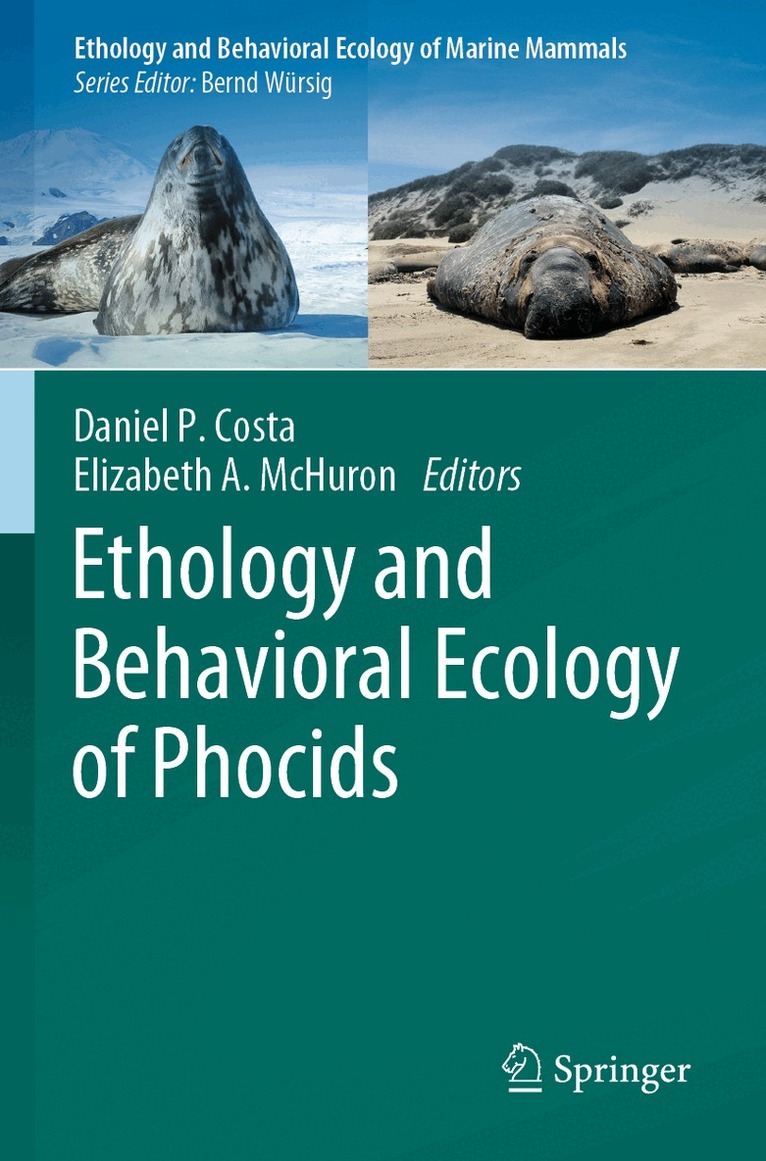
    Ethology and Behavioral Ecology of Phocids

    AvDaniel P. Costa,Elizabeth A. McHuron

    Häftad, Engelska, 2023

    Del i serien Ethology and Behavioral Ecology of Marine Mammals

    1 592 kr

    Beställningsvara. Skickas inom 5-8 vardagar. Fri frakt över 249 kr.

    Beskrivning

    Phocid (or earless or true) seals are ecologically diverse, occupying habitats from the tropics to the poles in marine and freshwater and feeding on anything from tiny zooplankton to other marine mammals. There are 18 species of phocid seals, the smallest species (ringed seal) is more than 20 times smaller than the largest (southern elephant seal), with marked sexual dimorphism present in some species. This book examines the behavior, ecology, and physiology that allow phocid seals to inhabit such a wide range of habitats. The book is composed of 16 chapters written by 37 authors from 8 countries. The book first describes the general patterns of phocid behavior, followed by descriptions of what is known about well-studied species. We have taken a holistic approach, focusing not only on the behaviors themselves but also on the factors that constrain the expression of behavior and the proximate mechanisms driving behavior. In many cases, the chapters represent collaborations between well-established researchers and early-mid career individuals who bring new perspectives to help carry the field of phocid behavioral ecology well into the future.

    Produktinformation

    • Utgivningsdatum:2023-03-19
    • Mått:155 x 235 x 36 mm
    • Vikt:990 g
    • Format:Häftad
    • Språk:Engelska
    • Serie:Ethology and Behavioral Ecology of Marine Mammals
    • Antal sidor:645
    • Förlag:Springer Nature Switzerland AG
    • ISBN:9783030889258

    Utforska kategorier

    • Miljövetenskap och miljöpolitik inom Naturvetenskap och teknik
    • Biovetenskap inom Naturvetenskap och teknik
    • Zoologi inom Naturvetenskap och teknik

    Mer om författaren

    Dr. Daniel Costa Ph.D. is a Distinguished Professor of Ecology and Evolutionary Biology at the University of California at Santa Cruz and is the Director of the Institute of Marine Sciences.  He has a B.A. from UCLA and a Ph.D. from U.C. Santa Cruz and did postdoctoral research at the Scripps Institution of Oceanography. He works at the interface between ecology and physiology with marine mammals and seabirds, taking him to every continent and almost every habitat from the Galapagos to Antarctica. While he has worked with sea otters, sea lions, and cetaceans; his research on phocid seals started with northern elephant seals in 1975 and expanded to Antarctic seals in 1978. He has published over 500 scientific papers. Currently, he is examining the movement patterns of marine mammals and seabirds to understand the factors that determine their habitat requirements.  He has pioneered using bioenergetics to predict when acoustic or other disturbance impacts marine mammalpopulations. Collectively, this work is essential for the conservation of highly migratory species. He co-founded the Tagging of Pacific Predators program, a multidisciplinary effort to study the movement patterns of 23 species of marine vertebrate predators in the North Pacific Ocean. He has been quite fortunate to supervise a highly talented cohort of 35 doctoral students, 22 masters, and 15 postdoctoral scholars. With his background in marine mammal biology, he has served as a member of international steering committees for the Integrated Climate and Ecosystem Dynamics program, The Census of Marine Life, Southern Ocean GLOBEC, CLIOTOP, the Southern Ocean Observing System IMBER, and the USA Ocean Studies Board. He is a Fellow of the California Academy of Sciences and an Inaugural Fellow of the Society of Marine Mammalogy, of which he served as Secretary. Dr Elizabeth McHuron is a research scientist with the Cooperative Institute for Climate, Ocean, and Ecosystem Studies at the University of Washington. She has a B.S. from Western Washington University, an M.S. from Moss Landing Marine Labs, and a Ph.D. from the University of California Santa Cruz. Her research on marine mammals began over a decade ago with harbor seals, which hold a special place in her heart, but has since branched out to include otariids and several cetacean species. Much of her current research focuses on understanding the interplay between behavior, energetics, and reproductive success, with the overall goal of understanding how changing environments and exposure to human activities affect marine mammal populations. When not pondering the complexities of marine mammal behavior, she enjoys teaching her three kids about the natural world, including most importantly, the many differences between true and eared seals.

    Innehållsförteckning

    • Evolution – Analisa Berta.- Sensory and cognition – Tentative Colleen Reichmuth and others.- Communication – Isabelle Charrier.- Physiology – Dan Crocker.- Movement – Luis Huckstadt and Ryan Reisinger.- Navigation – Patrick Robinson.- Foraging ecology and behavior – Don Bowen.- Reproductive behavior and lactation strategies – Dan Costa and Jen Maresh.- Breeding behavior – Paddy Pomeroy and Kelly Robinson.- Conservation – Samantha Simmons and others.