• Fri frakt över 249 kr
  • •
  • Snabba leveranser
  • •
  • Billiga böcker
Kundservice

Du är på sajten för privatpersoner.

Företag, bibliotek eller offentlig verksamhet?

Du handlar på classic.bokus.com, där alla dina funktioner finns intakta.
Till classic.bokus.com
Bokus logotyp. Gå till startsidan.
  • Erbjudanden
  • Nyheter
  • Student
  • Topplistor
  • Barn & ungdom
  • Bokus Play
  • E-böcker
  • Pocketböcker
  • Spel & pussel

10% rabatt på allt med kod: NYSTART10 →

Sidfot

Mina sidor

    Hjälp

    • Kundservice
    • Vanliga frågor och svar
    • Frakt och leverans
    • Retur vid ångerrätt
    • Reklamera vara
    • Betalning
    • Köpvillkor
    • Allmänna villkor
    • Information om webbplatsens tillgänglighet

    Om Bokus

    • Om oss
    • Pressrum
    • För studenter
    • För företag
    • För bibliotek och offentlig verksamhet
    • För leverantörer
    • Hållbarhet

    Populärt

    • Aktuella erbjudanden
    • Presentkort
    • Studentlitteratur
    • Nya böcker
    • Topplistor
    • Signerade böcker
    • Engelska böcker

    Inspiration

    • Boktips
    • BookTok
    • Populära bokserier
    • Barnbokskaraktärer
    • Populära författare
    Logotyp för Bokus
    Följ oss på Facebook (extern länk)Följ oss på Instagram (extern länk)Följ oss på YouTube (extern länk)Följ oss på TikTok (extern länk)
    bokus @ CookiesAnpassa cookiesIntegritetspolicyKöpvillkor
    Till Citymail hemsida (extern länk)Till Budbee hemsida (extern länk)Till Postnord hemsida (extern länk)Till Schenker hemsida (extern länk)Till Early Bird hemsida (extern länk)Till Walleys hemsida (extern länk)
    1. Ekonomi och Ledarskap
    2. Ledarskapsböcker

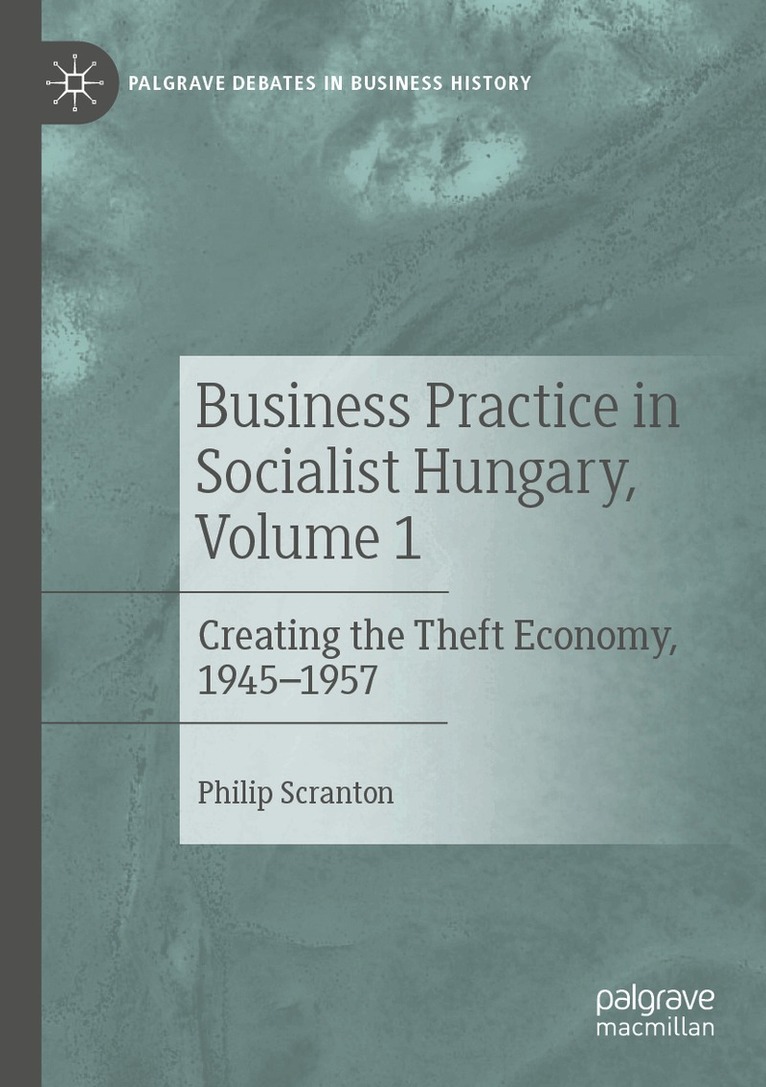
    Business Practice in Socialist Hungary, Volume 1

    Creating the Theft Economy, 1945–1957

    AvPhilip Scranton

    Häftad, Engelska, 2023

    Del i serien Palgrave Debates in Business History

    1 452 kr

    Beställningsvara. Skickas inom 10-15 vardagar. Fri frakt över 249 kr.

    Fler format och utgåvor

    Inbunden

    1 452 kr

    E-bok

    1 780 kr

    Beskrivning

    This study aims to reconstruct the activities of enterprises and individuals over two decades in one developing country (Hungary), within and across four politico-economic domains (agriculture, infrastructure/construction, commerce, and manufacturing), from the initial Stalinist obsession with heavy industry (Volume 1: Creating the Theft Economy, 1945-1957) through later reforms paying greater attention to profitable farming and the provision of abundant consumer goods (Volume 2: From Chaos to Contradiction, 1957-1972, forthcoming 2023). It provides hundreds of grounded, granular stories for reflection, as reported by actors and direct observers, ranging from innovation and improvisation to obstruction, failure, and fraud. Further, it offers an otherwise-unobtainable close encounter with another world, familiar in some respects while amazingly peculiar in others. The social history of enterprise and work in postwar Central European nations “building socialism” has longbeen underdeveloped. Through extensive macro-level research on planning and policy in Hungary, Poland, Czechoslovakia, and other Bloc countries, a grand narrative has been framed: reconstruction and breakneck industrialization under Soviet tutelage; then eventual mismanagement, stagnation and crisis, leading to collapse. This book seeks to explore what socialism actually looked like to those sustaining (or enduring} it as they faced forward into an unknowable future, to assess how and where it did (or didn’t) work, and to recount how ordinary people responded to its opportunities and constraints. This study will appeal to readers interested in understanding how businesses worked day-to-day in a planned economy, how enterprise practices and technological strategies shifted during the first postwar generation, how novice managers and technicians emerged during rapid industrialization, how peasants learned to farm cooperatively, how organizations improvised and adapted, howpolitical purity and practical expertise contended for control, and how the controversies and convulsions of the postwar decades shaped a deeply flawed project to “build socialism.”

    Produktinformation

    • Utgivningsdatum:2023-01-31
    • Mått:148 x 210 x 19 mm
    • Vikt:431 g
    • Format:Häftad
    • Språk:Engelska
    • Serie:Palgrave Debates in Business History
    • Antal sidor:306
    • Förlag:Springer Nature Switzerland AG
    • ISBN:9783030891862

    Utforska kategorier

    • Ledarskapsböcker inom Ekonomi och Ledarskap
    • Entreprenörskap inom Ekonomi och Ledarskap
    • Affärsetik inom Ekonomi och Ledarskap

    Mer om författaren

    Philip Scranton is University Board of Governors Professor Emeritus, History of Industry and Technology, at Rutgers University, USA. His publications include fourteen books and seventy scholarly articles, multiple contributions to exhibit catalogs, and numerous reviews of books and conferences.

    Recensioner i media

    “Philip Scranton’s new book highlights a number of very important problems in a very interesting and readable way. … The phenomena examined in the book were deeply embedded in the internal relations of contemporary firms, they were also influenced by power relations between authorities and companies, bargaining over resources and performance, by conflicting inter­ests, by networks of social relations among the workers: complex economic and social pro­cesses that will be worthy of further study by future generations of researchers.” (Ágnes Pogány, Business History, October 5, 2023)

    Innehållsförteckning

    • Preface.- Chapter 1 – Introduction: Hungary: Geography, History and Society to 1945.- Chapter 2– The Theft Economy: Occupation and Forced Industrialization.- Chapter 3 – Agriculture from Stalinism to the Revolt.- Chapter 4 – An Unfinished Project: Constructing Socialist Construction.- Chapter 5 – Socialist Commerce: Provisioning, Coping,  Maneuvering and Trading.- Chapter 6 – Hungary’s Socialist Industrialization: A Snare and a Delusion.- Chapter 7 –  The Revolt: Spontaneity,  Repression and Reaction.- Chapter 8 – Afterword.