Palgrave Debates in Business History – serie
Visar alla böcker i serien Palgrave Debates in Business History. Handla med fri frakt och snabb leverans.
9 produkter
9 produkter
Inbunden, Engelska, 2021
1 402 kr
Skickas inom 10-15 vardagar
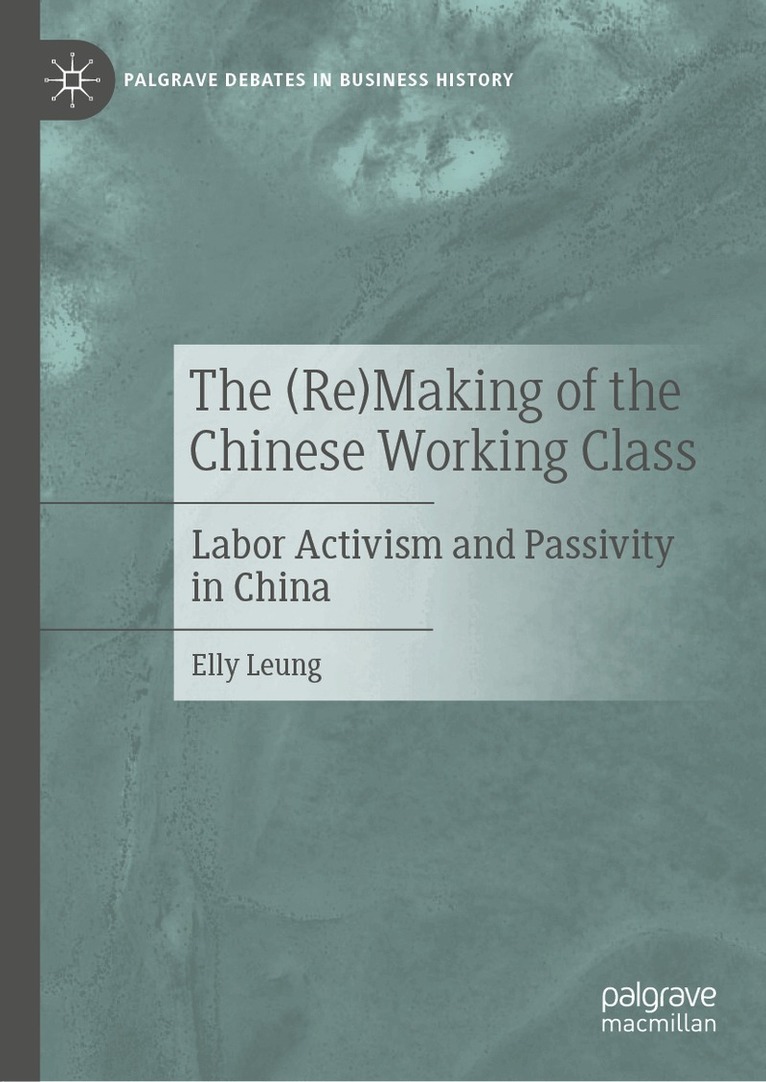
It will serve as a gateway to comprehensive knowledge about China for students andacademics with interests in Chinese employment relations, Chinese politics, labourist activist culture, and social movements.
Häftad, Engelska, 2022
1 402 kr
Skickas inom 10-15 vardagar
It will serve as a gateway to comprehensive knowledge about China for students andacademics with interests in Chinese employment relations, Chinese politics, labourist activist culture, and social movements.
Inbunden, Engelska, 2022
1 444 kr
Skickas inom 10-15 vardagar
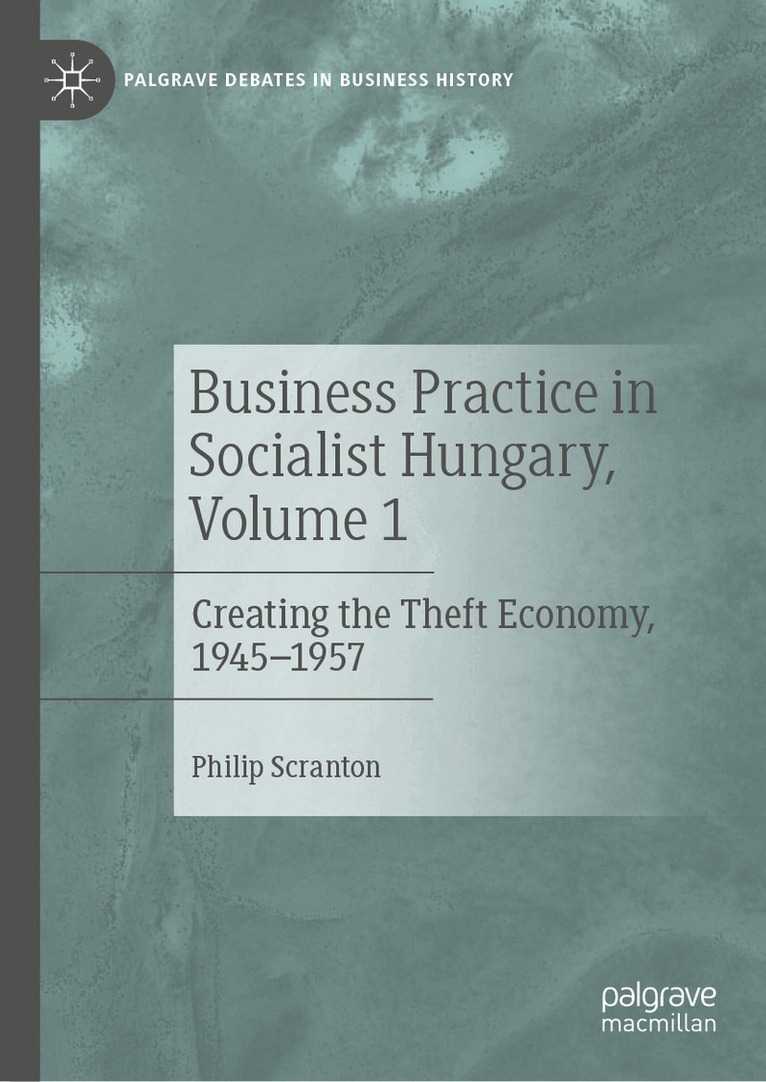
This study aims to reconstruct the activities of enterprises and individuals over two decades in one developing country (Hungary), within and across four politico-economic domains (agriculture, infrastructure/construction, commerce, and manufacturing), from the initial Stalinist obsession with heavy industry (Volume 1: Creating the Theft Economy, 1945-1957) through later reforms paying greater attention to profitable farming and the provision of abundant consumer goods (Volume 2: From Chaos to Contradiction, 1957-1972, forthcoming 2023). It provides hundreds of grounded, granular stories for reflection, as reported by actors and direct observers, ranging from innovation and improvisation to obstruction, failure, and fraud. Further, it offers an otherwise-unobtainable close encounter with another world, familiar in some respects while amazingly peculiar in others. The social history of enterprise and work in postwar Central European nations “building socialism” has longbeen underdeveloped. Through extensive macro-level research on planning and policy in Hungary, Poland, Czechoslovakia, and other Bloc countries, a grand narrative has been framed: reconstruction and breakneck industrialization under Soviet tutelage; then eventual mismanagement, stagnation and crisis, leading to collapse. This book seeks to explore what socialism actually looked like to those sustaining (or enduring} it as they faced forward into an unknowable future, to assess how and where it did (or didn’t) work, and to recount how ordinary people responded to its opportunities and constraints. This study will appeal to readers interested in understanding how businesses worked day-to-day in a planned economy, how enterprise practices and technological strategies shifted during the first postwar generation, how novice managers and technicians emerged during rapid industrialization, how peasants learned to farm cooperatively, how organizations improvised and adapted, howpolitical purity and practical expertise contended for control, and how the controversies and convulsions of the postwar decades shaped a deeply flawed project to “build socialism.”
Häftad, Engelska, 2023
1 444 kr
Skickas inom 10-15 vardagar
This study aims to reconstruct the activities of enterprises and individuals over two decades in one developing country (Hungary), within and across four politico-economic domains (agriculture, infrastructure/construction, commerce, and manufacturing), from the initial Stalinist obsession with heavy industry (Volume 1: Creating the Theft Economy, 1945-1957) through later reforms paying greater attention to profitable farming and the provision of abundant consumer goods (Volume 2: From Chaos to Contradiction, 1957-1972, forthcoming 2023). It provides hundreds of grounded, granular stories for reflection, as reported by actors and direct observers, ranging from innovation and improvisation to obstruction, failure, and fraud. Further, it offers an otherwise-unobtainable close encounter with another world, familiar in some respects while amazingly peculiar in others. The social history of enterprise and work in postwar Central European nations “building socialism” has longbeen underdeveloped. Through extensive macro-level research on planning and policy in Hungary, Poland, Czechoslovakia, and other Bloc countries, a grand narrative has been framed: reconstruction and breakneck industrialization under Soviet tutelage; then eventual mismanagement, stagnation and crisis, leading to collapse. This book seeks to explore what socialism actually looked like to those sustaining (or enduring} it as they faced forward into an unknowable future, to assess how and where it did (or didn’t) work, and to recount how ordinary people responded to its opportunities and constraints. This study will appeal to readers interested in understanding how businesses worked day-to-day in a planned economy, how enterprise practices and technological strategies shifted during the first postwar generation, how novice managers and technicians emerged during rapid industrialization, how peasants learned to farm cooperatively, how organizations improvised and adapted, howpolitical purity and practical expertise contended for control, and how the controversies and convulsions of the postwar decades shaped a deeply flawed project to “build socialism.”
Inbunden, Engelska, 2022
1 665 kr
Skickas inom 10-15 vardagar
This book argues that modern Western civilization is synonymous with business, and you cannot have one without the other—or, at least, not for very long.
Häftad, Engelska, 2023
1 665 kr
Skickas inom 10-15 vardagar
This book argues that modern Western civilization is synonymous with business, and you cannot have one without the other—or, at least, not for very long.
Inbunden, Engelska, 2023
1 775 kr
Skickas inom 10-15 vardagar
This book aims to reconstruct the activities of enterprises and individuals over two decades in one developing country (Hungary), within and across four politico-economic domains (agriculture, infrastructure/construction, commerce, and manufacturing), from the initial Stalinist obsession with heavy industry through later reforms paying greater attention to profitable farming and the provision of abundant consumer goods. It provides hundreds of grounded, granular stories for reflection, as reported by actors and direct observers, ranging from innovation and improvisation to obstruction, failure, and fraud. Further, it offers an otherwise-unobtainable close encounter with another world, familiar in some respects while amazingly peculiar in others.The social history of enterprise and work in postwar Central European nations “building socialism” has long been underdeveloped. Through extensive macro-level research on planning and policy in Hungary, Poland, Czechoslovakia, and other Bloc countries, a grand narrative has been framed: reconstruction and breakneck industrialization under Soviet tutelage; then eventual mismanagement, stagnation and crisis, leading to collapse. This book seeks to explore what socialism actually looked like to those sustaining (or enduring} it as they faced forward into an unknowable future, to assess how and where it did (or didn’t) work, and to recount how ordinary people responded to its opportunities and constraints.This study will appeal to readers interested in a understanding how businesses worked day-to-day in a planned economy, how enterprise practices and technological strategies shifted during the first postwar generation, how novice managers and technicians emerged during rapid industrialization, how peasants learned to farm cooperatively, how organizations improvised and adapted, how political purity and practical expertise contended for control, and how the controversies and convulsions of the postwar decadesshaped a deeply flawed project to “build socialism.”
Häftad, Engelska, 2024
1 775 kr
Skickas inom 10-15 vardagar
This book aims to reconstruct the activities of enterprises and individuals over two decades in one developing country (Hungary), within and across four politico-economic domains (agriculture, infrastructure/construction, commerce, and manufacturing), from the initial Stalinist obsession with heavy industry through later reforms paying greater attention to profitable farming and the provision of abundant consumer goods. It provides hundreds of grounded, granular stories for reflection, as reported by actors and direct observers, ranging from innovation and improvisation to obstruction, failure, and fraud. Further, it offers an otherwise-unobtainable close encounter with another world, familiar in some respects while amazingly peculiar in others.The social history of enterprise and work in postwar Central European nations “building socialism” has long been underdeveloped. Through extensive macro-level research on planning and policy in Hungary, Poland, Czechoslovakia, and other Bloc countries, a grand narrative has been framed: reconstruction and breakneck industrialization under Soviet tutelage; then eventual mismanagement, stagnation and crisis, leading to collapse. This book seeks to explore what socialism actually looked like to those sustaining (or enduring} it as they faced forward into an unknowable future, to assess how and where it did (or didn’t) work, and to recount how ordinary people responded to its opportunities and constraints.This study will appeal to readers interested in a understanding how businesses worked day-to-day in a planned economy, how enterprise practices and technological strategies shifted during the first postwar generation, how novice managers and technicians emerged during rapid industrialization, how peasants learned to farm cooperatively, how organizations improvised and adapted, how political purity and practical expertise contended for control, and how the controversies and convulsions of the postwar decadesshaped a deeply flawed project to “build socialism.”
Inbunden, Engelska, 2025
449 kr
Skickas inom 10-15 vardagar
Corporate Social Responsibility (CSR) was coined as a term in the 1950s, although modern notions of corporate responsibility can be traced to the second half of the 19th century.