• Fri frakt över 249 kr
  • •
  • Snabba leveranser
  • •
  • Billiga böcker
Kundservice

Du är på sajten för privatpersoner.

Företag, bibliotek eller offentlig verksamhet?

Du handlar på classic.bokus.com, där alla dina funktioner finns intakta.
Till classic.bokus.com
Bokus logotyp. Gå till startsidan.
  • Erbjudanden
  • Nyheter
  • Student
  • Topplistor
  • Barn & ungdom
  • Bokus Play
  • E-böcker
  • Pocketböcker
  • Spel & pussel

Må bättre, för mindre! Upp till 50% rabatt på hälsoböcker

Sidfot

Mina sidor

    Hjälp

    • Kundservice
    • Vanliga frågor och svar
    • Frakt och leverans
    • Retur vid ångerrätt
    • Reklamera vara
    • Betalning
    • Köpvillkor
    • Allmänna villkor
    • Information om webbplatsens tillgänglighet

    Om Bokus

    • Om oss
    • Pressrum
    • För studenter
    • För företag
    • För bibliotek och offentlig verksamhet
    • För leverantörer
    • Hållbarhet

    Populärt

    • Aktuella erbjudanden
    • Presentkort
    • Studentlitteratur
    • Nya böcker
    • Topplistor
    • Signerade böcker
    • Engelska böcker

    Inspiration

    • Boktips
    • BookTok
    • Populära bokserier
    • Barnbokskaraktärer
    • Populära författare
    Logotyp för Bokus
    Följ oss på Facebook (extern länk)Följ oss på Instagram (extern länk)Följ oss på YouTube (extern länk)Följ oss på TikTok (extern länk)
    bokus @ CookiesAnpassa cookiesIntegritetspolicyKöpvillkor
    Till Citymail hemsida (extern länk)Till Budbee hemsida (extern länk)Till Postnord hemsida (extern länk)Till Schenker hemsida (extern länk)Till Early Bird hemsida (extern länk)Till Walleys hemsida (extern länk)
    1. Samhälle och politik
    2. Samhälle och kultur
    3. Sociala grupper och identitet

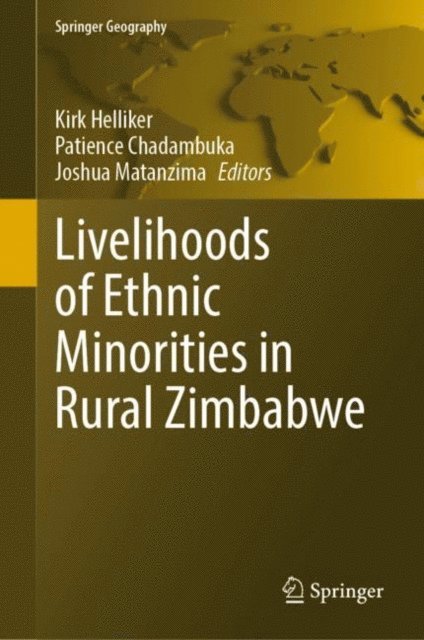
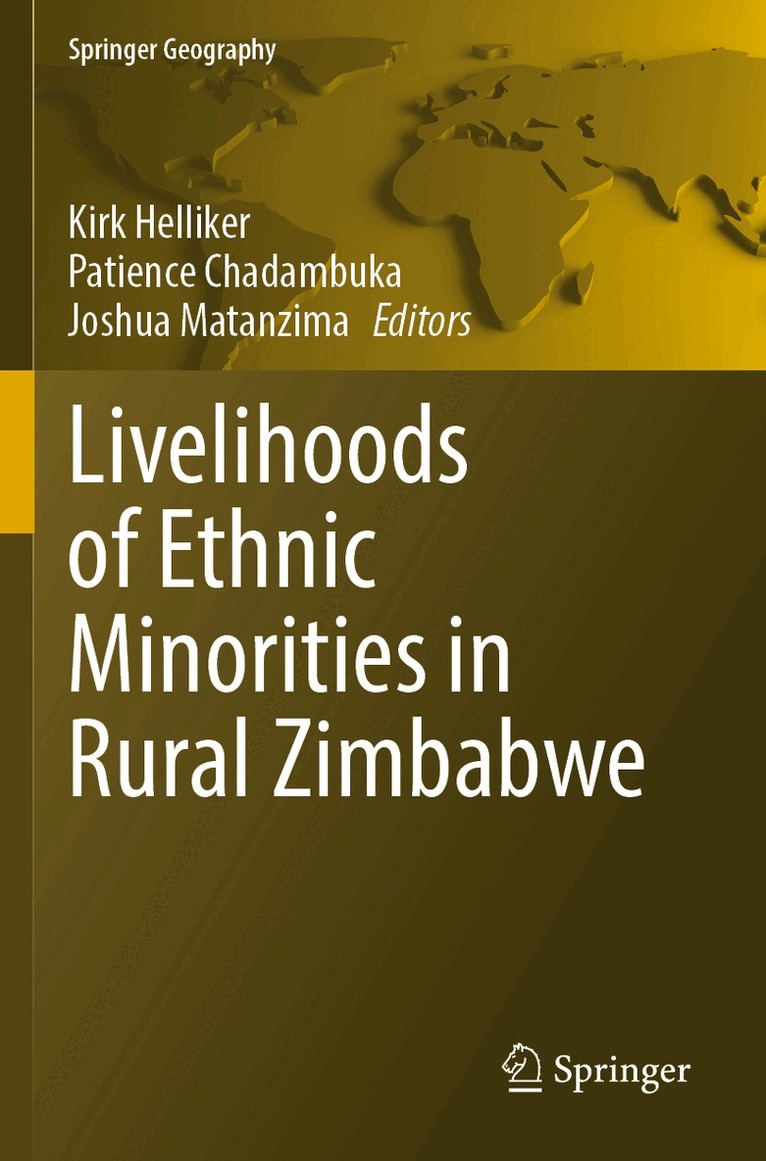
    Livelihoods of Ethnic Minorities in Rural Zimbabwe

    AvKirk Helliker,Patience Chadambuka

    Inbunden, Engelska, 2022

    Del i serien Springer Geography

    1 410 kr

    Beställningsvara. Skickas inom 10-15 vardagar. Fri frakt över 249 kr.

    Beskrivning

    The book provides empirically-rich case studies of the lives and livelihoods of marginalised ethnic minorities in colonial and post-colonial Zimbabwe, with a specific focus on diverse rural areas. It demonstrates the dynamic and complex relationships existing between ethnic minorities and livelihoods, and analyses the ways in which projects of belonging (and identity-formation) amongst these ethnic minorities are entangled in their respective livelihood construction projects, and vice versa. The ethnic minorities include those considered indigenous to Zimbabwe, and those often defined as ‘aliens’, including ethnicities with a transnational presence in southern Africa. The ethnicities studied in the book include the following: Chewa, Doma, Tonga, Tshwa San, Shangane, Basotho, Ndau, Hlengwe and Nambya. By studying their livelihoods in particular, this book offers the first full manuscript about ethnic minorities in Zimbabwe. In doing so, it highlights the significance of these ethnic minorities to Zimbabwean history, politics and society.

    Produktinformation

    • Utgivningsdatum:2022-04-22
    • Mått:155 x 235 x 18 mm
    • Vikt:573 g
    • Format:Inbunden
    • Språk:Engelska
    • Serie:Springer Geography
    • Antal sidor:228
    • Förlag:Springer Nature Switzerland AG
    • ISBN:9783030947996

    Utforska kategorier

    • Sociala grupper och identitet inom Samhälle och politik
    • Geografi inom Naturvetenskap och teknik
    • Etnicitet inom Samhälle och politik

    Mer om författaren

    Joshua Matanzima is a PhD candidate in Anthropology, at La Trobe University, Australia. He is a member of the Gwembe Tonga Research Project founded in 1956. He holds a BA honours degree in History from the University of Zimbabwe and a MA degree in Anthropology from Rhodes University. His research interests include anthropology of landscapes, human-wildlife conflicts and borderland economics with special emphasis on the Zambezi Valley. He has published a book chapter, several journal articles and book reviews in accredited international journals. Kirk Helliker is a Research Professor in the Department of Sociology at Rhodes University in South Africa, where he also heads the Unit of Zimbabwean Studies, which he founded in 2015. He publishes widely on Zimbabwean society and also supervises a significant number of PhD and MA students, mostly on Zimbabwean topics. Patience Chadambuka  is a Lecturer and Chairperson in the Department of Community Studies  (formerly Sociology Department) at the Midlands State University, Zimbabwe. She holds a PhD in Sociology from Rhodes University, South Africa, MSc in Sociology and Anthropology, and a BSc in Sociology from the University of Zimbabwe as well as a Postgraduate Diploma in Tertiary Education. Her areas of research interest include Land and Agrarian Studies, Ethnicity, Livelihoods and Migration.

    Innehållsförteckning

    • Historicising and Theorising the Livelihoods of Ethnic Minorities in Zimbabwe.- The Tshwa San of Zimbabwe: Land, Livelihoods, and Ethnicity.- Migrants, Ethnic Minorities and ‘Men of the Soil’: Basotho Farmers in Southern Rhodesia.- Displacement and Livelihood Vulnerability among the BaTonga Women of Binga from 1958 to 1980.- Transformations in the Livelihood Activities of Hlengwe People of the South-East Lowveld of Zimbabwe, 1890 to Now.- The Impact of Community-based Conservation on the Livelihoods of the Doma in the mid-Zambezi Valley.- Human-Wildlife Conflict and Precarious Livelihoods of the Tonga-speaking people of North-western Zimbabwe.- The Political Economy of Shangane Livelihoods in Rural Zimbabwe.- Land, Displacement and Livelihood Strategies among the Nambya People in North-western Zimbabwe, from the 1940s.- (Re)Inventing Livelihoods in Communal Areas in post-Fast Track Zimbabwe: The Case of Chewa Ex-farm Workers in Shamva Communal Areas.- Cultural Economic Survival under Crisis: Malawian Nyau Dances and Zimbabwe’s Economic Meltdown.- Ethnicity and Livelihoods in Precarious Times: The Case of the Ndau People of Chimanimani.- Changing Borderland Livelihoods and Coping Strategies among “Indigenous People”, “Malawians” and “Mozambicans” in Honde Valley since the 1970s.