• Fri frakt över 249 kr
  • •
  • Snabba leveranser
  • •
  • Billiga böcker
Kundservice

Du är på sajten för privatpersoner.

Företag, bibliotek eller offentlig verksamhet?

Du handlar på classic.bokus.com, där alla dina funktioner finns intakta.
Till classic.bokus.com
Bokus logotyp. Gå till startsidan.
  • Erbjudanden
  • Student
  • Topplistor
  • Barn & ungdom
  • Bokus Play
  • E-böcker
  • Ljudböcker
  • Pocketböcker
  • Spel och pussel

Pocketfynda! Hundratals böcker för 49 kr/st →

Sidfot

Mina sidor

    Hjälp

    • Kundservice
    • Vanliga frågor och svar
    • Frakt och leverans
    • Retur vid ångerrätt
    • Reklamera vara
    • Betalning
    • Köpvillkor
    • Allmänna villkor
    • Information om webbplatsens tillgänglighet

    Om Bokus

    • Om oss
    • Pressrum
    • För studenter
    • För företag
    • För bibliotek och offentlig verksamhet
    • För leverantörer
    • Hållbarhet

    Populärt

    • Aktuella erbjudanden
    • Presentkort
    • Studentlitteratur
    • Nya böcker
    • Topplistor
    • Signerade böcker
    • Engelska böcker

    Inspiration

    • Boktips
    • BookTok
    • Barnbokskaraktärer
    • Populära författare
    Logotyp för Bokus
    Följ oss på Facebook (extern länk)Följ oss på Instagram (extern länk)Följ oss på YouTube (extern länk)Följ oss på TikTok (extern länk)
    bokus @ CookiesAnpassa cookiesIntegritetspolicyKöpvillkor
    Till Citymail hemsida (extern länk)Till Budbee hemsida (extern länk)Till Postnord hemsida (extern länk)Till Schenker hemsida (extern länk)Till Early Bird hemsida (extern länk)Till Walleys hemsida (extern länk)
    1. Historia och arkeologi
    2. Historia
    3. Historia: särskilda händelser och ämnen
    4. Socialhistoria och kulturhistoria

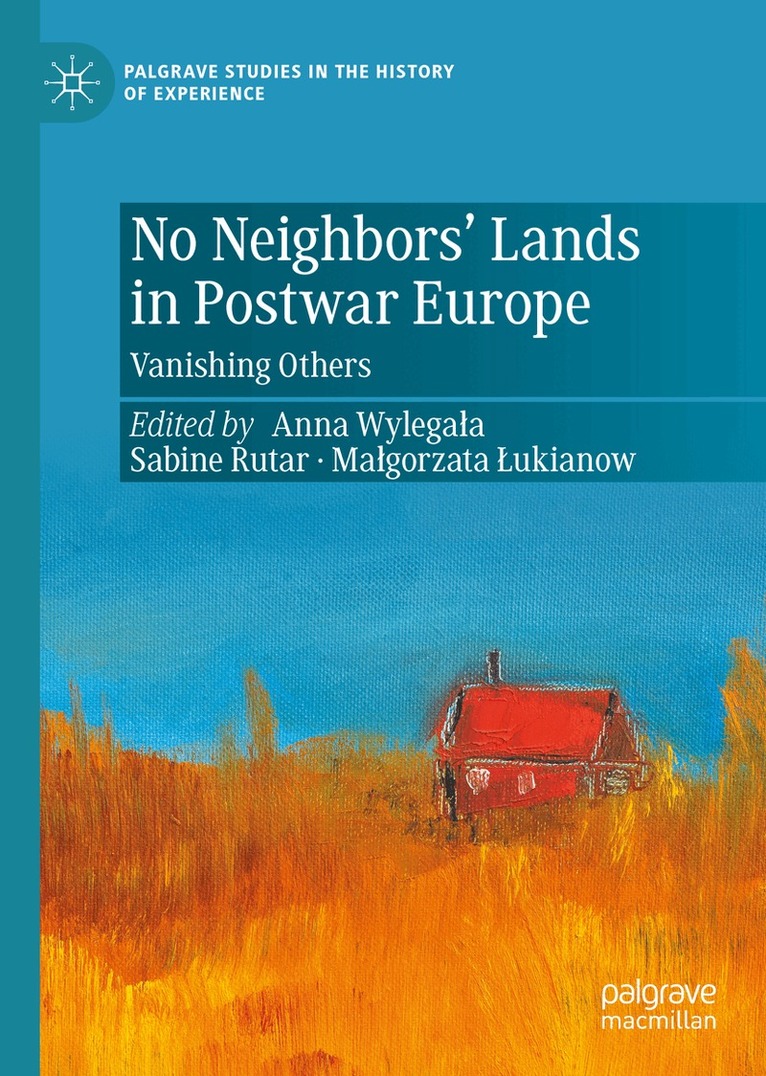
    No Neighbors’ Lands in Postwar Europe

    Vanishing Others

    AvAnna Wylegała,Sabine Rutar

    Inbunden, Engelska, 2023

    Del i serien Palgrave Studies in the History of Experience

    1 441 kr

    Beställningsvara. Skickas inom 10-15 vardagar. Fri frakt över 249 kr.

    Beskrivning

    This book focuses on the social voids that were the result of occupation, genocide, mass killings, and population movements in Europe during and after the Second World War. Historians, sociologists, and anthropologists adopt comparative perspectives on those who now lived in ‘cleansed’ borderlands. Its contributors explore local subjectivities of social change through the concept of ‘No Neighbors’ Lands’: How does it feel to wear the dress of your murdered neighbor? How does one get used to friends, colleagues, and neighbors no longer being part of everyday life? How is moral, social, and legal order reinstated after one part of the community participated in the ethnic cleansing of another? How is order restored psychologically in the wake of neighbors watching others being slaughtered by external enemies? This book sheds light on how destroyed European communities, once multi-ethnic and multi-religious, experienced postwar reconstruction, attempted to come to terms with what had happened, and negotiated remembrance.Chapter 7 and 13 are available open access under a Creative Commons Attribution 4.0 International License via link.springer.com.

    Produktinformation

    • Utgivningsdatum:2023-03-13
    • Mått:148 x 210 x 29 mm
    • Vikt:683 g
    • Format:Inbunden
    • Språk:Engelska
    • Serie:Palgrave Studies in the History of Experience
    • Antal sidor:422
    • Upplaga:2023
    • Förlag:Springer International Publishing AG
    • ISBN:9783031108563

    Utforska kategorier

    • Socialhistoria och kulturhistoria inom Historia och arkeologi
    • Europas historia inom Historia och arkeologi
    • Andra världskriget inom Historia och arkeologi

    Mer om författaren

    Anna Wylegała is a sociologist and is Assistant Professor at the Institute of Philosophy and Sociology of the Polish Academy of Sciences in Warsaw. She is the author of Displaced Memories: Remembering and Forgetting in Post-War Poland and Ukraine (2019) and the co-editor (with Małgorzata Głowacka-Grajper) of The Burden of the Past: History and Identity in Contemporary Ukraine (2020).Sabine Rutar is Senior Researcher at the Leibniz Institute for East and Southeast European Studies in Regensburg, Germany, where she works as Editor-in-Chief and Managing Editor of Comparative Southeast European Studies. In her forthcoming monograph At Work under Hitler and Tito: Mining and Maritime Industries in Yugoslavia, 1940s–1960s she compares microhistories of industrial labour during World War II and the early Cold War.Małgorzata Łukianow is a sociologist and is Assistant Professorat the Institute of Philosophy and Sociology of the Polish Academy of Sciences in Warsaw. Her work is situated at the intersection of the sociology of culture, memory studies, and the sociology of knowledge.

    Recensioner i media

    “Assessing archives, trial records, and interviews, the contributors offer micro-historical fieldwork, whose grassroots insights inform decades of analysis about the era’s population upheavals. … This volume brings multilingual research to English-language specialist researchers, as well as upper-level university courses on nationalism, forced migration, or memory history." (Andrew Demshuk, Zeitschrift für Ostmitteleuropa-Forschung, Vol. 74 (1), 2025)“The volume succeeds to deconstruct unilateral memory narratives by drawing attention to the emotionality and materiality of losses, by showing different scales of individual agency in the context of structural, state-imposed violence, and by unveiling the social dimension of many national conflicts. No Neighbors’ Land is a fruitful contribution to the historiographical and mnemopolitical discussion of experiences of violence during and after the Second World War.” (Laura Clarissa Loew, Justus-Liebig-Universität Gießen, H-Soz-Kult, hsozkult.de, December 5, 2023)

    Innehållsförteckning

    • PART I: THE POINT OF DEPARTURE: EXPERIENCING THE CATASTROPHE.- The Prussian Spirit of the Land: Cultural Transfer and Fears of German Contamination in Soviet Kaliningrad, 1947–1953; Nicole Eaton.- In 1945 'Poles Were Taking Over the Entire Town of Rabka'; Karolina Panz.- New Neighbours’ Land: Istria and the Complexities of Solidarity; Pamela Ballinger.- Native Children in the Belgian-German and Polish-German Borderlands: Comparing Verification and Nationalization Narratives after the Second World War; Machteld Venken.- PART II: A BRAVE NEW WORLD: DYSFUNCTIONALITY, JUSTICE AND RECONSTRUCTION.- Men Who Witnessed Rape: Holocaust Survivors’ Testimonies and Postwar Trials in Soviet Ukraine; Marta Havryshko.- Doctors, Craftsmen and Landlords: Reconstructing Professional Structure in Postwar Galicia; Anna Wylegała.- Disappearing Neighbours: Postwar Reconstruction in a Temporary Capital of Poland (the Industrial City ofŁódź); Agata Zysiak.- Trials for Anti-Jewish Crimes in Bulgaria; Nadège Ragaru.- PART III: THE UNBEARABLE LIGHTNESS OF THINGS: PROPERTY ISSUES.- 'The Alienation Lacks Any Legal Basis': The Fate of Jewish Property in Postwar Hungary;  Borbála Klacsman.- Notions of Property and Belonging in the Film 'Piran - Pirano' (Slovenia 2010, dir. Goran Vojnović); Sabine Rutar.- Negotiations of Property between the Romanian and Hungarian Governments in the Aftermath of the Second World War; Emanuela Grama.- The Fate of the Property of the Kočevska Germans after Their Resettlement and Deportation from Slovenia; Mitja Ferenc.- PART IV: LIVING WITH THE DEAD: MEMORY AND COMMEMORATION.- What Is Behind a Monument: Local Commemoration Strategies in Polish Galicia; Małgorzata Łukianow.- 'A Matter of Four Screws': Holocaust Commemorations in Post-Soviet Russia (the Rostov-on-Don Case); Irina Rebrova.- Heritage ofSilenced Memories: A Case Study of Collective Amnesia in Czech Silesia; Johana Wyss.