• Fri frakt över 249 kr
  • •
  • Snabba leveranser
  • •
  • Billiga böcker
Kundservice

Du är på sajten för privatpersoner.

Företag, bibliotek eller offentlig verksamhet?

Du handlar på classic.bokus.com, där alla dina funktioner finns intakta.
Till classic.bokus.com
Bokus logotyp. Gå till startsidan.
  • Erbjudanden
  • Nyheter
  • Student
  • Topplistor
  • Barn & ungdom
  • Bokus Play
  • E-böcker
  • Pocketböcker
  • Spel & pussel

10% rabatt på allt med kod NYSTART10 →

Sidfot

Mina sidor

    Hjälp

    • Kundservice
    • Vanliga frågor och svar
    • Frakt och leverans
    • Retur vid ångerrätt
    • Reklamera vara
    • Betalning
    • Köpvillkor
    • Allmänna villkor
    • Information om webbplatsens tillgänglighet

    Om Bokus

    • Om oss
    • Pressrum
    • För studenter
    • För företag
    • För bibliotek och offentlig verksamhet
    • För leverantörer
    • Hållbarhet

    Populärt

    • Aktuella erbjudanden
    • Presentkort
    • Studentlitteratur
    • Nya böcker
    • Topplistor
    • Signerade böcker
    • Engelska böcker

    Inspiration

    • Boktips
    • BookTok
    • Populära bokserier
    • Barnbokskaraktärer
    • Populära författare
    Logotyp för Bokus
    Följ oss på Facebook (extern länk)Följ oss på Instagram (extern länk)Följ oss på YouTube (extern länk)Följ oss på TikTok (extern länk)
    bokus @ CookiesAnpassa cookiesIntegritetspolicyKöpvillkor
    Till Citymail hemsida (extern länk)Till Budbee hemsida (extern länk)Till Postnord hemsida (extern länk)Till Schenker hemsida (extern länk)Till Early Bird hemsida (extern länk)Till Walleys hemsida (extern länk)
    1. Naturvetenskap och teknik
    2. Geovetenskap
    3. Miljövetenskap och miljöpolitik

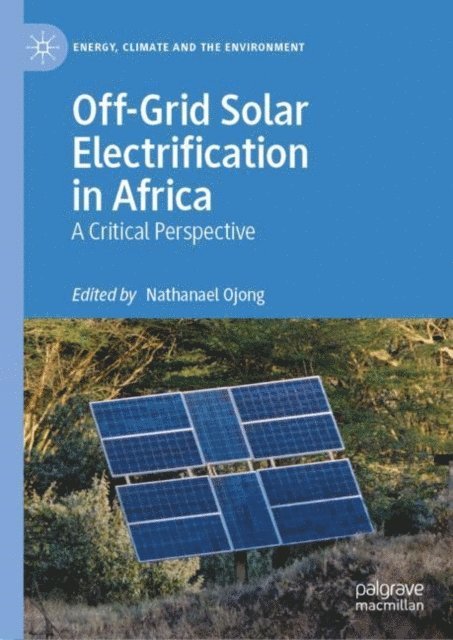
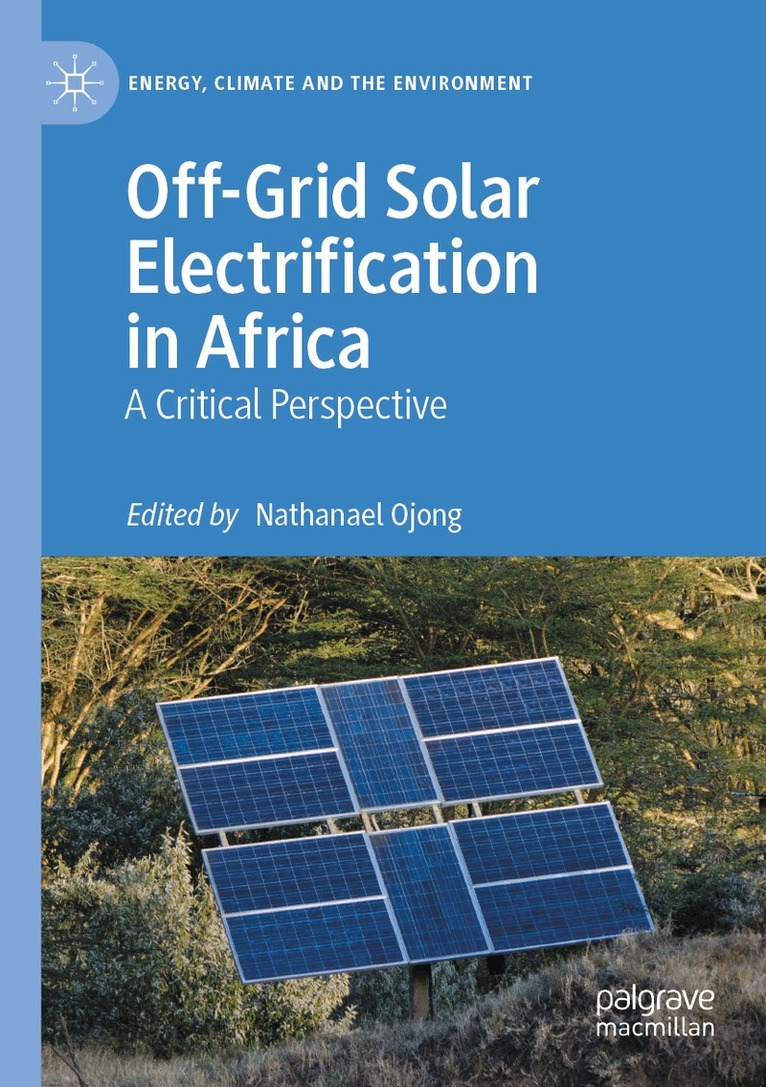
    Off-Grid Solar Electrification in Africa

    A Critical Perspective

    AvNathanael Ojong

    Inbunden, Engelska, 2022

    Del i serien Energy, Climate and the Environment

    1 409 kr

    Beställningsvara. Skickas inom 10-15 vardagar. Fri frakt över 249 kr.

    Beskrivning

    This book evaluates off-grid solar electrification in Africa by examining how political, economic, institutional, and social forces shape the adoption of off-grid solar technologies, including how issues of energy injustice are manifested at different levels and spaces. The book takes a historical, contemporary, and projective outlook using case studies from pre- and ongoing electrification communities in non-Western countries such as Ghana, Kenya, Rwanda, Senegal, Malawi, Tanzania, and Nigeria. Beyond the diverse nature of these countries in terms of their geographical location in West, East, and Southern Africa, each offers a different experience in terms of colonial history, economic and institutional infrastructure, social and cultural context, and level of adoption of off-grid solar technologies.  Notably, the book contributes to the off-grid solar and energy justice scholarship in low-income non-Western contexts. It examines various approaches to energy justice and does so by engaging with Western and non-Western philosophical notions of the concept. It takes into consideration the major principles of Ubuntu philosophy with the adoption of off-grid solar technologies, hence enriching the energy justice framework. Finally, the book interrogates the degree to which the social mission that catalysed the expansion of the off-grid solar sector is being undermined by broader structural dynamics of the capital investment upon which it is reliant. It also argues that the ascendance of off-grid solar electrification in Africa is transformative in that it enables millions of people without access to or facing uncertainties linked to centralised grid energy to have access to basic energy services.

    Produktinformation

    • Utgivningsdatum:2022-11-16
    • Mått:148 x 210 x 26 mm
    • Vikt:628 g
    • Format:Inbunden
    • Språk:Engelska
    • Serie:Energy, Climate and the Environment
    • Antal sidor:373
    • Förlag:Springer International Publishing AG
    • ISBN:9783031138249

    Utforska kategorier

    • Miljövetenskap och miljöpolitik inom Naturvetenskap och teknik
    • Sociologi inom Samhälle och politik
    • Geografi inom Naturvetenskap och teknik

    Mer om författaren

    Nathanael Ojong is Assistant Professor of International Development Studies and Deputy Director of the Harriet Tubman Institute for Research on Africa and its Diasporas at York University in Canada. He is a member of the Knowledge Network of African Experts established by the United Nations Office of the Special Adviser on Africa to help shape economic and social policy in Africa. His work encompasses renewable energy technologies and finance capitalism, energy and sustainability, urban and rural livelihoods, financial development, inclusive growth, entrepreneurship, informal economies, socio-cultural influences on health outcomes, and social protection in Africa.

    Innehållsförteckning

    • Chapter 1: Energy Justice and Off-Grid Solar Electrification in Africa: Trends, Narratives and Contestations.- Part I     History and Politics of Off-grid Solar Electrification.- Chapter 2 : Off-Grid Enterprise: A Critical History of Small-Scale Off-Grid Solar in Sub-Saharan Africa.- Chapter 3: At the Margins of the Grid: The Politics of Off-Grid Electrification in Senegal.- Chapter 4: Decade of Change: Off-Grid Solar Energy in Rwanda.- Part II     Manifestations of energy injustices.- Chapter 5:  The dark side of the sun: Solar home systems and their injustices in Africa.- Chapter 6 : Framing Energy Justice: Perspectives from Malawi’s Off-Grid Solar Market.- Chapter 7:  Gender Differentiation, Equality and Equity in Off-Grid Solar Usage in Rural Tanzania: A Fraying Thread?.- Chapter 8 ; On-Grid and Off-Grid Electrification in Kenya:Who are left Behind and Why?.- Part III   Enabling uptake: Constraints and Opportunities.- Chapter 9: Solar Home Systems in Rural landscapes: Examining the Forces Shaping Solar Home Systems Adoption in Southeast Nigeria.- Chapter 10:  Assessing Enablers and Barriers to Off-Grid Solar Electrification in Urban Ghana.- Chapter 11: Off-Grid Solar Electrification on the Rise in Africa, But Where to?.