Inbunden, Engelska, 2022
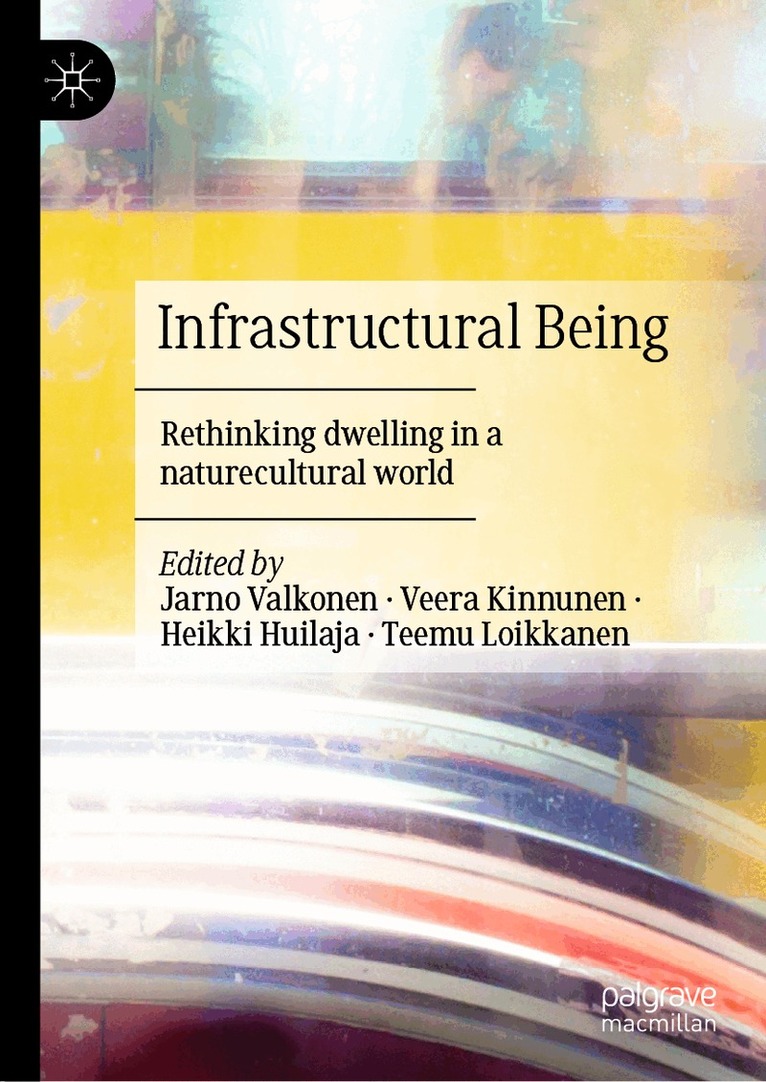
Infrastructural Being
Av Jarno Valkonen, Veera Kinnunen, Heikki Huilaja, Teemu Loikkanen
1527 kr
Beställningsvara. Skickas inom 10-15 vardagar. Fri frakt över 249 kr.
Beskrivning
This book provides a comprehensive insight into the contemporary naturecultural world by exploring infrastructures through the dwelling approach. The notion of naturecultures has been utilized in environmental humanities and social sciences to emphasize the inherent messiness of the lived world and the inseparability of social and biophysical elements. Concept of naturecultures stresses that seemingly “natural” is always simultaneously “cultural” and vice versa. This approach allows fleshing out the messy engagements with infrastructures, which in this book is conceptualized as infrastructural being. This book is a contribution to emerging discussions on infrastructures in the fields of environmental social sciences and humanities. It sensitizes to the peculiarities of modern dwelling and modern, yet often overlooked, ways of being connected with nature. Moreover, it provides tools for speculating, how could things be otherwise. The book is a topical response to the urgent call for developing new forms of human-nature relations in times of environmental turbulence.
Produktinformation
- Utgivningsdatum: 2022-12-02
- Mått: 148 x 210 x 20 mm
- Vikt: 420 g
- Format: Inbunden
- Språk: Engelska
- Antal sidor: 212
- Förlag: Springer International Publishing AG
- ISBN: 9783031158261
Utforska kategorier
Betyg & recensioner
0 recensioner
Inga recensioner tillgängliga.