• Fri frakt över 249 kr
  • •
  • Snabba leveranser
  • •
  • Billiga böcker
Kundservice

Du är på sajten för privatpersoner.

Företag, bibliotek eller offentlig verksamhet?

Du handlar på classic.bokus.com, där alla dina funktioner finns intakta.
Till classic.bokus.com
Bokus logotyp. Gå till startsidan.
  • Erbjudanden
  • Nyheter
  • Student
  • Topplistor
  • Barn & ungdom
  • Bokus Play
  • E-böcker
  • Pocketböcker
  • Spel & pussel

10% rabatt på allt med kod: NYSTART10 →

Sidfot

Mina sidor

    Hjälp

    • Kundservice
    • Vanliga frågor och svar
    • Frakt och leverans
    • Retur vid ångerrätt
    • Reklamera vara
    • Betalning
    • Köpvillkor
    • Allmänna villkor
    • Information om webbplatsens tillgänglighet

    Om Bokus

    • Om oss
    • Pressrum
    • För studenter
    • För företag
    • För bibliotek och offentlig verksamhet
    • För leverantörer
    • Hållbarhet

    Populärt

    • Aktuella erbjudanden
    • Presentkort
    • Studentlitteratur
    • Nya böcker
    • Topplistor
    • Signerade böcker
    • Engelska böcker

    Inspiration

    • Boktips
    • BookTok
    • Populära bokserier
    • Barnbokskaraktärer
    • Populära författare
    Logotyp för Bokus
    Följ oss på Facebook (extern länk)Följ oss på Instagram (extern länk)Följ oss på YouTube (extern länk)Följ oss på TikTok (extern länk)
    bokus @ CookiesAnpassa cookiesIntegritetspolicyKöpvillkor
    Till Citymail hemsida (extern länk)Till Budbee hemsida (extern länk)Till Postnord hemsida (extern länk)Till Schenker hemsida (extern länk)Till Early Bird hemsida (extern länk)Till Walleys hemsida (extern länk)
    1. Naturvetenskap och teknik
    2. Geovetenskap
    3. Miljövetenskap och miljöpolitik

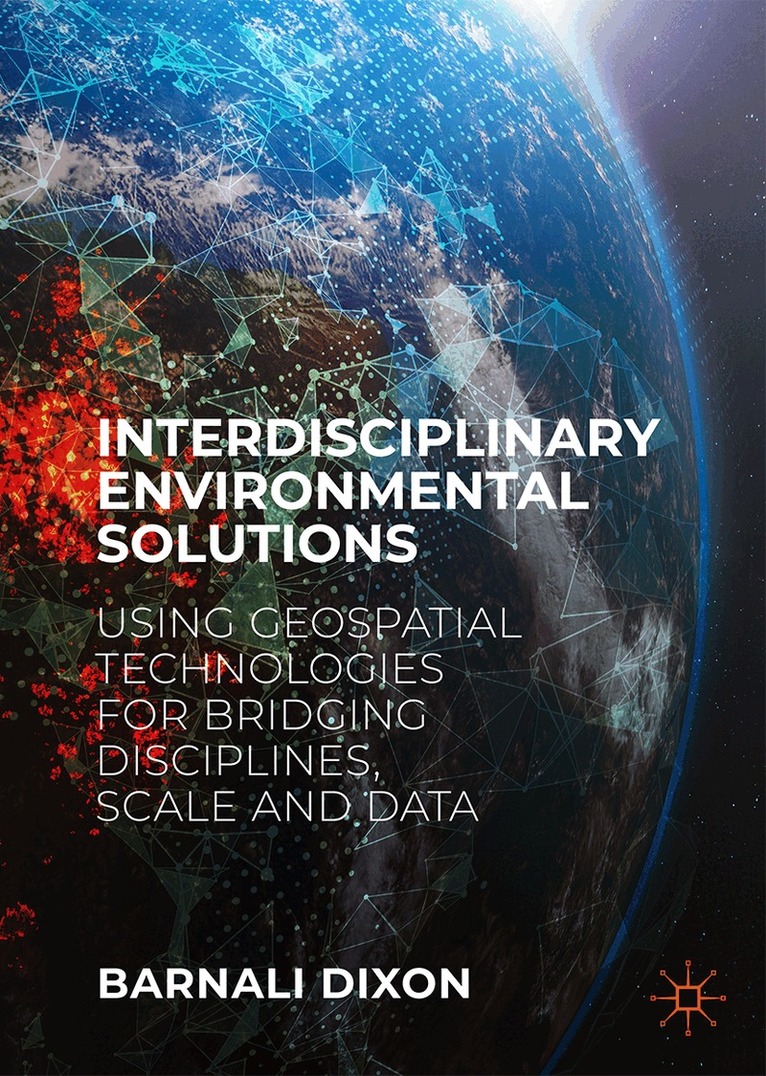
    Interdisciplinary Environmental Solutions

    Using Geospatial Technologies for Bridging Disciplines, Scale and Data

    AvBarnali Dixon

    Inbunden, Engelska, 2025

    816 kr

    Beställningsvara. Skickas inom 10-15 vardagar. Fri frakt över 249 kr.

    Fler format och utgåvor

    E-bok

    1 026 kr

    Häftad

    601 kr

    Beskrivning

    This textbook presents a clear and accessible argument for sustainable planning and development.  The book discusses multiple environmental issues and examines how potential solutions can and should be addressed in the context of space and place. The book also offers an invaluable discussion on the need for a framework for system-based thinking where various disciplines should work together to find innovative solutions. Students are provided with an appreciation of the need for an interdisciplinary approach to these issues combined with an underlying sense of space, an appreciation of cultural diversity and differences, as well as associated insights into human relationships. These core attributes put space at the heart of environmental and natural resources management, in terms of policy, planning and on-the-ground initiatives.This book will be an invaluable reference for advanced undergraduate, graduate students and researchers working in the field looking for an accessible overview of this interdisciplinary approach to the topic.

    Produktinformation

    • Utgivningsdatum:2025-07-03
    • Mått:148 x 210 x 53 mm
    • Vikt:1 240 g
    • Format:Inbunden
    • Språk:Engelska
    • Antal sidor:812
    • Förlag:Springer International Publishing AG
    • ISBN:9783031167621

    Utforska kategorier

    • Miljövetenskap och miljöpolitik inom Naturvetenskap och teknik
    • Sociologi inom Samhälle och politik
    • Biovetenskap inom Naturvetenskap och teknik

    Mer om författaren

    Dr Barnali Dixon is currently Professor of Geospatial Technologies, in the Program of Environmental Science and Policy, at University of South Florida. She is also the founding director of the Geospatial Analytics lab (G-SAL) and the Executive Director of Initiative on VCoastalResilienbce and Adaptation (iCAR). Dr Dixon's research focuses on the development and application of spatially integrated decision support tools (SDST) using GIS, GPS and remote sensing tools for modeling and managing soil, landuse and land-water interfaces using approximation tools. She is particularly interested in model development that are transdisciplinary in nature.

    Innehållsförteckning

    • Chapter 1: Introduction Interdisciplinary Environmental Solutions.- Chapter 2:Introduction Complexity of environmental systems.- Chapter 3: Illustration of System Complexity and Need for integrative analysis for effective solutions.- Chapter 4: Place, Space, Scale, Geospatial Analysis and GIS.- Chapter 5: Uncertainty Issues with Complex System.- Chapter 6: Role of Place (Space) in Decision Support Systems.- Chapter 7: Place-based approaches to Integrated Environment Solutions.- Chapter 8: Role of place and space in identification of environmental problems and finding solutions.- Chapter 9: Geographic Problem Solving: Summary of key environmental problems that need integrative approaches and the notion of uncertainty associated with ‘ways of knowing’.- Chapter 10: GIS, GeoAI, and Geospatial Framework For Integrated Place-Based Approach.- Chapter 11:Conceptual Framework for Integration of Terrestrial Systems and Aquatic Sinks using Systems Thinking and Place-based Approach.- Chapter 12: Spato-temporal variability of water quality and watershed relationship.- Chapter 13: The Impact of Wildfire on Soil Erosion and Water Quality using a GIS-integrated Framework.- Chapter 14: Geospatially Integrated Drainage Basin Scale Sediment Dynamics Under Projected Future Climate Conditions In South East Georgia, USA.- Chapter 15: Linking Watershed’s Properties to MPAs: Integration of Terrestrial Source, Landuse, and Watershed Hydrogeology in Coastal MPA Management.- Chapter 16: Modeling of Surface and Groundwater Contamination to Assess Human Health Risk: An Integrated Geospatial Approach.- Chapter 17: Application of a geospatially integrated species distribution model for seagrass in an urbanized estuary.- Chapter 18: Role of Place/Space in Conservation and Multi-scale Analysis.- Chapter 19: Analyzing Public Responses from Qualitative Data through Spatial Distribution Analysis Utilizing GIS for Effective Resilience Planning.- Chapter 20: Sensitivity Analysis and the use of Geospatial Framework: a Case Study of Soil Moisture and Soil Water Balance.- Chapter 21: Comparison of RUSLE and MUSLE models to predict and estimate soil erosion : a geospatially integrated sensitivity analysis.- Chapter 22: Comparison of Sensitivity analysis with ANN and SVM for Water Budget Calculations.